








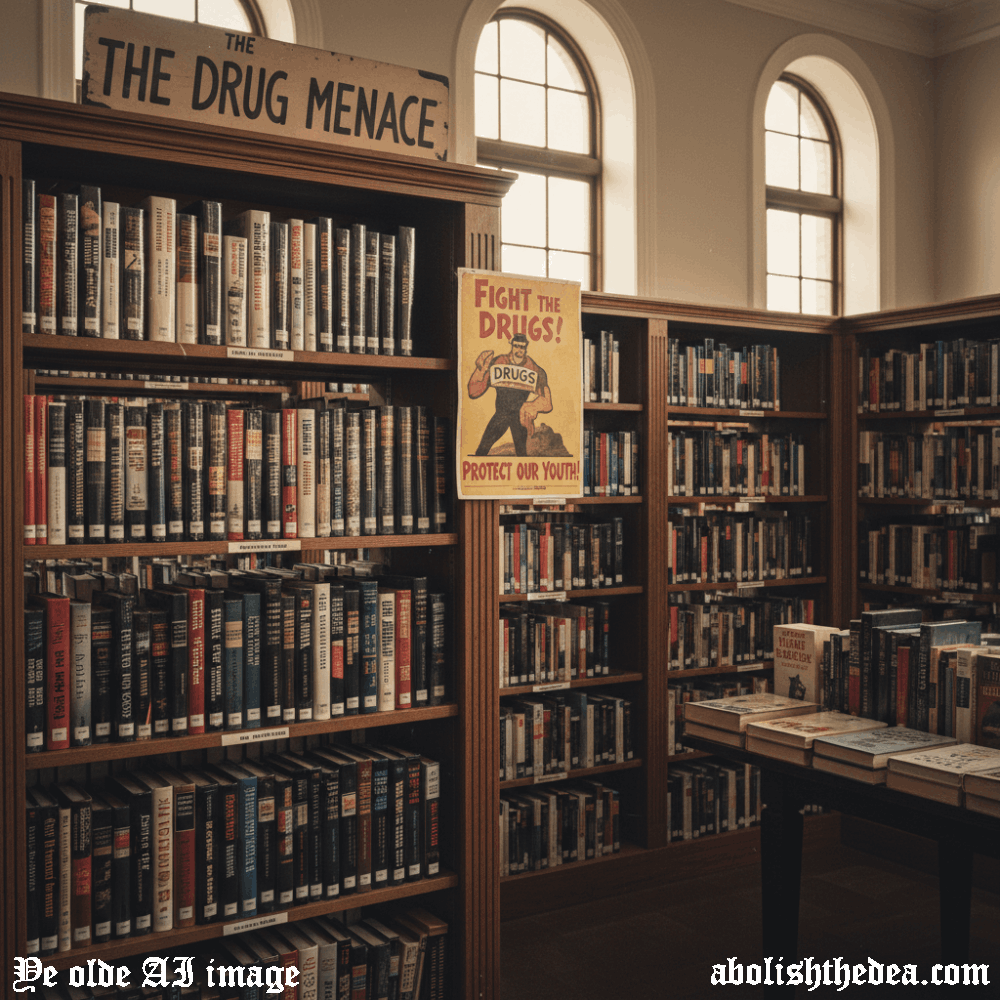
 Yesterday I traveled to Blue Plate Books in Winchester, Virginia, one of the largest used bookstores in the region. My plan was to buy books that would help me flesh out my understanding of drug-related issues. This was naive of me, however. Even though the store features tens of thousands of books, the vast majority of the authors of those books ignore the fact that drug prohibition even exists. The few books that treat of demonized drugs do so from the point of view of addiction and abuse. There are no books about how opium can improve your love of nature or about how phenethylamines can make the suicidal wish to live or about how the use of laughing gas can change your views of reality -- as the use of laughing gas eroded William James's dogmatic fealty to passion-scorning materialism and behaviorism.
The idea that "drugs" have no medical benefits is not science, it is philosophy, and bad philosophy at that. It is based on the idea that benefits must be molecularly demonstratable and not created from mere knock-on psychological effects of drug use, time-honored tho' they be.
The drug war is being used as a wrecking ball to destroy democratic freedoms. It has destroyed the 4th amendment and freedom of religion and given the police the right to confiscate the property of peaceful and productive citizens.
There are a potentially vast number of non-addictive drugs that could be used strategically in therapy. They elate and "free the tongue" to help talk therapy really work. Even "addictive" drugs can be used non-addictively, prohibitionist propaganda notwithstanding.
Imagine the Vedic people shortly after they have discovered soma. Everyone's ecstatic -- except for one oddball. "I'm not sure about these experiences," says he. "I think we need to start dissecting the brains of our departed adherents to see what's REALLY going on in there."
The Petpedia website says that "German Shepherds need to have challenging jobs such as searching for drugs." How about searching for prohibitionists instead?
I can't imagine Allen Ginsberg writing "Howl!" while under the influence of mood-damping drugs like Inderal and Prozac -- but then maybe that's the point: the powers-that-be do not want poets writing poems like "Howl!"
My local community store here in the sticks sells Trump "dollar bills" at the checkout counter. I don't know what's worse: a president encouraging insurrection or an electorate that does not see that as a problem.
Immanuel Kant wrote that scientists are scornful about metaphysics yet they rely on it themselves without realizing it. This is a case in point, for the idea that euphoria and visions are unhelpful in life is a metaphysical viewpoint, not a scientific one.
Assisted suicide cannot be discussed meaningfully without discussing the drug prohibition that renders it necessary in the first place.
After over a hundred years of prohibition, America has developed a kind of faux science in which despised substances are completely ignored. This is why Sci Am is making a new argument for shock therapy in 2023, because they ignore all the stuff that OBVIOUSLY cheers one up.
Yesterday I traveled to Blue Plate Books in Winchester, Virginia, one of the largest used bookstores in the region. My plan was to buy books that would help me flesh out my understanding of drug-related issues. This was naive of me, however. Even though the store features tens of thousands of books, the vast majority of the authors of those books ignore the fact that drug prohibition even exists. The few books that treat of demonized drugs do so from the point of view of addiction and abuse. There are no books about how opium can improve your love of nature or about how phenethylamines can make the suicidal wish to live or about how the use of laughing gas can change your views of reality -- as the use of laughing gas eroded William James's dogmatic fealty to passion-scorning materialism and behaviorism.
The idea that "drugs" have no medical benefits is not science, it is philosophy, and bad philosophy at that. It is based on the idea that benefits must be molecularly demonstratable and not created from mere knock-on psychological effects of drug use, time-honored tho' they be.
The drug war is being used as a wrecking ball to destroy democratic freedoms. It has destroyed the 4th amendment and freedom of religion and given the police the right to confiscate the property of peaceful and productive citizens.
There are a potentially vast number of non-addictive drugs that could be used strategically in therapy. They elate and "free the tongue" to help talk therapy really work. Even "addictive" drugs can be used non-addictively, prohibitionist propaganda notwithstanding.
Imagine the Vedic people shortly after they have discovered soma. Everyone's ecstatic -- except for one oddball. "I'm not sure about these experiences," says he. "I think we need to start dissecting the brains of our departed adherents to see what's REALLY going on in there."
The Petpedia website says that "German Shepherds need to have challenging jobs such as searching for drugs." How about searching for prohibitionists instead?
I can't imagine Allen Ginsberg writing "Howl!" while under the influence of mood-damping drugs like Inderal and Prozac -- but then maybe that's the point: the powers-that-be do not want poets writing poems like "Howl!"
My local community store here in the sticks sells Trump "dollar bills" at the checkout counter. I don't know what's worse: a president encouraging insurrection or an electorate that does not see that as a problem.
Immanuel Kant wrote that scientists are scornful about metaphysics yet they rely on it themselves without realizing it. This is a case in point, for the idea that euphoria and visions are unhelpful in life is a metaphysical viewpoint, not a scientific one.
Assisted suicide cannot be discussed meaningfully without discussing the drug prohibition that renders it necessary in the first place.
After over a hundred years of prohibition, America has developed a kind of faux science in which despised substances are completely ignored. This is why Sci Am is making a new argument for shock therapy in 2023, because they ignore all the stuff that OBVIOUSLY cheers one up.


 (up)
(up)