



bird icon for twitter bird icon for twitter


Drug War Propaganda from Hollywood

how movies toe the line with prohibition ideology

by Brian Ballard Quass, the Drug War Philosopher


January 14, 2025


I thought I'd watch "Smile 2" last night since I had found "Smile 1" reasonably enjoyable. This was a mistake, however, because the opening scene was pure Drug War agitprop. It was clearly written to advance the notion that drugs are the problem, not prohibition.

The movie begins with the efforts of a livid vigilante to punish a drug dealer whose recent gunplay had inadvertently killed a woman and her young child. Sure, that's evil -- no one likes a wanton killer. But how much more evil were the politicians and other demagogues who created a world in which such people do such things?!

We did not have Americans torturing each other and firing guns carelessly in public before the War on Drugs incentivized such extreme violence. And yet movies like "Smile 2" keep reinforcing the idea that drugs and drug dealers are the problem, not prohibition, that we have only to crack down hard enough -- with vigilantes, if needed -- and the problem will go away, nay, that it is our duty to crack down and to erase drug dealers from the face of the earth.

Just think about what the Drug War has done here. Think about the movies that you've seen which feature extreme torture and extreme disregard for human life. Chances are that the vast majority of their plots concerned drug dealing.

Does anyone see what's going on here? Substance prohibition has created the violence on which these movies are all-too-accurately based. And this is inexcusable because common sense psychology tells us that prohibition would do precisely this. People like to get rich and there will always be a morally challenged minority which will go to extreme measures when extreme incentives are offered thanks to insane social policies like prohibition.

This is another reason why the FDA is enormously biased when it comes to drug approval. Not only do they ignore the obvious positive effects of the drugs that they bash, but they also ignore the obvious negative effects of outlawing drugs. The FDA is supposedly all about keeping us safe, right? And yet by outlawing drugs, they are enabling torture and wholesale murder!

And yet no one sees this -- nor will they ever see this thanks to movies like "Smile 2"!

Schopenhauer says that the truth will eventually be known, but I am beginning to wonder.

I never thought of myself as a great genius, but the idiocy of the vast majority on these topics is beginning to swell my head. Either I am a genius, being the only one to recognize these obvious syllogistic truths, or there are a fair percentage of people out there who "get this" but are just not speaking up -- or else they are hiding their knowledge in academic-speak. Academic Philip Jenkins wrote about the Drug War in "Synthetic Panics1" in reasonably lucid prose, but his work has had limited effect for two reasons: 1) He refrained from drawing any overt conclusions from the data that he had amassed, and 2) He gave his book a title that did not even mention "drugs." In other words, he shielded himself from mainstream criticism, but only at the cost of diminishing the impact of his book.

Even factual and assumption-free movies about drug-related deaths are propaganda in the age of the Drug War. They may not be propaganda "in and of themselves," but collectively they are part of an obvious propaganda campaign -- a campaign of censorship designed to make us associate drugs with nothing but death, dying and dead-end streets.

*drugwarmovies 2 3 *


Notes:

1: 'Synthetic Panics' by Philip Jenkins DWP (up)
2: Glenn Close but no cigar DWP (up)
3: Running with the torture loving DEA DWP (up)


Schopenhauer


Schopenhauer synthesizes the ideas of Immanuel Kant and Plato with the philosophy of eastern religions, according to which we human beings are unable to perceive Reality writ large. This limitation, however, which both Schopenhauer and Kant suggest applies to all human beings as such, may actually only apply to "sober" individuals, as William James was to point out a decade after Schopenhauer's death. James realized that the strategic use of drugs that provide self-transcendence can help one see past the so-called Veil of Maya. He went so far as to insist that philosophers must use such substances in an effort to understand ultimate realities -- advice that, alas, most modern philosophers seem committed to ignoring.

"No account of the universe in its totality," wrote James, "can be final which leaves these other forms of consciousness quite disregarded."

The exciting thing now is to consider Schopenhauer's philosophy in light of the revelations provided by certain drug use and to assess how such epiphanies tend to confirm, qualify or perhaps even refute the German pessimist's ideas about an eternal and unchangeable will, a will which the philosopher tells us is manifested in (or rather manifested AS) objects, animals, plants and persons. Schopenhauer tells us that the will corresponding to these entities is purposeful, for it seeks to create a specific kind of object or individual, but that the will is also meaningless, in the sense that the fact that it IS a specific kind of will is an arbitrary given, to which we need not ascribe any purpose, let alone a creator.

I am still trying to wrap my head around that latter claim, by the way, the idea that there can be teleology without design. I think I am slowly beginning to understand what Schopenhauer means by that claim in light of Kantian distinctions, but I am by no means sure that I agree with him. Yet I am not qualified to push back at this time. Further reading is required on my part before I can either refute him advisedly, or else concede his point. I do find, however, that Schopenhauer occasionally makes definitive-sounding claims that are actually quite open to obvious refutations.

In "The World as Will and Idea," for instance, he states that tropical birds have brilliant feathers "so that each male may find his female." Really? Then why are penguins not decked out with technicolor plumage? To assign "final causes" like this to nature is to turn animals into the inkblots of a biological Rorschach test. Not only is Schopenhauer being subjective here, but he has an agenda in making this particular kind of claim: he wants to underscore his belief that there is a logical causative explanation behind the fact that "wills" of the tropical birds would manifest in this colorful way, that it was not some act of extravagance on the part of a whimsical creator. But this kind of explanation is not the least bit compelling since one can imagine dozens of equally plausible "final causes" for the feature in question: the birds want to attract mates, the birds want to warn off predators, the birds want to mimic other yellow birds, the birds want to collectively camouflage themselves while roosting as one big yellow object (or more accurately, the birds' wills want to do these things).

One senses that Schopenhauer would respond as follows: "Fine. Give any reason you like, Ballard. But whatever you do, do not tell me that some suppositious God likes variety!"

And what about this famous pessimism? It's so typical of curmudgeons to try to make a universal law out of their own psychological issues. Schopenhauer does not seem to understand that attitude matters. As Hamlet said, "I could be bounded in a nutshell, and count myself a king of infinite space, were it not that I have bad dreams." It is neither the shortness of life nor the inhumanity of our fellows that ruins life for most people -- but rather their attitude TOWARD such circumstances. Every manic-depressive knows that a blue sky and party cake does not make a person happy, nor living amid postcard scenery. One can commit suicide in Disneyland just as well as Skid Row. It is attitude, attitude, attitude that matters -- from which it follows that it is a sin to outlaw substances that can help us adopt a positive attitude toward life. That's why it's so frustrating that philosophers like Schopenhauer pretend that life can be judged by circumstances alone. Only once we acknowledge that attitude matters can we clearly see the importance of the many mind-improving medicines of which Mother Nature is full, the meds that we slander today by classing them under the pejorative label of "drugs."


  • Drug War Propaganda from Hollywood
  • Ego Transcendence Made Easy
  • If this be reason, let us make the least of it!
  • Psilocybin Breakthrough
  • Schopenhauer and Drugs
  • Too Honest to Be Popular?
  • What Can the Chemical Hold?
  • What if Arthur Schopenhauer Had Used DMT?
  • What's Drugs Got to Do With It?


  • Ten Tweets

    against the hateful war on US


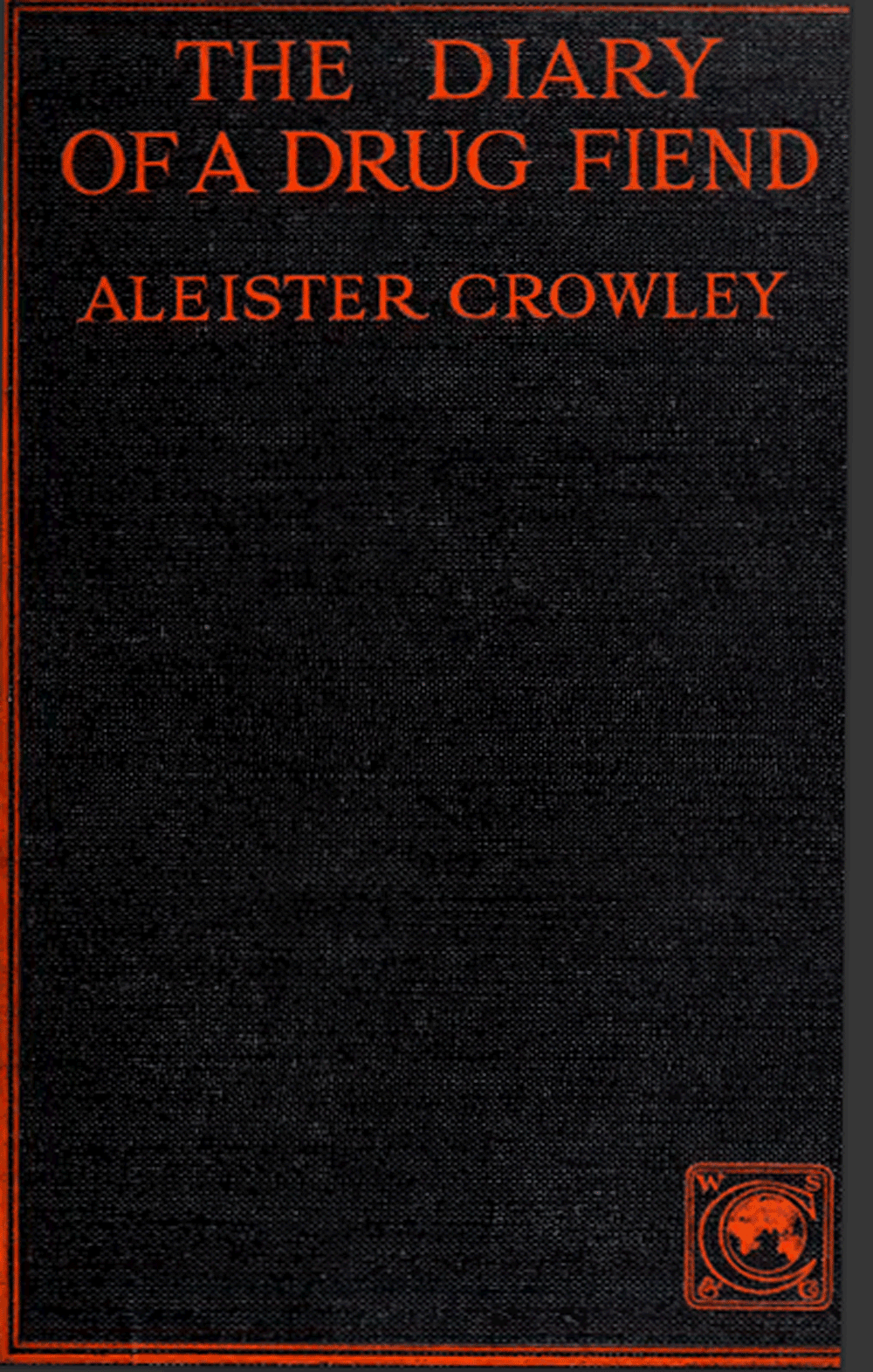
    Aleister Crowley actually TRIED to get addicted to drugs and found he could not. These things are not inevitable. The fact that there are town drunkards does not mean that we should outlaw alcohol.

    Every video about science and psilocybin is funny. It shows nerds trying to catch up with common sense. But psychedelics work, whether the FDA thinks so or not. It's proven by what James Fadiman calls "citizen science," i.e. everyday experience.

    The drug war is a meta-injustice. It does not just limit what you're allowed to think, it limits how and how much you are allowed to think.

    We're living in a sci-fi dystopia called "Fahrenheit 452", in which the police burn thought-expanding plants instead of thought-expanding books.

    The problem with blaming things on addiction genes is that it whitewashes the role of society and its laws. It's easy to imagine an enlightened country wherein drug availability, education and attitudes make addiction highly unlikely, addiction genes or no addiction genes.

    It also bothers me that gun fanatics support the drug war. If I have no rights to mother nature, then they have no rights to guns. If the Fourth Amendment can be ignored based on lies and ignorance, then so can the Second.

    Properly speaking, MDMA has killed no one at all. Prohibitionists were delighted when Leah Betts died because they were sure it was BECAUSE of MDMA/Ecstasy. Whereas it was because of the fact that prohibitionists refuse to teach safe use.

    The press is having a field day with the Matthew Perry story. They love to have a nice occasion to demonize drugs. I wonder how many decades must pass before they realize that people are killed by ignorance and a corrupted drug supply, not by the drugs themselves.

    I can think of no greater intrusion than to deny a person autonomy over how they think and feel in life. It is sort of a meta-intrusion, the mother of all anti-democratic intrusions.

    The drug war has created a whole film genre with the same tired plots: drug-dealing scumbags and their dupes being put in their place by the white Anglo-Saxon establishment, which has nothing but contempt for altered states.


    Click here to see All Tweets against the hateful War on Us


    Mad at Mad in America
    Case Studies in Wise Drug Use


    This site uses no cookies! This site features no ads!


    Thanks for visiting The Drug War Philosopher at abolishthedea.com, featuring essays against America's disgraceful drug war. Updated daily.

    Copyright 2025, Brian Ballard Quass Contact: quass@quass.com


    (up)