






Homepage of the Drug War Philosopher, Brian Quass
blog icon orange rss icon with stylized radio waves bird icon for twitter bird icon for twitter substack icon


back navigation arrow forward navigation arrow


False Consciousness in the Age of the Drug War

How depressed Americans blame themselves for the problems caused by drug prohibition

by Brian Ballard Quass, the Drug War Philosopher

November 25, 2025


It is becoming increasingly difficult for me to separate my philosophical life from my casual life with friends. That is because, unbeknownst to themselves, the latter keep saying and doing things that tragically illustrate the problems with drug prohibition. I am thinking especially of the increasing number of my friends who are "coming out" as being depressed. They always do so in a predictable fashion, by making a somewhat lengthy tell-all speech, either in person or by mail, in which they confess to having been depressed for a long time now and to having even contemplated suicide, reporting however that they have finally seen the light. They now see that they are sick and that they need help. They speak of their determination to join a variety of self-help groups and report that they have already visited a psychiatrist, from whom they have received an antidepressant which they trust will help them correct their recalcitrant biochemistry and so make them comfortable once again in their own skin. They thank us for our time and our understanding and invite our advice and suggestions on upbeat protocols moving forward. They then sit back, as it were, in expectation of the compassion and reassurance that such an intimate confession must necessarily elicit from all but the most callous of hearts.

Such avowals place me in a very awkward position. Should I attempt to give this naive sufferer "the big picture" regarding his or her situation -- should I tell them how cocaine is a godsend for depression1 and how medical doctors helped outlaw the drug for obvious self-interested reasons2 -- or should I just make with the expected back-patting while perhaps adding a few reciprocal confessions of my own in order to break the ice, which might be imagined to be quite thick after such confessions, especially if both confessor and penitent are of the masculine sex. Even if I decide to be honest, it is not clear what advice I should give in the age of the Drug War. Should I be troubled by the idea that my friend has committed to the use of a drug that will likely turn him or her into a patient for life? or should I let that decision go unchallenged in recognition of the fact that Big Pharma drugs, however problematic and inadequate they may be, are the only game in town when it comes to pharmacological relief in the age of drug prohibition? That latter decision, of course, will probably depend on how close the world may be to drug relegalization at the time, at least somewhere on the globe. If any country were likely to re-legalize drug use on principle in the near future, and so re-legalize our right to take care of our own health, then I would counsel my depressed friend to seriously consider relocating to that enlightened country when such a change came about, in the meantime foregoing the use of "meds" which may prove to be "un-kickable" in the long run3.

I do not mean to scoff at these heartfelt avowals, only to point out that these misguided penitents are essentially apologizing for a crime that they never committed. It is drug prohibition which brought about their depression by outlawing endless godsends, many of which could have treated the blues in real-time and helped them take both depression and themselves less seriously. Cocaine could have cured their depression in a trice, as Sigmund Freud knew from personal experience4. But there are many other drugs that could have helped as well. Consider the following reports from users of the phenethylamines synthesized by American chemist Alexander Shulgin5 6:


Why then are so many Americans depressed? It is because Puritans of our time are more ambitious than their forebears. The Puritans of yore insisted merely that their homes and places of worship be simple and unadorned. The Puritans of today insist that the soul of humankind be just as simple and unadorned, hence the War on Drugs to outlaw all substances whose use might inspire or facilitate any new and therefore frightening ways of being in the world.

It will be objected that some people are "really" depressed, thanks to their biochemistry, for instance. But we cannot know if that is true -- or if that even MATTERS -- until we purposefully attempt to leverage the vast array of psychoactive medicines to end depression in a vast variety of specific cases. Before we can do this, however, we need to create a new field of professionals, which I call pharmacologically savvy empaths7, who, unlike modern materialist doctors, would take common-sense psychology into account in advising on wise drug use. Unlike materialist doctors, these empaths would see at once that laughing gas and cocaine have glaringly obvious uses for the depressed and that the protocols for their wise and beneficial use are limited only by the human imagination. Unlike materialist doctors, these empaths would understand the value of anticipation8, the value of virtuous circles, and the value of turning success into a habit with the strategic use of psychoactive medicines. Unlike materialist doctors, these empaths would understand that it is absurd to promote brain-damaging shock therapy while yet outlawing the kinds of drugs that would render such "therapy" unnecessary9. We need, in other words, to finally realize in the western world that it was a category error to place materialists in charge of mind and mood medicine in the first place.

CHRISTIANITY IS DEAD! LONG LIVE CHRISTIANITY!

One cannot help but notice a religious aspect to the sort of confessions mentioned above. This puts one in mind of Nietzsche's claim that Christian values continue to regulate behavior in the west even though Christianity as a religion would seem to be in decline10. One can no longer come home to the Church, perhaps, having long-since replaced one's faith with a naive belief in the omnipotence of science, but one still feels a psychospiritual need to come home -- to play the prodigal and to be welcomed back once again into the fold. Perhaps this helps explain why so few depressives connect the dots between their condition and drug prohibition. Although they are no longer practicing Christians, they embrace the assumptions about morality that were championed by the Christian Nationalists who started the original War on Drugs in the latter 19th and early 20th centuries11, including the idea that drug use is sin. From this it follows that only "meds" can be used to treat depression and that therefore no conspiracy exists when it comes to drugs and depression. Of course, Americans consider it to be scientifically incorrect to speak of sin these days. They therefore secularize and psychologize their problems. But they do so in such a way as to give themselves the cathartic benefits of Christianity in the form of redemption, albeit a redemption that is achieved on humanistic rather than religious grounds.


Author's Follow-up:

November 26, 2025

picture of clock metaphorically suggesting a follow-up


My main point, I hope, is an implicit corollary to what I have written above: namely, that the depressed should be spending their free time protesting drug prohibition with their fellow depressed, rather than engaging with them in maudlin exchanges about the challenges that they face in life -- or about the relative merits of one dependence-causing Big Pharma "med" over another. They should leverage the power of a just indignation to stand up for their rights to heal rather than pretending that their life situation came about naturally, as it were, by an unlucky throw of the dice. No, they are depressed because of drug prohibition, and until they recognize that fact and begin to push back in the name of healthcare freedom, their suffering will be in vain.


Notes for essay entitled False Consciousness in the Age of the Drug War: How depressed Americans blame themselves for the problems caused by drug prohibition:

1: “Freud on Cocaine : Freud, Sigmund, 1856-1939 : Free Download, Borrow, and Streaming : Internet Archive.” 2023. Internet Archive. 2023. https://archive.org/details/freudoncocaine0000freu/page/n5/mode/2up?view=theater. (up)
2: Sigmund Freud's real breakthrough was not psychoanalysis DWP (up)
3: How Drug Prohibition makes it impossible to get off of Effexor and other Big Pharma drugs DWP (up)
4: “Freud on Cocaine : Freud, Sigmund, 1856-1939 : Free Download, Borrow, and Streaming : Internet Archive.” 2023. Internet Archive. 2023. https://archive.org/details/freudoncocaine0000freu/page/n5/mode/2up?view=theater. (up)
5: Shulgin, Alexander T, and Ann Shulgin. 2019. Pihkal : A Chemical Love Story. Berkeley, Ca: Transform Press. (up)
6: Pihkal 2.0: Finding drugs that work for users rather than for pharmaceutical companies DWP (up)
7: pharmacologically-savvy empath: this is an empathic individual with an ethnobotanical knowledge of safe and beneficial drug use worldwide, someone who recognizes psychological common sense and can advise on protocols that meet user needs while avoiding unwanted dependency. (up)
8: The Therapeutic Value of Anticipation DWP (up)
9: The FDA on ECT: Supporting a Vital Treatment Charles, Kellner MD, 2019 (up)
10: Nietzsche and the Drug War DWP (up)
11: Monteith, Andrew. 2023. Christian Nationalism and the Birth of the War on Drugs. New York University Press EBooks. https://doi.org/10.18574/nyu/9781479817993.001.0001. (up)


read more essays here


Ten Tweets

against the hateful war on US


Laughing gas is the substance that gave William James his philosophy of reality. He concluded from its use that what we perceive is just a fraction of reality writ large. Yet his alma mater (Harvard) does not even MENTION laughing gas in their bio of the man.

This is why we would rather have a depressed person commit suicide than to use "drugs" -- because drugs, after all, are not dealing with the "real" problem. The patient may SAY that drugs make them feel good, but we need microscopes to find out if they REALLY feel good.

Materialist scientists cannot triumph over addiction because their reductive focus blinds them to the obvious: namely, that drugs which cheer us up ACTUALLY DO cheer us up. Hence they keep looking for REAL cures while folks kill themselves for want of laughing gas and MDMA.

In 1886, coca enthusiast JJ Tschudi referred to prohibitionists as 'kickers.' He wrote: "If we were to listen to these kickers, most of us would die of hunger, for the reason that nearly everything we eat or drink has fallen under their ban."

Drug warriors think only about young people misusing drugs. They never think about the millions of the depressed whom they're condemning to a lifetime of totally unnecessary misery by outlawing drugs.

Rick Strassman isn't sure that DMT should be legal. Really?! Does he not realize how dangerous it is to chemically extract DMT from plants? In the name of safety, prohibitionists have encouraged dangerous ignorance and turned local police into busybody Nazis.

Someday the world will realize that Freud's real achievement was his discovery of the depression-busting power of cocaine.

For those who want to understand what's going on with the drug war from a philosophical point of view, I recommend chapter six of "Eugenics and Other Evils" by GK Chesterton.

New article in Scientific American: "New hope for pain relief," that ignores the fact that we have outlawed the time-honored panacea. Scientists want a drug that won't run the risk of inspiring us.

The war on drugs has destroyed America's faith in the power of education. In fact, it has made us think of education as WRONG in and of itself. It has made us prefer censorship and fear-filled ignorance to education!


Click here to see All Tweets against the hateful War on Us


back navigation arrow forward navigation arrow
Book Cover

Break the ice with a sledgehammer: place this book on your coffee table.

This book features 150 annotated images, designed to force brainwashed Americans to confront the fact that drug prohibition is wrong. Here is what author Richard Parrish II says of the book's compiler: "The drug prohibition philosopher provides first-hand, principled, persuasive, and insightful arguments against the current drug prohibition regime..."

Purchase Your Copy
Book Cover

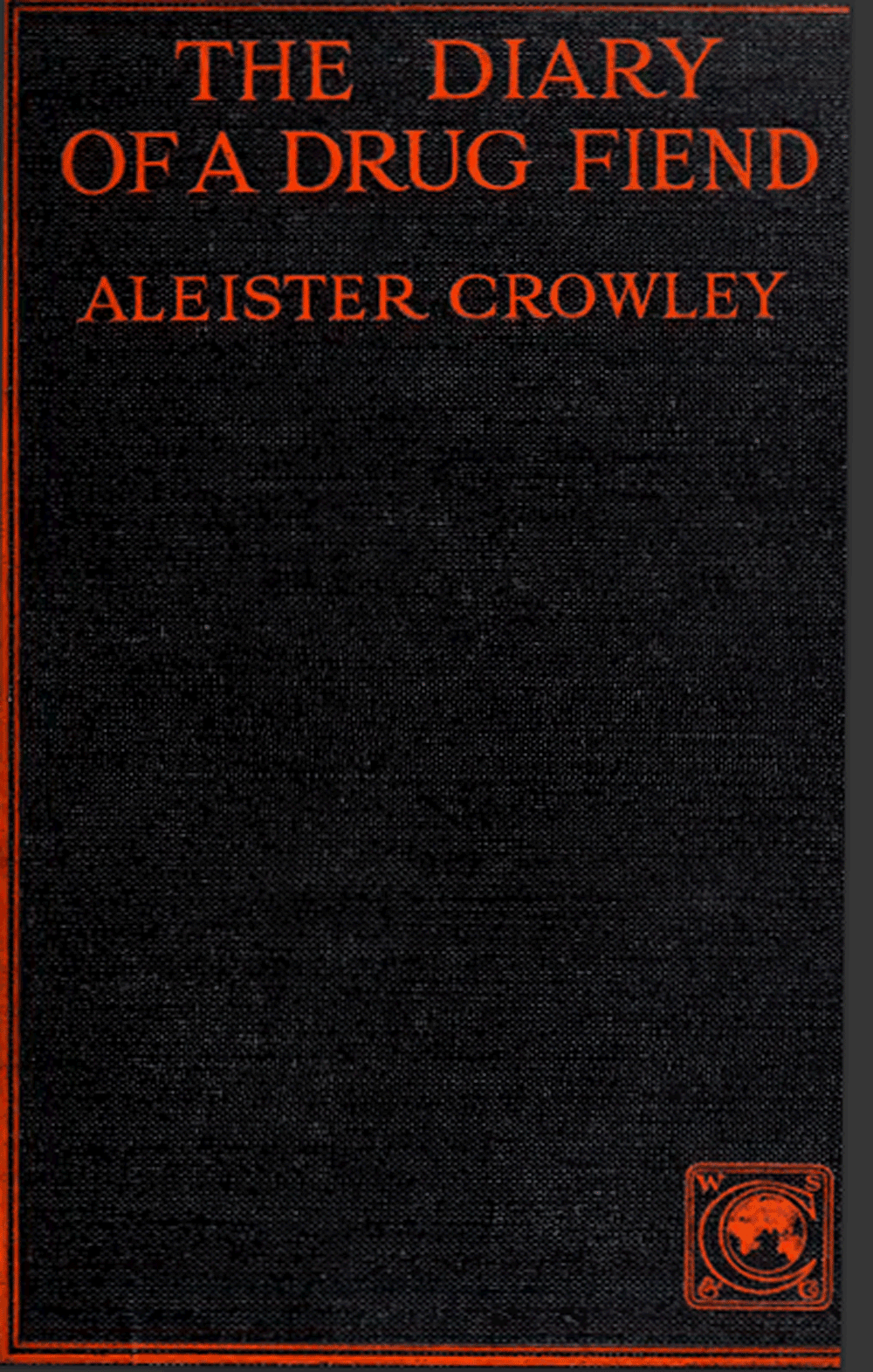
Diary of a Drug Fiend

This is the only full-cast recording of Aleister Crowley's 1922 classic paeon to common sense. It is the first book -- and so far almost the only book -- to stake out a philosophy of drug use that is compatible with human freedom, one in which we learn to use drugs as wisely as possible for the benefit of humanity. This recording was produced by the Drug War Philosopher and your purchases help support his effort to push back against the tragically counterproductive policy of drug prohibition, in the name of human freedom and of humanity's right to heal.

Purchase Your Copy


No cookies, no ads paid for by amoral and immoral billionaires (or trillionaires).


Unless otherwise indicated, no AI is used in the creation of site content. These essays represent the original ideas of their author and not the ideas that the author SHOULD have based on an algorithmic parsing of existing data. For more on this subject, consider the AI-related viewpoints to which the author subscribes as delineated in the New York Times opinion piece entitled "What 370,000 College Essays Tell Us About A.I.’s Effects on Creativity" by Rebecca Winthrop of the Brookings Institution.

The Partnership for a Death Free America is a proud sponsor of The Drug War Philosopher website @ abolishthedea.com.


Copyright 2026, Brian Ballard Quass Contact: quass@quass.com

tombstone for American Democracy, 1776-2024, RIP (up)