a philosophical review of The Southpaw, Nobody and Hook
by Brian Ballard Quass, the Drug War Philosopher
December 28, 2025
I do not think there is any American on Earth who adequately appreciates the extent to which they have been brainwashed about drugs. Not only have they been protected by the media from all positive reports of drug use, but almost every movie and television show that they watch spreads anti-drug propaganda in a subtle and therefore insidious manner. I realized this latter fact this weekend after watching three more-or-less randomly chosen movies with my nephew and brother-in-law. None of these movies revolved around the topic of drugs, but each implicitly promoted the message that drugs were, indeed, evil and that they were to be avoided like the devil. These seemingly apolitical movies implicitly encouraged the anti-constitutional and undemocratic efforts of the Drug Warriors to "crack down" on drug use "by any means necessary." After all, if drugs are the devil him or herself, then surely we all have a duty to do everything possible to ensure that they are never used, right? This is the insidious message that even our seemingly drug-neutral movies are spreading today in the age of Drug War censorship.
This is why Americans remain as bamboozled as ever about drugs, because they live and breathe drug prohibition with the help of constant implicit hints from our Hollywood script writers and, alas, their overseers in Washington D.C.1 Of course, the greatest bamboozlement of all is the belief that there even IS such a thing as "drugs" in the pejorative sense in which Americans use that word today2. The word "drugs" today simply means "substances that have no positive uses for anybody, anywhere, at any dose, for any reason, ever," and the fact is that there are no such substances on earth. Even "deadly" Botox has positive uses and is now being used to fight migraine headaches, something that would never have happened had we outlawed the drug based on abstract concerns about toxicity3. Even if we cannot find positive uses for a drug in our culture, we outlaw human progress when we conclude for all time, as it were, and for all people (existing and yet to come) that a drug MUST have no positive uses and cannot even be investigated for the same! But America exceeds even THAT hubris. Not happy with merely outlawing coca, we have bullied the United Nations into adopting the childish and tyrannous goal of eradicating the plant from the face of the Earth4!
Those who have ears, hear, the childish tyranny of the Drug War mentality!
I will mention the three offending movies as briefly as possible, partly because I am pressed for time this morning and partly because I find this topic extremely depressing, because it truly makes me wonder if modern capitalism -- and the mass-media propaganda upon which it depends -- is compatible with human freedom5. I am beginning to think not, and so I class myself as a true pessimist on this subject, in contradistinction to Schopenhauer, by the way, who, despite his well-earned reputation as a curmudgeon, always believed that the truth would ultimately triumph. Whenever I encounter the lockjaw that sets in when I attempt to discuss these matters with my fellow Americans -- nay, even with my own family -- I tend to think otherwise. I fear that Homo sapiens has met its match when it comes to modern propaganda. The most hopeful thing that I can say on this subject is that I would be happy to be proved wrong.
Three seemingly apolitical movies that help bamboozle viewers about drugs
Tick Wills warns Billy Hope not to engage in drug use, and yet the coach turns out to be an unrepentant solo drinker. It was, of course, alcohol that caused Billy Hope to drive his Maserati into a tree and lose custody of his daughter.
1) The Southpaw. Forest Whitaker plays Tick Wills, the down-to-earth coach who is going to help Billy Hope (Jake Gyllenhaal) get his life and his boxing career back on track. Tick makes it clear, however, that neither drug use nor drinking will be tolerated in his gym. Certainly not! (Humph!) Of course, Billy soon realizes that Tick is a hypocrite when it comes to the booze portion of that injunction. It turns out that Tick is a solo drinker, and an unrepentant one at that. "Drinking's a solitary sport," he mumbles, after Billy discovers him in the local bar. Spoiler alert: the two finally end up drinking together side by side without either attaching any moral opprobrium to the practice. Drinking was what one "DID," after all. Why fight the tide? And yet imagine what Tick would have said had Billy tested positive for using any of the thousands of psychoactive substances that qualify as "drugs" these days? Tick would have classified Billy as a willful scumbag, unworthy to get his preteen daughter back from the state which had taken custody after the grieving boxer crashed his soon-to-be-repossessed Maserati into a tree -- the tree right outside his house, in fact, where little Leila was sleeping peacefully at the time, bless her!
Note that Bill was plastered during that incident: in other words he was using the one drug that hypocritical Coach Tick himself thinks is okay: namely, alcohol.
The Message?
Drinking is good-old-normal stuff, folks -- while "drug" use is evil and renders one incapable of being a parent.
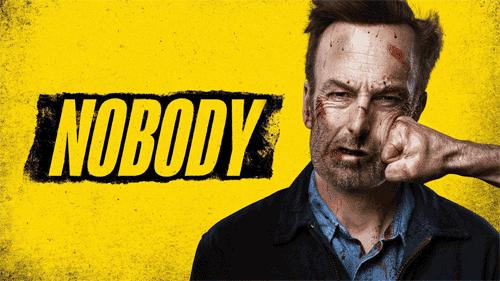
In Nobody, Hutch Mansell goes about anonymously killing Enemies of the State, and he is the GOOD guy. The fact that this movie is popular shows how far drug-war militarism has blinded Americans to the once-obvious downsides of a police state.
2) Nobody. Bob Odenkirk plays Hutch Mansell, a seemingly mild-mannered accountant and family man who makes a secretive living out of channeling his anger (or rather his rage) against enemies of the state. The government pays Hutch to kill anonymously in cases where legal attempts to suppress unwelcome behavior have failed to pan out. His principal enemy (at least in this first instalment of the budding franchise) is a Russian mobster named Yulian, played by Aleksey Serebryakov. The script writers establish that Yulian is a bad guy by introducing him in a scene where he flamboyantly enters his night club, takes a quick "snort" of cocaine, and takes to the stage to regale the audience with an off-key but enthusiastic rendition of a Russian ballad. Of course, in a drug-neutral society, this would just be a jovial man going about his business, but in the context of America's drug propaganda, Yulian's use of cocaine stamps him as a scumbag from the first. To show the bad guy using cocaine is like placing the word "scumbag" on the screen and pointing it at Yulian. It speaks volumes about character and reputation in the minds of the hundreds of millions of westerners who have been predisposed by drug propaganda to see drug use as evil incarnate.
Of course, most Americans are blissfully ignorant of the fact that Sigmund Freud considered cocaine to be a cure for depression6. Depression would not even be a "thing" in America had self-interested doctors not encouraged us to outlaw the drug. These doctors never asked the depressed what they thought about cocaine. The doctors merely focused on the rare misusers of the drug, exactly as if they were to judge alcohol by looking only at alcoholics. Wade Davis wrote in Rolling Stone that cocaine use was eventually associated with 400 cases of toxicity worldwide7 -- as if this was justification enough for the outlawing of the drug. Davis, of course, fails to realize that 3,000 people die from aspirin every year in England alone8, to say nothing of the 178,000 who die from alcohol each year in America9. And yet Wade is a typical American: he cares more about the vast minority of irresponsible or genetically predisposed "abusers" than he does about the rights of hundreds of millions of the depressed! The exclamation point is used advisedly here because I have gone a lifetime now without godsend medicine thanks to this statistically challenged "take" on prohibition -- and what's more, my complaints have been universally ignored, as, for instance, neither the Rolling Stone nor the Atlantic (to name but two mainstream purveyors of the Drug War party line) will print my letters to the editors on these topics.
And don't get me started on antidepressants!
Get it? "Don't get me started on antidepressants?"
And why not? Because I will become a ward of the healthcare state if I take those dependence-causing drugs. If Wade is upset about 400 people, you'd think he'd be compassion itself for the hundreds of millions of antidepressant users who can never get off their dependence-causing meds, ever10! Venlafaxine has a 95% recidivism rate 11 for long-term users! 95%. And yet Davis is silent. Those are not "drugs" after all but "meds." Ahhh! It sounds so much better, right? And so Davis concludes that the experiences of 400 people on this globe of 8.23 billion should determine drug policy for everybody else. I guess Drug Warriors are magicians. They hide the obvious and focus our apathetic eyes on strategically chosen minutiae. They hide the hundreds of millions of depressed who could be given new lives by cocaine and instead focus our attention on the statistically rare misusers! What lopsided compassion! Why can't we take away the doctors' alcohol, at least, by way of some small compensation for the millions of depressed whom they have abandoned in their time of need: that wine that the moralizing doctors sip without one thought going to the 178,000 deaths occasioned by the use of that drug12-- a substance that they should, by rights, be calling a "poison" if they were to be consistent with their view of psychoactive substances in general.
The movie "Nobody" has another insidious element when it comes to drugs. Not only does it implicitly tell us that drugs are evil, but it tells us that assassination is now an accepted job of government, that when the rule of law does not seem to be working, the government can simply hire some anonymous "nobody" to kill those who seem to defy it. In other words, democracy is dead in America, we no longer think that the rule of law is enough. Nay, the very desire for democracy is dead when a people have come to believe that government-sponsored assassination is an acceptable means of solving perceived social problems. This is a particularly alarming state of affairs when you consider that our government is conducting what they call a "Drug War." We now see that those words, "drug WAR," were chosen very purposefully indeed: they were chosen to justify all sorts of tyrannical actions that would be totally unacceptable in a time of peace. They were chosen, in fact, to normalize militarism and arbitrary police power. And that's what they have done over the years, to the point where Americans now believe in the rule of brute force when it comes to drugs.
True, the movie may be fiction, but the script writers imply that such "nobodies" do exist already in today's world -- and even if this is not entirely true (or even if it is true but only with important caveats), it is alarming to see that movie viewers are not appalled by such a world of anonymous government hitmen -- a fact which is made clear from the lack of any negative buzz about the movie in this regard. I have pointed this out to Variety magazine, how their critics ignore the hideous social message of drug-related movies, but of course I was completely ghosted by them as well. 13
It is just like the cynical and mistrustful Drug Warriors to re-imagine the fairy dust of Peter Pan as an evil drug -- but then the term 'evil drug' is redundant in their puritanical and pharmacologically challenged minds.
3) Hook (2025). This movie has a more direct connection with America's drug attitudes than the two above, as the IMDB summary makes clear:
After murdering John Darling and losing his hand to Peter Pan, Lily the daughter of Peter and Wendy, now will face carnage from the drug induced revenge seeking James Hook, her biological father, until he marries Wendy Darling.
Drug-induced? What drug?
Take your pick. There are thousands of substances that qualify as "drugs" today, and yet Americans have been taught that they are all one single thing, and all of them bad. So "drugs" is just a placeholder for the worst, most horrible, most unnecessary substance that the movie viewer can imagine. Hook is not the real villain, it was "drugs"!
How utterly absurd, childish, and ultimately tyrannical.
Context matters, damn it!
The propriety of drug use is always determined by circumstances! This is why drug prohibition was a tyrannical absurdity in the first place. As GK Chesterton wrote in Eugenics and Other Evils:
It is said that the Government must safeguard the health of the community. And the moment that is said, there ceases to be the shadow of a difference between beer and tea. People can certainly spoil their health with tea or with tobacco or with twenty other things. And there is no escape for the hygienic logician except to restrain and regulate them all." s14
Most of the serial murderers and mass shooters have not been on drugs -- but wait till one is and suddenly we see Americans think to themselves, "See?! I told you drugs were evil!"
Those who have ears, hear, the childish tyranny of the Drug War mentality!
Yes, a drug that provides hope and endurance may be used by a murderer -- but that same drug could also provide peace of mind to a young hospice patient or help a depressed adult pull back from the brink of suicide!
This is why the Drug War is so wrong: because it would have us judge drug use out of all context. Yet if alcohol is not to be held accountable for murders and car wrecks and suicides, then no other drug on the planet should be so held!
See, folks, this is why I say this subject is depressing. Americans are so utterly bamboozled by the medicalized morality of the modern Drug War -- a counterproductive and tyrannical policy based on the following absurd algorithm:
that a substance that might be misused at one dose in one circumstance by a white American young person must not be used by anyone at any dose in any circumstance!
That's anti-scientific and childish -- and it denies us the right to take care of our own health, than which no right is more fundamental in an ostensibly free society!
Is drug use wrong, you ask? What a silly question! It begs hundreds of other questions, such as... what drug? at what dose? used by what person? with what education level? in what culture? with what goals? etc. etc. etc.
No drug is bad in and of itself. To say things like "Fentanyl kills!" is philosophically equivalent to shouting "Fire bad!" as did our cave-dwelling ancestors. All such statements would have us fear substances rather than learn how to use them as wisely as possible for the benefit of humanity!
Details count! But Americans like certainty -- so they turn to materialist science to pan drugs in the abstract. It is simple tyranny -- so simple that it is off the radar to almost everyone, with the help of the propaganda and censorship alluded to in this essay.
It is quite impossible to know— without knowing a great deal about such a person, his family and friends, and his whole cultural setting— just what [a drug user] is doing and why. But it is quite possible, indeed it is easy, to know what those persons who try to repress certain kinds of drug uses and drug users are doing and why.
Please remember, however, that there are two reasons why Americans (and westerners in general) are so completely brainwashed on this topic. Not only do today's movies (and TV shows and novels) implicitly support anti-drug attitudes, as shown above, but we westerners are shielded for a lifetime from all positive reports of drug use in our conglomerate media. That's a powerful mix of censorship and propaganda, one which I fear that the vast majority of Homo sapiens simply cannot rise above, hence the survival of drug prohibition for well over 100 years now.
Speaking of which, it amazes me that no congressmen in the early 1900s seemed worried about the idea of putting the government in charge of how much pain medication we should receive or how minds should be allowed to work -- a power grab more enormous than any other undertaken by civil government in the past.
I will end this essay by going on record with Szasz himself when he laments as follows, again in his 1974 classic "must read," Ceremonial Chemistry:
It is so obvious and so well known that most prohibitions generate massive defiance of them— especially if the prohibited acts supposedly injure only the actor himself, and actually do not injure even him— that I will only record my amazement here about how people can blind themselves to this rule when trying to think about and deal with the “drug problem.”
Don't the Oregon prohibitionists realize that all the thousands of deaths from opiates is so much blood on their hands?
Why don't those politicians understand what hateful colonialism they are practicing? Psychedelics have been used for millennia by the tribes that the west has conquered -- now we won't even let folks talk honestly about such indigenous medicines.
Just think how much money bar owners in the Old West would have saved on restoration expenses if they had served MDMA instead of whiskey.
Imagine if there were drugs for which dependency was a feature, not a bug. People would stop peddling that junk, right? Wrong. Just ask your psychiatrist.
"The Oprah Winfrey Fallacy": the idea that a statistically insignificant number of cases constitutes a crisis, provided ONLY that the villain of the piece is something that racist politicians have demonized as a "drug."
These are just simple psychological truths that drug war ideology is designed to hide from sight. Doctors tell us that "drugs" are only useful when created by Big Pharma, chosen by doctors, and authorized by folks who have spent thousands on medical school. (Lies, lies, lies.)
"My faith votes and strives to outlaw religions that use substances of which politicians disapprove."
There's a run of addiction movies out there, like "Craving!" wherein they actually personify addiction as a screaming skeleton. Funny, drug warriors never call for a Manhattan Project to end addiction. Addiction is their golden goose.
Assisted suicide cannot be discussed meaningfully without discussing the drug prohibition that renders it necessary in the first place.
This pretend concern for the safety of young drug users is bizarre in a country that does not even criminalize bump stocks for automatic weapons.









 I do not think there is any American on Earth who adequately appreciates the extent to which they have been brainwashed about drugs. Not only have they been protected by the media from all positive reports of drug use, but almost every movie and television show that they watch spreads anti-drug propaganda in a subtle and therefore insidious manner. I realized this latter fact this weekend after watching three more-or-less randomly chosen movies with my nephew and brother-in-law. None of these movies revolved around the topic of drugs, but each implicitly promoted the message that drugs were, indeed, evil and that they were to be avoided like the devil. These seemingly apolitical movies implicitly encouraged the anti-constitutional and undemocratic efforts of the Drug Warriors to "crack down" on drug use "by any means necessary." After all, if drugs are the devil him or herself, then surely we all have a duty to do everything possible to ensure that they are never used, right? This is the insidious message that even our seemingly drug-neutral movies are spreading today in the age of Drug War censorship.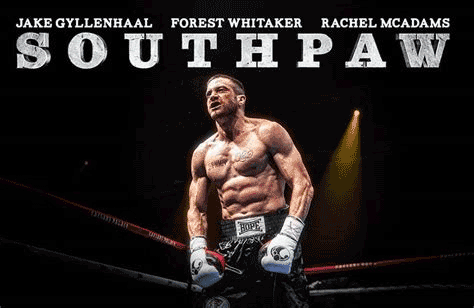

 (up)
(up)