1) Depressed westerners are now demanding their right to assisted suicide.
2) Drug prohibition outlaws hundreds of drugs whose use can help make the depressed wish to live.
CONCLUSION
An ethical discussion about the propriety of assisted suicide for the depressed must include a debate about the propriety of drug prohibition.
Could any conclusion be any clearer?
Apparently so, because Robert Whitaker denies it -- or at least denies the importance of that syllogism.
I would like to take his word for that, and yet his failure to be impressed by philosophical syllogisms sounds all too familiar to me. It is part of a larger pattern. It is the same reaction I get when I write to leaders of the campaigns against gun violence in the inner cities. I argue "syllogistically" as follows.
PREMISES
1) We need to end gun violence in inner cities.
2) It is drug prohibition which brought guns to the inner cities in the first place.
CONCLUSION
No discussion of the gun violence in inner cities is complete which fails to discuss the policy of drug prohibition.
And yet this is exactly what the groups do which claim to be fighting to end gun violence in inner cities, they ignore the role of drug prohibition in bringing that gun violence about in the first place. They will blame the problem on a wide variety of social factors, including poverty, a lack of education, and racist police officers -- all of which have indeed played a well-documented role in the destruction of our inner cities. And yet they refuse to denounce the drug prohibition that started this destructive ball rolling in the first place. Why not? Because as Thomas Szasz pointed out, the leaders of the minority communities that reside in our inner cities have come to believe with the rest of indoctrinated America that drugs are a problem, rather than the social policies that weaponize those drugs.
Undaunted, I move on. And so I write to the organizations devoted to ending school shootings, arguing as follows:
PREMISES
1) There is a problem with hothead students shooting up schools.
2) Drug prohibition outlaws a whole class of drugs called entheogens whose therapeutic use has the prima facie potential to experientially teach those hotheads a modicum of compassion for their fellows.
CONCLUSION
A discussion about ending school shootings must include a discussion about drug prohibition.
Again, please note, this is a syllogistic conclusion deduced from generally accepted facts, not a personal opinion of my own.
And yet the enemies of school shootings are not up in arms about drug prohibition. Indeed, they see no connection between drug prohibition and school shootings. The proof is extant. Anyone who doubts it can simply search the words "drug prohibition school shootings." Of course, if you page to the 2,000th hit in a Google search of those terms, you might see my essays on that topic: otherwise, you will see no evidence that drug prohibition has any connection with school shootings whatsoever.
Predictably enough, however, a search on the above-mentioned terms will bring up a number of "authoritative" articles designed to clear "meds" of all charges of causing school shootings. So while no one will point out that outlawed drugs could help, the well-paid supporters of the politically limited pharmacopoeia of our times will insist that "meds" can't hurt.
And so I try my luck with the groups that are fighting against dementia. Again, I argue syllogistically, this time as follows:
PREMISES
1) Dementia involves an inability to order one's thoughts and to concentrate.
2) Drug prohibition outlaws drugs that can help one order one's thoughts and concentrate.
CONCLUSION
Advocates for dementia patients should be protesting on their patients' behalf for the end of drug prohibition.
Again, I am greeted with the virtual equivalent of blank stares. I am ignored by such advocates. I am apparently the only one who is reaching these inconvenient conclusions. Again, the proof of that latter statement is extant. Just search the words "drug prohibition dementia" and you'll see that no one is connecting these dots -- except myself, should you have a few hours to page through a sea of advertisement-filled results and find my insights buried alive by pay-to-play and academic-friendly algorithms.
When I myself performed such a search this morning, I found an article in the UK Telegraph with a headline reading "Alzheimer's 'Wonder Drugs' Do Not Work," by Deputy Health Editor Michael Searles1 -- a guy, by the way, who looks to me like a school boy, at least in the thumbnail pic above his byline, bearing in mind that I am not currently wearing my reading glasses. Of course, I need hardly add that Searles is not talking about drugs like coca, cocaine and amphetamines. Oh, no. He is a mainstream health editor after all. Outlawed drugs, "as everyone knows," can have no positive uses in the healthcare field. Oh, good Lord, no.
QED
Ta-da! I have shown how the most basic of philosophical arguments, the humble syllogism, means nothing to those who are writing under the influence of the drug-war ideology of substance demonization, not when it comes to assisted suicide for the depressed, not when it comes to inner-city gun violence, not when it comes to school shootings, and not when it comes to dementia, including Alzheimer's Disease.
I am sure that a creative philosopher could imagine ways to gainsay the validity of these prima facie conclusions of mine, but here's the point: they would have to do so by adducing less obvious arguments than my own. Were they to actually do that by formulating their own propositions, we would then have the beginnings of an actual debate about the propriety of drug prohibition, and this is precisely what the activists mentioned above do not want to have. They want to ignore drug prohibition altogether rather than being forced to defend their own tacit and implicit support for that policy with some logical argument. Why not? Because they know that they could never make such an argument. Any arguments that they make in support of drug prohibition could be demolished at will with any number of inconvenient factoids, first and foremost being the fact that drug prohibition has resulted in over one million totally unnecessary overdose deaths in America in the 21st century by refusing to regulate drugs as to identity, quality and quantity.
One million.
So, please, ye who should know better, do not attempt to refute my arguments with cries about the safety of our young people!
OUTLAWING FREE SPEECH
Note that the kinds of drugs that I have mentioned above are precisely the ones that sites like Mad in America and Surviving Antidepressants tell me that I should not be talking about. Why not? Whenever I speak of such drugs without demonizing them, I am told I am giving medical advice, that we must see our doctors for advice about healthcare.
What doctors are those? Why the same doctors who took advantage of their monopoly on dispensing mind and mood medicine to place me on drugs that I could never kick, ever, and hence have turned me into a patient for life, which is yet another downside of drug prohibition, by the way, for which my syllogistic proofs fall on deaf laptops, so to speak.
CONCLUDING CONCLUSION
Whenever I make the kinds of seemingly straightforward arguments mentioned above and yet am greeted with blank stares of total incomprehension, I think of the following comical exchange in "All's Well That Ends Well":
LAFEW: Your Lord and Master did well to make his recantation.
PAROLLES: Recantation? My Lord? My Master?
LAFEW: Ay, is it not a language I speak?
Author's Follow-up:
April 21, 2026
There are many more cases in which the powers-that-be reckon without drug prohibition and its disastrous effects. Philosophers and academics are ignoring the obvious as well.
PREMISES
1) Immanuel Kant created his Categories of the Understanding on the presupposition that there was a privileged, one-size-fits-all rational consciousness, which he assumed to be the "sober" state as defined by the western materialist.
2) William James discovered, after using laughing gas, that "rational consciousness as we call it, is but one special type of consciousness, whilst all about it, parted from it by the filmiest of screens, there lie potential forms of consciousness entirely different."
CONCLUSION
Drug prohibition is keeping us from advancing our knowledge about human consciousness because it outlaws the experiential research called for on this topic by William James.
I'd like to say that our board-certified philosophers are losing sleep over this disgraceful status quo, but not a bit of it. To the contrary, Harvard University, the alma mater of William James, does not even include the subject of nitrous oxide in their online biography of the man. They ignore James's experiments with a substance that changed his whole view of human consciousness and reality. So they carry on with their make-believe philosophy, their "philosophy lite," not daring to speak up about the outlawing of philosophical progress, just as some people I know refuse to speak up about assisted suicide for the depressed, despite the fact that drug prohibition outlaws hundreds of substances whose wise use could make these depressed people wish to live!
For more on this completely ignored subject, see What drug use could tell us about the rationalist triumphalism of Immanuel Kant. Speaking of which, you gotta love drug prohibition. It has so hamstrung my board-certified rivals in the philosophy departments of the nation, that a nobody like myself is able to scoop them all on the biggest Kant-related story of our time!
Author's Follow-up:
May 06, 2026
PREMISES
1) Many US elections are won by small margins.
2) Drug prohibition leads to both the facto and de jure disenfranchisement of minority voters.
[NOTES: “In the United States, one in every 20 black men over the age of 18 is in state or federal prison, compared to one in 180 white men”2 and Black men are sent to federal prison on drug charges at 13 times the rate of white men.3 ]
CONCLUSION
Drug prohibition hands unearned electoral victories to racists and Drug Warriors.
Key Takeaways:
Assisted suicide cannot be discussed advisedly without discussing drug prohibition.
It is evil to withhold medicines from those who could profit from them.
Scientists are dogma-bound to ignore obvious benefits of drug use.
Drug scapegoating is part of America's DNA.
Drug prohibition is pharmacological colonialism.
No one but the author is protesting the demonization of laughing gas on behalf of William James and academic freedom.
Notes for essay entitled Is it not a language that I speak?:
Drug warriors do not want to end "addiction": it's their golden goose. They use the threat of addiction to scare us into giving up our democratic freedoms, like that once supplied by the 4th amendment.
"Everything one does in life, even love, occurs in an express train racing toward death. To smoke opium is to get out of the train while it is still moving. It is to concern oneself with something other than life or death." -Jean Cocteau
The Thomas Jefferson Foundation is a drug war collaborator. They helped the DEA confiscate Thomas Jefferson's poppy plants in 1987.
The drug war is is a multi-billion-dollar campaign to enforce the attitude of the Francisco Pizarro's of the world when it comes to non-western medicine. It is the apotheosis of the colonialism that most Americans claim to hate.
The outlawing of coca and opium is a crime against humanity.
Imagine educational documentaries showing how folks manage to safely incorporate today's hated substances into their life and lifestyle.
Drug war pundits need to stop using the word "snorts" when it comes to cocaine. We "take" our "meds," and yet we "snort" cocaine, just like a pig. That is NOT neutral language, folks!
There are neither "drugs" nor "meds" as those terms are used today. All substances have potential good uses and bad uses. The terms as used today carry value judgements, as in meds good, drugs bad.
What attracts me about "drug dealers" is that they are NOT interested in prying into my private life. What a relief! With psychiatry, you are probed for pathological behavior on every office visit. You are a child. To the "drug dealer," I am an adult at least.
According to Donald Trump's view of life, Jesus Christ was a chump. We should hate our enemies, not love them.
Break the ice with a sledgehammer: place this book on your coffee table.
This book features 150 annotated images, designed to force brainwashed Americans to confront the fact that drug prohibition is wrong. Here is what author Richard Parrish II says of the book's compiler: "The drug prohibition philosopher provides first-hand, principled, persuasive, and insightful arguments against the current drug prohibition regime..."
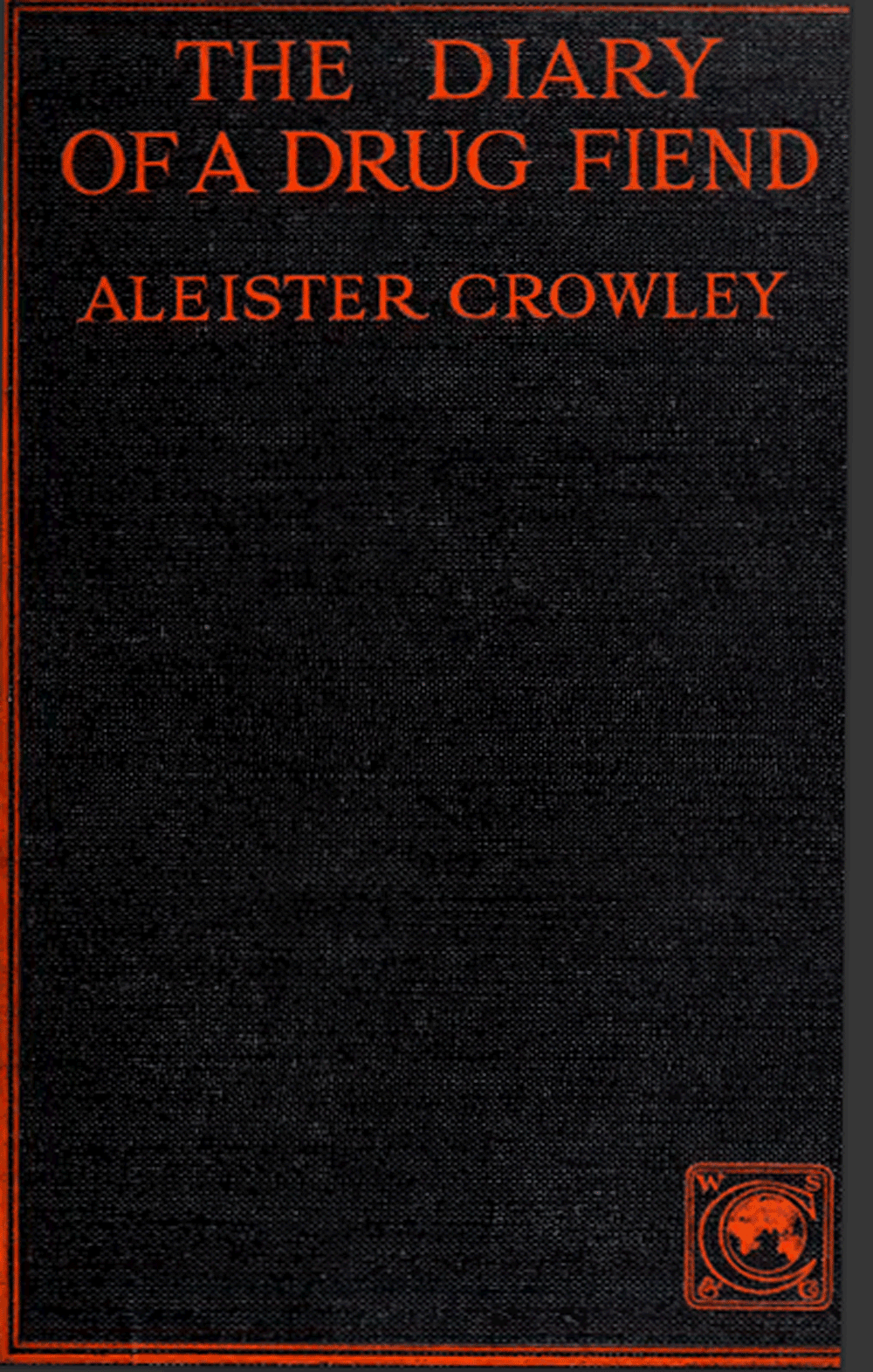
This is the only full-cast recording of Aleister Crowley's 1922 classic paeon to common sense. It is the first book -- and so far almost the only book -- to stake out a philosophy of drug use that is compatible with human freedom, one in which we learn to use drugs as wisely as possible for the benefit of humanity. This recording was produced by the Drug War Philosopher and your purchases help support his effort to push back against the tragically counterproductive policy of drug prohibition, in the name of human freedom and of humanity's right to heal.
No cookies, no ads paid for by amoral and immoral billionaires (or trillionaires).
Unless otherwise indicated, no AI is used in the creation of site content. These essays represent the original ideas of their author and not the ideas that the author SHOULD have based on an algorithmic parsing of existing data. For more on this subject, consider the AI-related viewpoints to which the author subscribes as delineated in the New York Times opinion piece entitled "What 370,000 College Essays Tell Us About A.I.’s Effects on Creativity" by Rebecca Winthrop of the Brookings Institution.












 (up)
(up)