




How Mad in America pundits ignore the role of drug prohibition in destroying the lives of the depressed
by Brian Ballard Quass, the Drug War Philosopher
April 15, 2026
APRIL 17 UPDATE
Predictable. Robert Whitaker had greenlighted my essay... only to change his mind after handing the essay off to one Peter Stone for editing. Who is Peter Stone? He just happens to be the author of the article that I criticized below on philosophical grounds. While it is very unlikely that Peter read my comments on this particular web page, he very likely read the original copy of these comments that I posted under his article on MIA.
After which.... Robert told me that he had decided that my essay didn't meet his organization's editorial standards after all. Of course, we all know to what editorial standard Robert is referring: the rule that you should never piss off the editor!
I guess what I'm saying is, you can ignore any rot you find below about my so-called "approved" essay. MIA is just another big one that got away.
Come to think of it, I even criticized an article by Robert himself below. But given my site's consistently shabby performance on Google Analytics, I find it impossible to believe that Robert visited my site in the first place, let alone honed in on the critical comments in question.
After having had my essay approved for publication by Mad in America1, the site and organization by Robert Whitaker2 that critiques the psychiatric pill mill, I decided to begin commenting on some of the existing articles in the organization's web zine. Just scanning the article titles, however, makes me wonder if Robert knew what he was getting himself into when he decided to give me a voice. I fear that the vast majority of the articles published there are written by authors who, like almost everybody else in America, pretend that the outlawing of hundreds of psychoactive drugs has nothing to do with the subject of psychiatry or human behavior. I am really going to have to mind my manners and be as polite as possible in raising my lonely voice in the comments section to such posts. How do you politely tell people that they are missing the biggest point and drawing conclusions based on faulty assumptions, in blithe ignorance of the ability of drugs to inspire and elate? It makes me wonder if my comments will actually be approved.
If not, I can at least publish those comments below for the sake of a more enlightened posterity.
ESSAY: "Are We Overlooking Homicidal Ideation in Psychiatry?" by Jordyn Tovey3
COMMENT: Thank you for your article. I have just two thoughts regarding issues that were not raised.
1) I know that in America, confidentiality can no longer be assumed to be operative in conversations with a “professional,” whether we’re talking about a conversation with a priest or a psychiatrist. This creates an uncertain climate for the “patient.” They will be less likely to be honest about their anger precisely to the extent that they “plan to do something about it.”
2) There are a class of drugs called entheogens, which includes MDMA. America has been too busy hating drugs to notice that such drugs help inspire compassion. In a sane world, surely we would be using entheogens in counseling sessions to help angry patients “feel” for their perceived enemies.
The use of Ecstasy (the street version of MDMA) in the British rave scene of the 1990s resulted in unprecedented peace on the dance floor. Unprecedented! But MPs cracked down on the drug, and dancers switched to alcohol, a drug that kills 178,000 a year in the US alone. After the crackdown, the dance floors erupted into violence, all “justified” by the fact that a few young people had died after using Ecstasy. Why? Because drug prohibition had denied them regulated product and information about safe use.
These are drugs that help people feel compassion! Surely, this is hugely relevant to the topic of counseling angry patients. Consider the following quotations from DJs in Britain, as they describe the peaceful 1990s rave scene that existed with the help of Ecstasy. The following quotes are from the 2020 documentary by Terry Stone entitled “United Nation: Three Decades of Drum & Bass.”
“It was the first time that black-and-white people had integrated on a level… and everybody was one.” — DJ Ray Keith.
“It was black and white, Asian, Chinese, all up in one building.” — DJ MC GQ.
“Everyone’s loving each other, man, they’re not hating.” – DJ Mampi Swift.
And MDMA is just one of endless phenethylamines that could exist in a free world. Chemist Alexander Shulgin had the rare freedom to synthesize hundreds of phenethylamines in the 1990s, resulting in user reports such as the following:
“The feeling was one of great camaraderie, and it was very easy to talk to people.”
“I was able to go through and resolve some judgments with particular persons.”
“No more axes to grind. I can be free.”
The depressed need more than exercise
A case in point is Robert's April 9th post entitled "Prescribe Exercise, Not Pills." Now, I have nothing against exercise, but one must have the motivation to exercise. That is what drugs can provide. It seems to me that Mad In America is recommending a Christian Science answer to the psychiatric pill mill. Agreed, Big Pharma is profiting from turning America into patients with dependence-causing pills that underperform, but we are told that we need to fight back by abjuring all drugs whatsoever. (Robert seems not to see that "meds" are different from drugs in this: that for "meds," dependence is a feature, whereas for all other drugs, dependence is a bug.) As someone who has been afflicted in the past by negative inner voices that make it hard even to breathe, I find Robert's views on this topic to be naive, to put it mildly. Yes, let's have exercise, by all means, and let's take vitamins and sleep well, but it takes the common-sense incentive provided by medicines to inspire the severely depressed to follow through on those expedients in the first place. I submit that such a view as Robert's can only be held by those who have not personally been affected by negative inner voices, certainly not to the degree that they neither write books nor create organizations. It seems, moreover, that Robert is simply unaware of the common-sense benefits of drugs.
Of course, our society (our universities, our broadcasters, etc.) cranks out millions of such individuals through media censorship and the fact that the government study of drugs is devoted only to downsides, not to the godsend upsides that depressed people like myself would die for, some of us literally so insofar as we are all but forced to commit suicide by the wholesale outlawing of all substances that inspire and elate.
If Robert sees this, I'm sure he will sever all ties with yours truly, but I have to be honest on this subject. That's all I've got. Honesty. I won't make money off my efforts and it seems I might not even be heard for decades. All that's left for me is to speak the absolute truth, the truth of an adult who has been turned into a ward of the healthcare state by drug prohibition -- and who feelingly rejects the idea that the answer to the psychiatric pill mill is to take the medical advice of Mary Baker Eddy.
Letter to my Discord followers (yes, I think there are at least two!):
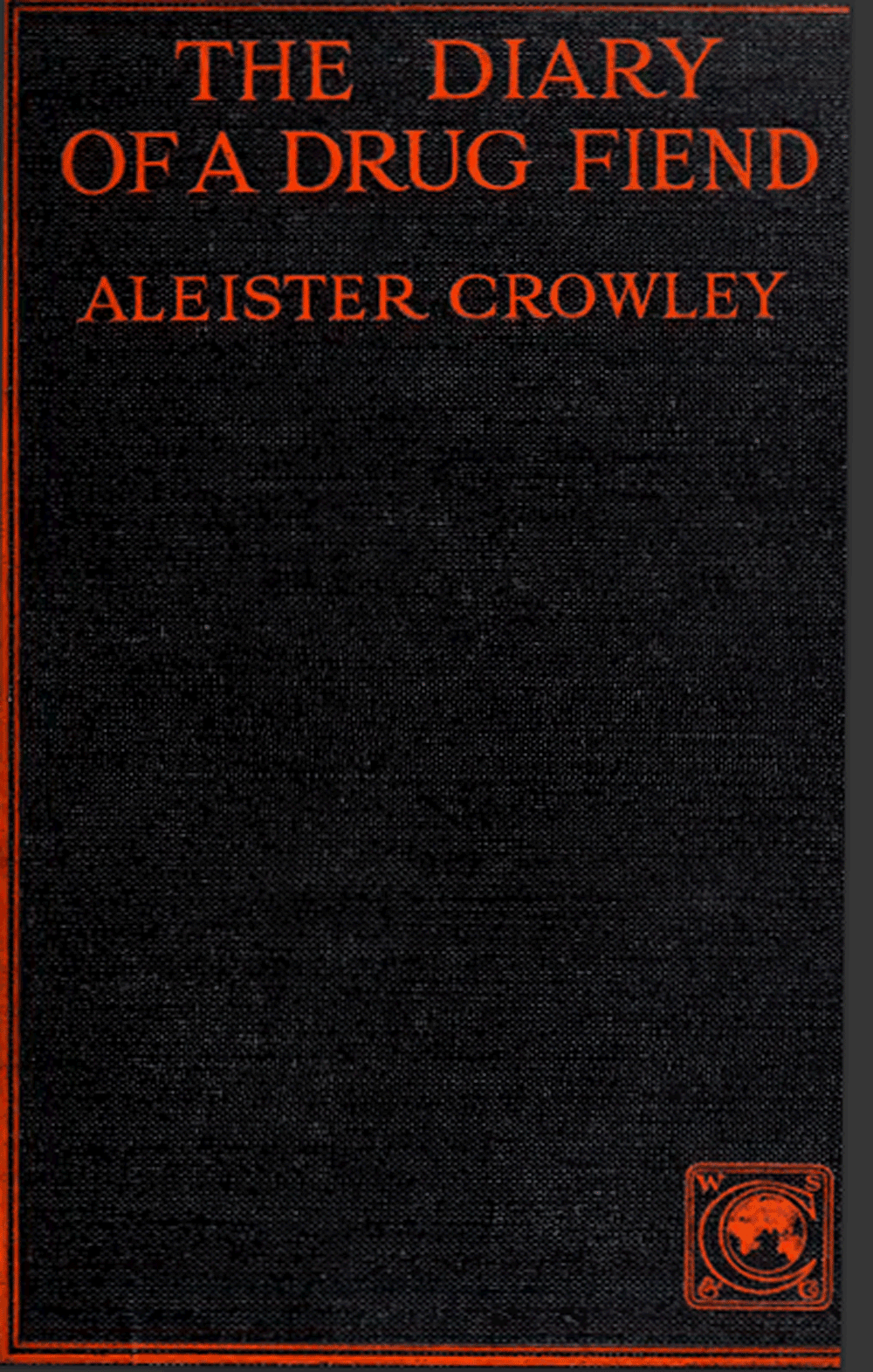
The good news: my essay on drugs and psychiatry is scheduled to appear on the Mad In America zine. Bad news: I expect to be kicked off the site or at least ignored eventually, probably sooner than later. Almost all the articles they post pretend that the answer to the psychiatric pill mill is to abstain from all drugs. Robert himself, organization founder, just published an essay entitled "Prescribe exercise, not pills." My response is, yes, but... By all means, let's dump dependence-causing meds upon which Big Pharma has been thriving at my expense, but let's not drop all substances because "meds" are being used as dependence-causing cash cows by amoral pharmaceutical execs. Crowley wrote the following about his first use of cocaine: "The depression lifted from my mind like the sun coming out of the clouds." That's the healing that I demand --- then maybe we can talk about exercising.
Final Word
Well, if Robert "drops me" immediately after picking me up, it will at least prove that some "movers and shakers" do occasionally read this page. The thing is, I just cannot deny the truth enough to sound diplomatic on these topics. I have lived this stuff my whole life: I've lived the downsides that our naive attitudes about drugs have brought about. But then maybe I am wrong. Maybe we should go down to Peru and tell the coca-chewing Inca that all they need is exercise. Maybe we should go back in time to the Indus Valley in 1500 BC and tell the Vedic people that they can pour out their goblets of Soma juice and exercise instead!
Of course, in Robert's defense, he never explicitly states that drugs could not be used effectively for the purposes that I have highlighted above. And yet absent an explicit declaration to this effect, it's tough to read his article title without recalling dozens of similar moralizing article titles in the past in the popular press, articles in which the depressed are conjured to "get high on sunshine" and to "do hugs, not drugs," and other such moralizing pablum from the drug-disparaging pens of the psychologically self-satisfied. It's as if the country had outlawed cars, and then when people complained, our most talented writers started cranking out articles about the benefits of walking and riding bikes. Yes, those two latter activities are fine, but let's not rewrite history so as to imply that we never needed cars or drugs in the first place.
Malcolm X sensed an important truth about drugs: the fact that it was always a self-interested category error for Americans to place medical doctors in charge of mind and mood medicine.
Democratic societies need to outlaw prohibition for many reasons, the first being the fact that prohibition removes millions of minorities from the voting rolls, thereby handing elections to fascists and insurrectionists.
If we encourage folks to use antidepressants daily, there is nothing wrong with them using heroin daily. A founder of Johns Hopkins used morphine daily and he not only survived, but he thrived.
The proof that psychedelics work has always been extant. We are hoodwinked by scientists who convince us that efficacy has not been "proven." This is materialist denial of the obvious.
The Drug War brought guns to the "hoods," thereby incentivizing violence in the name of enormous profits. Any site featuring victims of gun violence should therefore be rebranded as a site featuring victims of the drug war.
Saying "Fentanyl kills" is philosophically equivalent to saying "Fire bad!" Both statements are attempts to make us fear dangerous substances rather than to learn how to use them as safely as possible for human benefit.
A law proposed in Colorado in February 2024 would have criminalized positive talk about drugs online. What? The world is on the brink of nuclear war because of hate-driven politics, and I can be arrested for singing the praises of empathogens?
Freud had the right idea: He noticed that cocaine use actually ended depression in his patients. Unfortunately, he was ambitious and was more interested in making a name for himself than in pushing back against the statistically challenged fear mongering of prohibitionists.
America takes away the citizen's right to manage their own depression by making opium and cocaine illegal. Then psychiatrists treat the resulting epidemic of depression and anxiety by damaging the patient's brain with shock therapy.
We would never have even heard of Freud except for cocaine. How many geniuses is America stifling even as we speak thanks to the war on mind improving medicines?