




The more I learn about the positive effects of drugs, the more I am baffled by the American mindset toward them. If we looked at the vast psychoactive pharmacopeia that is potentially available to us without any presuppositions whatsoever, we would surely say something like the following:
"Here is the potential answer to every psychological shortcoming on earth! We need to find a way to harness the benefits of these substances for those who desire to use them (while, of course, respecting the rights of the many stealth Christian Scientists among us who are puritanically biased against the idea of using medicines to improve our minds and mood). We need to create a role in the west for a sort of pharmacologically savvy empath, someone whom one could consult for any psychological concern under the sun, with a view toward determining the best way to use available medicines to achieve desired results in the real world, advice that would be based on the goals of the user and informed by the empath's own drug experiences, their knowledge of historical drug usage and of best practices in a health-conscious drug-using community. In other words, real people would be the experts about drugs and not a disinterested Dr. Spock who assumes that drug efficacy is to be found in the ability of a substance to work in such a way as to flatter a theory of a biochemical determinist."
But the sad fact is that almost no Americans, and seemingly none in positions of power, are aware of the benefits of which I speak. That's because America censors all positive reports of drug use and relegates those accounts that do exist to seedy locations, to niche magazines and accounts written by radical writers. Of course this strategic sequestration of drug-friendly information is easy to do, given its relative scarcity in the age of the Drug War. For who but an iconoclast will dare to write tracts that will cause them to be subjected to the kind of scrutiny and criticism that could spoil their reputation with the mainstream and so render them more or less unemployable? For the most part, Americans who know better keep their mouths shut, knowing that it is just not considered American these days to maintain that there are positive uses for drugs.
It will be argued that psychedelics are being fast-tracked to some extent, even by the Trump administration, but this is surely because Trump envisions lucrative business practices to develop around the medicalization of such substances. Besides, this governmental promotion misses the whole point: that the President of the United States should not be in the business of deciding what psychoactive medicines may be valuable and which not.1 That is like electing the dumbest kid in the class to be leader of the Science Club. And even this analogy does not capture the full idiocy at work here, because we do not even need a Science Club to oversee our use of Mother Nature, especially when the club in question (in the form of the medical establishment) will be using that unholy monopoly to work with Big Pharma to put as many Americans on dependence-causing "meds" as possible. One in four American women now take a Big Pharma med every day of their life, and this in a country that claims to believe that drugs are bad, and never more so than when they cause dependency! This is why psychiatrists keep calling their prescriptions "meds" instead of "drugs," a kind of newspeak designed to keep the gullible public from noticing the hypocrisy of the status quo.
If pushed to respond to criticism, psychiatrists will claim that their "meds" ONLY cause dependency, while hated drugs cause addiction, but this is a distinction without a difference from the point of view of a user. If I quit Effexor cold turkey after long-term use, I may not go out and rob a pharmacy to get more pills, but I may just give up on life altogether, which is not an improvement over heroin from my own perspective. At least the thieving heroin addict is seeking to DO something about his or her situation, whereas I am just giving up. I guess the real benefit of being "only" dependent on antidepressants is that I won't locate the doctor during his weekend golf game and pester him for a refill on the putting green. Moreover, the term "addiction" is thrown about like candy in the anti-drug movement, with addiction being basically considered the regular use of a substance of which politicians disapprove.
A study in the 1980s showed that many regular heroin users managed to live normal lives, this despite the fact that the government was spending billions of dollars a year in an attempt to prevent them from doing so2. Imagine if we just let heroin users alone and let them use a regulated product with clean needles and so forth. There is absolutely no difference then between the daily use of opiates and the daily use of antidepressants, except that the former drug is often easier to kick and far less problematic from a philosophical point of view (about which I have written extensively in other essays). The difference is a political and ideological one. It exists because politicians do not like the kinds of lifestyles that they associate with such drug use, whereas they're comfortable with a "med" that helps keep people more or less satisfied with the status quo, or at least apathetic about changing it.
They are afraid of allowing human beings to have the freedom to control how they think and feel about the world around them, lest they should choose a mindset that renders them disinterested and even psychologically superior to the propaganda of advertisements that could otherwise help control their spending habits in favor of big business.
There is really only one valid concern about drug use, though, and that is unwanted dependency.3 (I do not include drug overdoses here, since they will eventually disappear, at least as a statistically relevant problem, in a world in which we regulate product as to identity and dosage and actually teach safe use.) Notice I did not say dependency by itself is a valid concern, but unwanted dependency. But this is a truth that the mainstream cannot fully embrace, because the healthcare industry is using unwanted dependency as a business strategy these days to ensure customers for decades to come. I certainly wouldn't be visiting a doctor 1/3rd my age every three months of my life if I had not been rendered dependent on Venlafaxine, a drug that the Mayo Clinic still flogs as a great treatment for depression on a page that does not even mention its enormous dependence-causing potential. In my view, all would-be users of the drug should be warned that they are probably signing up to be a lifetime "patient" if they use that drug for more than a few weeks. The lack of such a warning is completely immoral. And this brings us to more newspeak. When a heroin user takes their dose for the day, they are an addict seeking a fix. When a depressed American takes an antidepressant, they are a health-savvy person undergoing "maintenance therapy."
This is all self-interested nonsense and will only end when we completely change our attitude about drugs and see them in a new light, in a way that we would all agree on immediately if we were not misled by cultural biases, self-interest, and drug-war indoctrination, above all in the form of the censorship of almost all reports of beneficial drug use in the media.
AFTERWORD
I tried to perform research for this article, because I wanted to employ quotations that would make it clear that drugs do have benefits. But I was surprised to see that there is almost no website out there that unapologetically lists the glaringly obvious benefits of drug use, obvious at least to those who are willing to use psychological common sense rather than assuming that Dr. Spock in the chemistry department is the authority on mind and mood medicine. So I visited the ASK AI interface and typed in the following question:
There are many websites that talk about the downsides of drug use. Are there any sites that highlight the benefits of drug use?
I received no list of sites at all. Instead I got a somewhat pompous lecture on "The Complex Discourse on Psychoactive Substance Use." It was essentially a sort of apologetics for the willfully ignorant status quo.
So I checked out the footnotes, looking for likely sources of free talk about psychologically obvious benefits of drug use. But the list was unimpressive. It included the kinds of authors and pundits whom the hoi polloi might consider to be cutting edge on the topic, but whom a close examination of their positions shows them to be quite conservative relative to the bias-free attitude that I am recommending above. Andrew Weil was high on the list of footnotes, but he shows no sign of understanding the many psychologically obvious ways that drugs like opium and cocaine could help specific people with certain counterproductive behavioral predispositions to thrive in life. Michael Pollan was also near the top of the list, but Michael still champions drug prohibition, although he hid that fact on page 405 of his supposedly cutting-edge book entitled "How to Change Your Mind." There were a couple of promising-sounding papers from authoritative-sounding journals, but they were hidden behind academic paywalls, and then there were the books about harm reduction -- but absolutely no books about benefit PROduction.
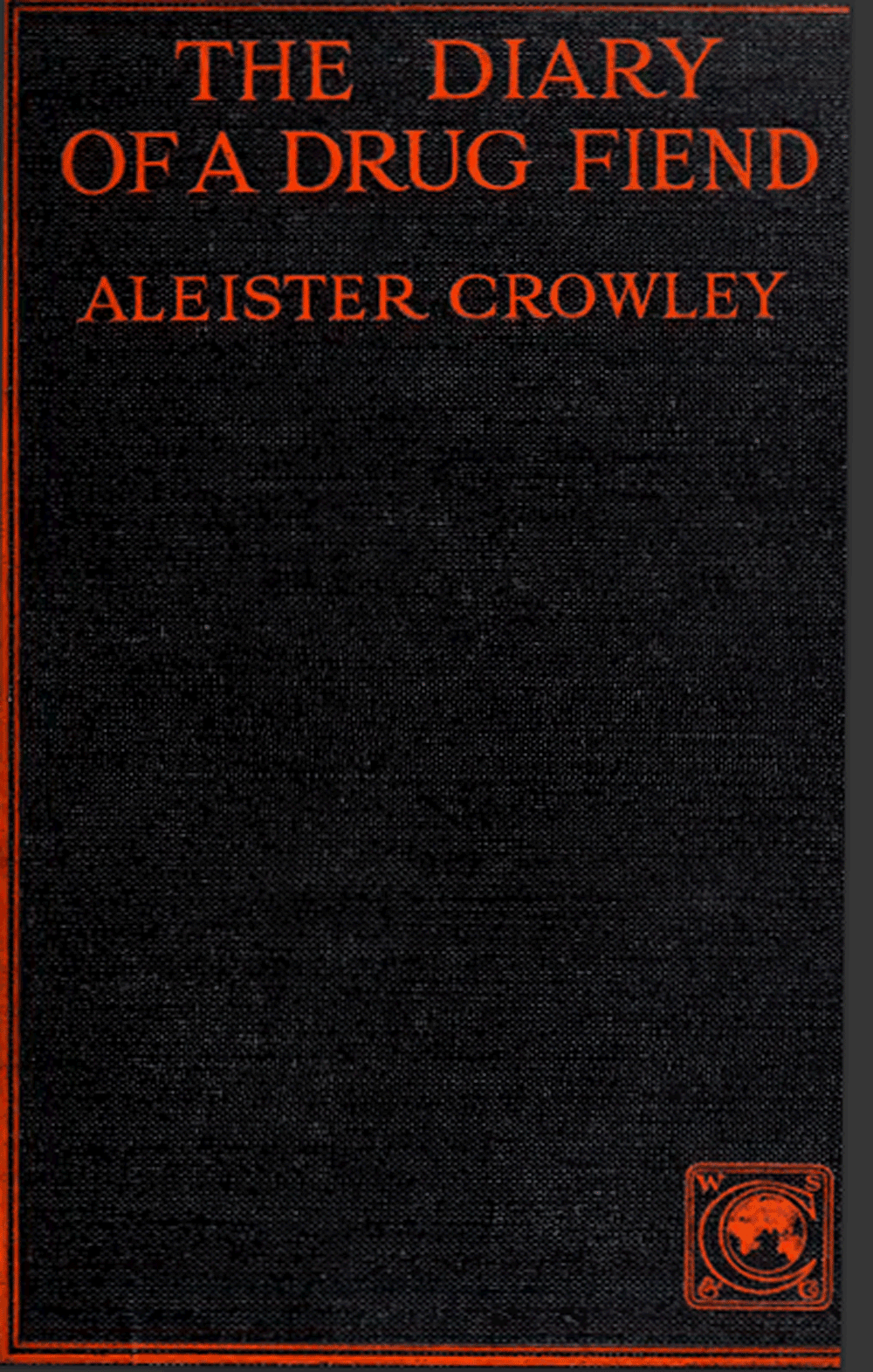
Well, if you want something done, you've got to do it yourself. It looks like I myself am going to have to create the page that I was looking for, one that points out good uses for hated substances. The relevant quotations may be few and far between thanks to Drug War censorship and an ongoing effort to gaslight us about obvious godsends, but they are out there, nonetheless, in the works of Aleister Crowley, in the user reports of Alexander Shulgin, in the anesthetic revelations of William James, in the dogmatically ignored writings of Sigmund Freud, in the histories of a variety of Latin American countries, and even in the ancient scriptures collectively referred to as the Vedas, upon which Brahmanism, Hinduism, Buddhism and Jainism were all based. Speaking of which latter source, I will close with a single line from the Vedas in praise of the psychoactive Soma juice, presented here as a sort of "teaser" for the drug-friendly quotation page yet to come.
We have drunk Soma and become immortal; we have attained the light the Gods discovered.
These are the kinds of potential drug benefits that Americans are withholding from the depressed around the world, and it is nothing less than a crime against humanity for us to do so. Sure, the average user will need guidance to achieve maximum benefits from drugs given their specific situation, hence my call above to replace psychiatrists with pharmacologically savvy empaths. But imagine the massive benefits that will accrue to society when we start prioritizing education and best-use practices over fearmongering and incarceration. In such a world, we would say goodbye to drive-by shootings, goodbye to the massive incarceration of minorities, goodbye to the totally unnecessary drug overdoses of young people, and "hello and welcome back" to the rule of law in Latin America... and that's just for starters!
Key Takeaways:
America needs a pharmacologically savvy empath, who gives advice about wise drug use based on actual user reports.
It is not considered American to say that there are beneficial uses for drugs.
1 in 4 American women take a Big Pharma drug every day of their life, this in a country that claims to hate drugs.
The difference between dependence and addiction is a distinction without a difference from the point of view of the depressed.
The difference between daily use of opium and daily use of Big Pharma drugs is political and philosophical.
Unwanted dependency is the main threat of drug use, but creating unwanted dependency is the business M.O. of Big Pharma and psychiatry.
There are almost no websites that unapologetically cite the obvious benefits of drug use, while there are endless pages that cite the potential downsides of use.
Almost no Americans understand (or at least CLAIM to understand) the obvious psychological benefits of drug use.
Benefit production is just as important as harm reduction.
It is a crime against humanity to keep the depressed from using natural medicines whose use has inspired entire religions.
Notes:
1: Indeed, no one should be placed in that position, period, full stop. All psychoactive drugs should be considered as potential godsends, at some dose, and/or in some combination, for some person, in some situation, etc. (up) 2: Drug Warriors and Their Prey: From Police Power to Police State Miller, Richard Lawrence, 1996 (up) 3: Of course, there will always be pathological and masochistic cases that raise concerns about the willful employment of inherently toxic substances like turpentine, but I am writing here of the great mass of users who may be supposed to have a basic interest in the preservation of their own health.
(up)
AI is like almost every subject under the sun: it takes on a very different and ominous meaning when we view it in light of the modern world's unprecedented wholesale outlawing of psychoactive medicine.
It's funny to hear fans of sacred plants indignantly insisting that their meds are not "drugs." They're right in a way, but actually NO substances are "drugs." Calling substances "drugs" is like referring to striking workers as "scabs." It's biased terminology.
Before anyone receives shock therapy -- or the right to assisted suicide -- they should have the option to start using opium or cocaine daily -- in fact, any drug that makes them feel that life is worth living again.
Materialist scientists are drug war collaborators. They are more than happy to have their fight against idealism rigged by drug law, which outlaws precisely those substances whose use serves to cast their materialism into question.
Freud thought cocaine was a great antidepressant. His contemporaries demonized the drug by focusing only on the rare misusers. That's like judging alcohol by focusing on alcoholics.
The UN of today is in an odd position regarding drugs: they want to praise indigenous societies while yet outlawing the drugs that helped create them.
If MAPS wants to make progress with MDMA they should start "calling out" the FDA for judging holistic medicines by materialist standards, which means ignoring all glaringly obvious benefits.
There are endless creative ways to ward off addiction if all psychoactive medicines were at our disposal. The use of the drugs synthesized by Alexander Shulgin could combat the psychological downsides of withdrawal by providing strategic "as-needed" relief.
As such, "we" are important. The sun is just a chaos of particles that "we" have selected out of the rest of the raw data and declared "This we shall call the sun!" "We" make this universe. Consciousness is fundamental.
Proof that materialism is wrong is "in the pudding." It is why scientists are not calling for the use of laughing gas and MDMA by the suicidal. Because they refuse to recognize anything that's obvious. They want their cures to be demonstrated under a microscope.