








Good afternoon, Samuel.
I have just read your wonderful paper entitled "Entheogens and Sacred Psychology." It is one of the few papers about "drugs" in which I find nothing to gainsay. However, it has inspired me to make a series of observations based on my own experience with these topics. As I believe I have mentioned, I am a 65-year-old chronic depressive and I have just traveled to Peru in order to learn about psychedelic plant medicine, aka master plants or plant teachers, from a philosophical and psychological point of view. I had hoped to use some of those medicines as well (particularly the huachuma cactus) to gain some of the routinely acknowledged benefits of that drug (a feeling of love and oneness with humanity), thinking I could eventually find therein the motivational mindset needed to break my lifelong dependence on Big Pharma meds (the kind upon which one and four American women are dependent for life). But I have been forced to delay the experience until an upcoming trip to Peru in June.
I will not give you a blow-by-blow account of the obstacles that I encountered in my attempts to use huachuma on my first trip to South America, but those experiences, frustrating as they were, highlighted some interesting issues yet to be explored about the fusion of psychoactive drugs and the western mindset, such as: "Should I feel guilty about trying to 'score' huachuma powder in Cusco in order to create a drinkable concoction of the San Pedro cactus by myself and for my own psychological, religious, philosophical and spiritual purposes?" I certainly felt rather low as I was slinking around Cusco, in my unexpectedly difficult quest to find the drug (coca leaves, on the other hand, were prominently available in every other street stall) though maybe that's a good thing: maybe shaman should be the gatekeepers of substances like huachuma cactus. That said, I am not sure how that situation would jibe with the western ideal of free academic inquiry, to have all my psychedelic experiences mediated through the rites and ceremonies of a religious tradition of which I am largely ignorant, especially when that religion is itself being mediated in many cases merely through the informed imaginations of well-meaning outsiders with respect to those shamanic traditions of the Inca that were so ruthlessly suppressed by the Spanish in colonial times.
After all, William James himself exhorted us as philosophers to study altered states2. For me, that would mean systemically using the substance under various circumstances, at various doses, at various times, in various situations and environments, in order to see what can and perhaps cannot be learned and/or felt thanks to such use. So the idea that I must necessarily associate a drug and its effects with Andean rituals seems problematic to me, it seems to me a bit of a "science stopper," even though I personally love what I'm learning about the Andean Cosmovision and the religious culture of the Inca. It is true, as I think you say, that westerners really do not have a religious tradition that they can "bring" to such drugs, but I would also point out that the DEA is doing everything it can to keep this from happening. If one wants to have their religion outlawed in America, all they need do is announce that the use of a drug like huachuma is part of their religious rites. The DEA will hound that church to the Supreme Court if necessary to prevent sacred usage. Even if the DEA fails in court, they will subsequently bind the church in question with such bureaucratic red tape and expensive "safety" requirements as to effectively nullify the victory thus obtained.
Thanks again for the fascinating paper. If you find time, I invite you to read below some further thoughts that occurred to me while reading it.
Sincerely Yours
"The evolution of modern medicine gave us our current, bifurcated view of drugs: the good ones that treat illness and the bad ones that people use to change their minds and moods." --Jacob Sullum, from Saying Yes: In Defense of Drug Use, p. 25117
The Drug Warriors say: "Don't tread on me! (That said, please continue to tell me what plants I can use, how much pain relief I can get, and whether my religion is true or not.)"
We should hold the DEA criminally responsible for withholding spirit-lifting drugs from the depressed. Responsible for what, you ask? For suicides and lobotomies, for starters.
A law proposed in Colorado in February 2024 would have criminalized positive talk about drugs online. What? The world is on the brink of nuclear war because of hate-driven politics, and I can be arrested for singing the praises of empathogens?
In the 19th century, poets got together to use opium "in a series of magnificent quarterly carouses" (as per author Richard Middleton). When we outlaw drugs, we outlaw free expression.
Had we really wanted to "help" users, we would have used the endless godsends of Mother Nature and related synthetics to provide spirit-lifting alternatives to problem use. But no one wanted to treat users as normal humans. They wanted to pathologize and moralize their use.
Even if the FDA approved MDMA today, it would only be available for folks specifically pronounced to have PTSD by materialist doctors, as if all other emotional issues are different problems and have to be studied separately. That's just ideological foot-dragging.
If you're looking for an anti-Christ, just look for an American presidential politician who has taught us to hate our enemies. Gee, now, who could that be, huh? According to Trump, Jesus was just a chump. Winning comes before anything at all in his sick view of life.
Harm Reduction is not enough. We need Benefit Production as well. The autistic should be able to use compassion-enhancing drugs; dementia patients should be able to use drugs that speed up and sharpen mental processes.
The drug war normalizes the disdainful and self-righteous attitude that Columbus and Pizarro had about drug use in the New World.
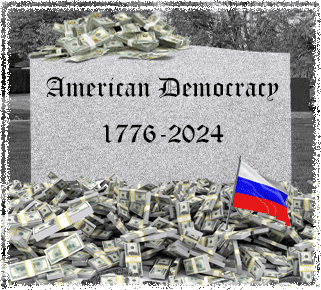
The Partnership for a Death Free America is launching a campaign to celebrate the 50th year of Richard Nixon's War on Drugs. We need to give credit where credit's due for the mass arrest of minorities, the inner city gun violence and the civil wars that it's generated overseas.


 (up)
(up)