Sigmund Freud's real breakthrough was not psychoanalysis
It was his discovery that cocaine could be used as an antidepressant
by Brian Ballard Quass, the Drug War Philosopher
August 12, 2025
The hypocritical and statistically challenged nature of the prohibitionist mindset is revealed when we consider the western world's illogical reaction to Sigmund Freud's work with cocaine. All the evidence that Freud adduced about that drug clearly indicated that cocaine has obvious godsend uses for many people who suffer from depression and self-doubt. Quoth Freud:
"The psychic effect of cocainum muriaticum in doses of 0.05-0.10 grams consists in a general raising of the spirits and constant euphoria, which differs in no way from the normal euphoria of healthy human beings.... One feels an increase in self-control, and feels revitalised and better able to work...."
These are godsend benefits! at least for those of us who suffer from chronic depression and/or who are stymied in life by the self-defeating voices of a pathological sobriety.
And yet the west's big takeaway from Freud's work with coca is that the drug is pure evil and must not be used by anybody for any reason, ever. And why not? Merely because a small proportion of users could become addicted to the drug -- and this in a world in which 1 in 4 American women are dependent on Big Pharma meds for life1 -- and we call them "good patients" for being so!
Here we see the statistically challenged pathology of the prohibitionist mindset at work. The prohibitionists feel free to outlaw a drug for everybody merely because it can be misused by a certain demographic. These prohibitionists are happy to throw all other stakeholders -- like myself -- under the bus, all so that their own white children can presumably be saved from evil cocaine -- saved, that is, by sacrificing minorities to gunfire and by turning minority communities into "no-go-zones," which is the result of drug prohibition, just as surely as liquor prohibition first brought machine-gun-fire to American streets and created the American Mafia as we know it today.
To put this another way, prohibitionists are basically decreeing that sad sacks like myself must suffer for a lifetime without help -- merely so that we can safeguard the pharmacological virginity of those young people whom we refuse on principle to educate about drugs. And what principle is that? Answer: the paleolithic idea that a drug whose use can be problematic for a white young person when used at one dose for one reason, must not be used by anybody at any dose for any reason. This is the resurrection of the "Fire bad!" mindset of caveman times. This same mindset, of course, also ignores the needs of demographics other than the depressed, like those who are in pain or who could use cocaine to help them tolerate the downsides of tapering off Big Pharma 23 's highly dependence-causing pharmacopoeia. That latter use of cocaine 4 is just a matter of common sense, by the way -- and yet Americans are so bamboozled by Drug War biases that I am the only one I know to even make that heretical statement!
But then these are the kinds of statements that most websites refuse to publish these days, on the grounds that speaking positively about drugs is the same as giving medical advice. Funny, though: I could sing the praises of relaxing with "a cold one" after a tough day at work, and no one will accuse me of giving medical advice. The real taboo here is not against giving medical advice, but rather against saying anything positive about the substances that we have been taught to hate since grade school, when we were first indoctrinated in the tenets of the drug-hating religion of Christian Science.
The fact is that cocaine is neither a panacea nor a scourge. In fact, no psychoactive drug is either a panacea or a scourge. All psychoactive drugs have potential positive uses for some people, at some doses, when used for some reasons, alone or in combination. And yet our western scientists have given themselves the fool's errand of determining whether cocaine is good or evil, ignorant of the fact that no substances are good or evil in and of themselves, without regard for how they are used. This is the whole problem with the prohibitionist mentality: our failure to envision all the stakeholders in the drug criminalization debate, our lopsided focus on the well-being of young people whom we refuse to educate about safe use and about drugs in general.
When we judge (or rather demonize) drugs in this way, we are judging far more than drugs. If we say, for instance, that cocaine should be illegal, we are tacitly also pronouncing on the importance of having a focused and cheerful mindset, on the propriety of living life like Sherlock Holmes or Robin Williams. We are saying, in effect, that such ways of "being in the world" are not as important as 100% safety. We are saying, to be specific, that solving my depression is not as important as 100% safety for all parties who are even remotely concerned. This is easy for scientists and moralists to say, because they have no skin in this game. They are like a landlubber calling for the outlawing of boat racing. They therefore feel free to run roughshod over the rights to godsend healthcare for the depressed. Unfortunately, I seem to be the only depressed person in the world who recognizes this fact, however, this failure on the part of the mainstream to honor me as a stakeholder in the drug legislation game. Otherwise, every self-help group for the depressed would be demanding the end of this drug prohibition which refuses to consider the depressed as stakeholders in our government's drug-related policy decisions. And yet almost all such groups have been bamboozled into viewing drugs as a problem, not as an answer.
This is why Freudian theory "puts me off," because I am looking for real practical answers right now, not for Freud's hypothetical reasons why human beings need such psychological help in the first place. That's a fascinating subject, no doubt, but it has nothing to do with the price of tea in China, so to speak. It bothers me to see our western intellectuals swooning over the verbose theories of Freud, theories which cure nobody -- or at least cure them very slowly -- while these same pundits completely ignore Freud's attempts to treat depression in real-time with something which, for most depressed people, REALLY WORKS: namely, the wise use of cocaine. Take French philosopher Merleau-Ponty5, for instance. He says plenty of no-doubt profound things about Freudian theory, but never even points out the inconvenient truth that Freud solved his own problems, not with psychoanalysis, but with the real politik of cocaine -- a fact which naturally leads me to ask indignantly: "Why is no one championing MY right to such positive healthcare results as well?"
Part of the answer is that we westerners are more comfortable with talking about deep emotions than we are with experiencing them. The Native-American activist Quanah Parker was alluding to this priggish bias of westerners when he observed that:
"The White Man goes into his church house and talks about Jesus, but the Indian goes into his tipi and talks to Jesus."
We might paraphrase Parker's observation as follows:
"The westerner goes into their local library and reads self-help books about feeling great; the free individual uses the world's many godsend medicines to actually feel great."
The irony is that Freud would not be a household name today were it not for his prolific output, which was made possible by his own liberal use of... you guessed it... cocaine!
Unfortunately, I am in a low mood today -- one of those moods that could have been so wonderfully ameliorated with the help of cocaine -- and so I fear I am having trouble making my point. This is partly because these issues are so fraught, of course. The logically challenged attitudes that I am attempting to address in this essay cannot be corrected merely by repealing a few laws: it will require a whole new philosophy of drug use -- and of life itself -- on the part of western society in order to make the western world safe again for godsend medicines. That is why I created a philosophical website about drugs in the first place, rather than a website about drug facts or drug statistics: because our drug policies spring from basic assumptions about the world around us -- from which it follows that our misguided assumptions must be identified and refuted if we are ever to stop our ignorant scapegoating of time-honored medicines.
To learn more, please read any of the hundreds of philosophical essays that I have published over the last six years on these very topics.
But before you do so, please read the following two spoiler alerts:
1) A sane world will be one in which the west adopts an holistic weltanschauung along the lines of the Cosmovision of the Andes6.
2) We will know that we have finally made our peace with drugs in the west when we begin thinking of drug-related deaths in the same way that we now think of car-related deaths or alcohol-related deaths: as tragedies, to be sure, but not as knock-down arguments in favor of outlawing either drugs, cars or alcohol!
"My impression has been that the use of cocaine over a long time can bring about lasting improvement..." --Sigmund Freud, On Cocaine, 1884
Author's Follow-up:
August 12, 2025
But let's not get carried away in praising Freud as a visionary who was ahead of his time. Yes, Freud noticed that cocaine could help the depressed -- but he failed to grasp the overarching insight implied by that observation: namely, that ANY drug has potential use as an antidepressant, provided only that it inspires and elates: ANY drug, including opium , LSD, phenethylamines, beta-carbolines, coca, laughing gas 7 , etc. Freud came very close to grasping this truth about the potential therapeutic nature of all psychoactive drug use: he recognized that the benefits of cocaine to increase work output were directly linked to the euphoria that the drug produced, and not based solely on some hidden chemical action from which that euphoria could be extracted by passion-scorning chemists on behalf of the materialist-minded pharmaceutical companies for whom they work.
Had Freud fully grasped this larger point -- that inspiration and happiness help and that therefore ALL drugs have potential therapeutic value -- he would not have gone on to focus his efforts on a hypothetical and highly speculative way of treating psychological problems -- namely, his glacially proceeding psychoanalysis. He would have thought more about his patients' immediate needs for help and less about the glory to be obtained by turning the pressing problems of his patients into mythological morality tales about which philosophers could henceforth speculate at will -- whilst the real-world protagonists in these stories continued to suffer unnecessarily.
In reading Freud's personal letters to his wife Martha8, it is clear that Freud's number one goal in life was "making it" in the world; he was not prepared to spend his whole life on an uphill battle to change the western world's intoxiphobic attitude toward drugs, no matter how much such a change would produce positive patient results in the real world. This is why he focused on psychoanalysis after he began getting pushback on his support of cocaine use -- pushback from the Drug Warriors of his time who were determined to judge cocaine negatively by focusing lopsidedly on its statistically rare misuse. Freud was not going to waste time beating a dead horse like cocaine in his efforts to rise to the top. Unfortunately, however, the psychoanalysis upon which he finally focused his ambitious efforts was basically a project for inspiring metaphysical speculation about the ontological sources of human motivation, NOT a protocol for actually helping people in the real world. The enormous though typically unspoken assumption of this new "science" was that a "cure" would follow naturally once a patient understood the supposed real (i.e., psychoanalytic) origins of their problems -- and yet this assumption has always been demonstrably false. This is, in fact, what I call the "self-help fallacy": the idea that we can change how people feel merely by talking to them -- through "words, words, words" -- without giving them any experiential knowledge of the desired mental states that we are attempting to evoke through the use of our starkly limited human language.
This reminds me once again of that observation by Quanah Parker:
"The White Man goes into his church house and talks about Jesus, but the Indian goes into his tipi and talks to Jesus." 9
Once again, we can tellingly paraphrase Parker's statement as follows:
"The White Man goes to an expensive psychoanalyst to find out WHY he feels lousy -- the Native American uses Mother Nature's medicines so that he no longer feels lousy."
It is time for the cocaine-savvy Freuds of the world to collaborate with the Alexander Shulgins of the world to begin trialing all SORTS of mind and mood medicines for their ability to help specific demographics in specific circumstances. Shulgin had the right idea, after all, when he focused on the user reports of actual laypeople. Unfortunately, the American chemist seems to have considered the testimony of such users as merely one input in determining what drugs might help the depressed. He felt that any true antidepressant had to be a one-size-fits-all pill that will affect different people in more or less identical ways. This approach was certainly in Shulgin's financial interests given his work for pharmaceutical companies. However, had Shulgin risen above his own self-interest, he would have seen that the testimony of the drug users is EVERYTHING. We need to trust them to tell us what works for THEM -- and in which particular circumstances it works. In other words, we have to embrace all the unique variables of drug use that the Drug Warrior completely ignores! Only in this way can we find out what works for whom and under which circumstances.
We need to amass a vast database of user reports a la Alexander Shulgin concerning the benefits and shortcomings of all drugs, as used by specific demographics in specific circumstances. As that database grows, it will become increasingly easy for a 'patient' who is suffering from psychological issues to choose a drug use pattern that makes sense for them. He or she would be able to choose the drug based on the successful drug-use experiences of people just like him or her -- rather than asking a materialist doctor to prescribe drugs based on the idea that the pill taker is a biochemical widget amenable to a one-size-fits-all cure for whatever ails them. It is time for materialist doctors to step aside and finally acknowledge the real experts in assessing the efficacy of psychoactive drug use: namely, the drug users themselves!
Please note that I am not dismissing psychoanalytic theory out of hand: I am merely pointing out that the psychoanalytic approach to patient narratives is not even a remotely productive therapeutic approach -- not when we compare its time-taking outcomes to the use of drugs that actually WORK in real-time for the sufferer. This is not to say that it has no philosophical value, however. Psychoanalytic theory certainly has value as a productive hypothesis -- an hypothesis productive of fascinating philosophical speculation. French philosopher Merleau-Ponty10, for instance, has taken psychoanalytic assumptions as a starting point for explaining the 20th-century attitude toward body and sex, which, as he points out, were so different to the body-scorning weltanschauung of the Victorian Era that preceded it. But going to see a psychoanalyst to improve one's mood is like going to see a philosopher to remove the rust from one's car. The philosopher will explain to you why the car is rusty and might even give you a long list of factors that increase oxidization in certain metals -- but what the customers really need in this case is some fast body work to remove the rust from their car -- not just a theory-based explanation of WHY their car was rusty in the first place!
As I wrote just this morning in an email to a rare friend of mine who actually sees through drug-war claptrap:
Freud had the right idea: He noticed that cocaine use actually ended depression in his patients. Unfortunately, he was ambitious and was more interested in making a name for himself than in pushing back against the statistically challenged fear mongering of prohibitionists.
Author's Follow-up:
September 13, 2025
The outlawing of drugs like coca and opium 11 is the outlawing of our right to take care of our own health. This is what comes about in a capitalist society where people demand to make money on illnesses and indispositions rather than letting people solve their own problems with time-honored panaceas.
There's a run of addiction movies out there, like "Craving!" wherein they actually personify addiction as a screaming skeleton. Funny, drug warriors never call for a Manhattan Project to end addiction. Addiction is their golden goose.
It is folly to put bureaucrats in charge of second-guessing drug prescriptions: what such bureaucrats are really doing is second-guessing the various philosophies of life which are presupposed by the way we use psychoactive drugs.
The massive use of plea deals lets prosecutors threaten drug suspects into giving up their rights to a fair trial.
All of our problems with opioids and opiates could have been avoided had the busybody Chicken Littles in America left well enough alone and let folks continue to smoke regulated opium peaceably in their own homes.
I've found that almost no one in the medical establishment has a clue about the endless positive uses that there would be for drugs in a world in which we decided to use them as wisely as possible for human benefit.
Opium could be a godsend for talk therapy. It can help the user step outside themselves and view their problems from novel viewpoints.
High suicide rates? What a poser! Gee, I wonder if it has anything to do with the fact that the US has outlawed all substances that elate and inspire???
Drug Warriors will publicize all sorts of drug use -- but they will never publicize sane and positive drug use. Drug Warrior dogma holds that such use is impossible -- and, indeed, the drug war does all it can to turn that prejudice into a self-fulfilling prophecy.
I'm told antidepressant withdrawal is fine because it doesn't cause cravings. Why is it better to feel like hell than to have a craving? In any case, cravings are caused by prohibition. A sane world could also end cravings with the help of other drugs.
The media called out Trump for fearmongering about immigrants, but the media engages in fearmongering when it comes to drugs. The latest TV plot line: "white teenage girl forced to use fentanyl!" America loves to feel morally superior about "drugs."
Unless otherwise indicated, no AI is used in the creation of site content. These essays represent the original ideas of their author and not the ideas that the author SHOULD have based on an algorithmic parsing of existing data. For more on this subject, consider the AI-related viewpoints to which the author subscribes as delineated in the New York Times opinion piece entitled "What 370,000 College Essays Tell Us About A.I.’s Effects on Creativity" by Rebecca Winthrop of the Brookings Institution.










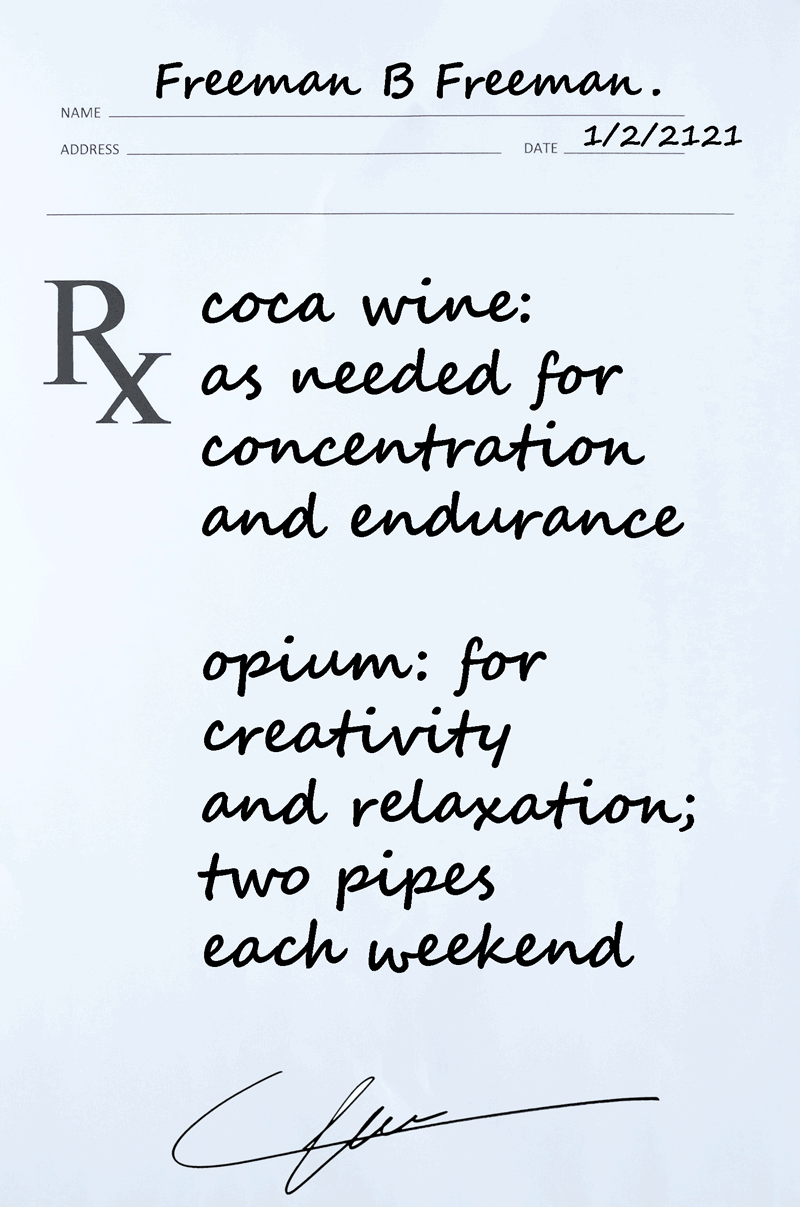 When we judge (or rather demonize) drugs in this way, we are judging far more than drugs. If we say, for instance, that cocaine should be illegal, we are tacitly also pronouncing on the importance of having a focused and cheerful mindset, on the propriety of living life like Sherlock Holmes or Robin Williams. We are saying, in effect, that such ways of "being in the world" are not as important as 100% safety. We are saying, to be specific, that solving my depression is not as important as 100% safety for all parties who are even remotely concerned. This is easy for scientists and moralists to say, because they have no skin in this game. They are like a landlubber calling for the outlawing of boat racing. They therefore feel free to run roughshod over the rights to godsend healthcare for the depressed. Unfortunately, I seem to be the only depressed person in the world who recognizes this fact, however, this failure on the part of the mainstream to honor me as a stakeholder in the drug legislation game. Otherwise, every self-help group for the depressed would be demanding the end of this drug prohibition which refuses to consider the depressed as stakeholders in our government's drug-related policy decisions. And yet almost all such groups have been bamboozled into viewing drugs as a problem, not as an answer.
  We might paraphrase Parker's observation as follows:
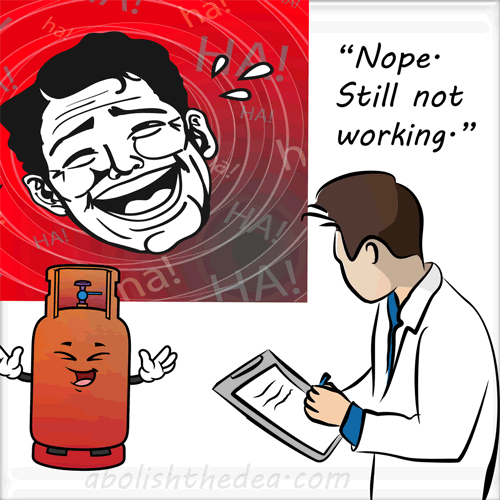 Unfortunately, the American chemist seems to have considered the testimony of such users as merely one input in determining what drugs might help the depressed. He felt that any true antidepressant had to be a one-size-fits-all pill that will affect different people in more or less identical ways. This approach was certainly in Shulgin's financial interests given his work for pharmaceutical companies. However, had Shulgin risen above his own self-interest, he would have seen that the testimony of the drug users is EVERYTHING. We need to trust them to tell us what works for THEM -- and in which particular circumstances it works. In other words, we have to embrace all the unique variables of drug use that the Drug Warrior completely ignores! Only in this way can we find out what works for whom and under which circumstances.
 (up)
(up)