








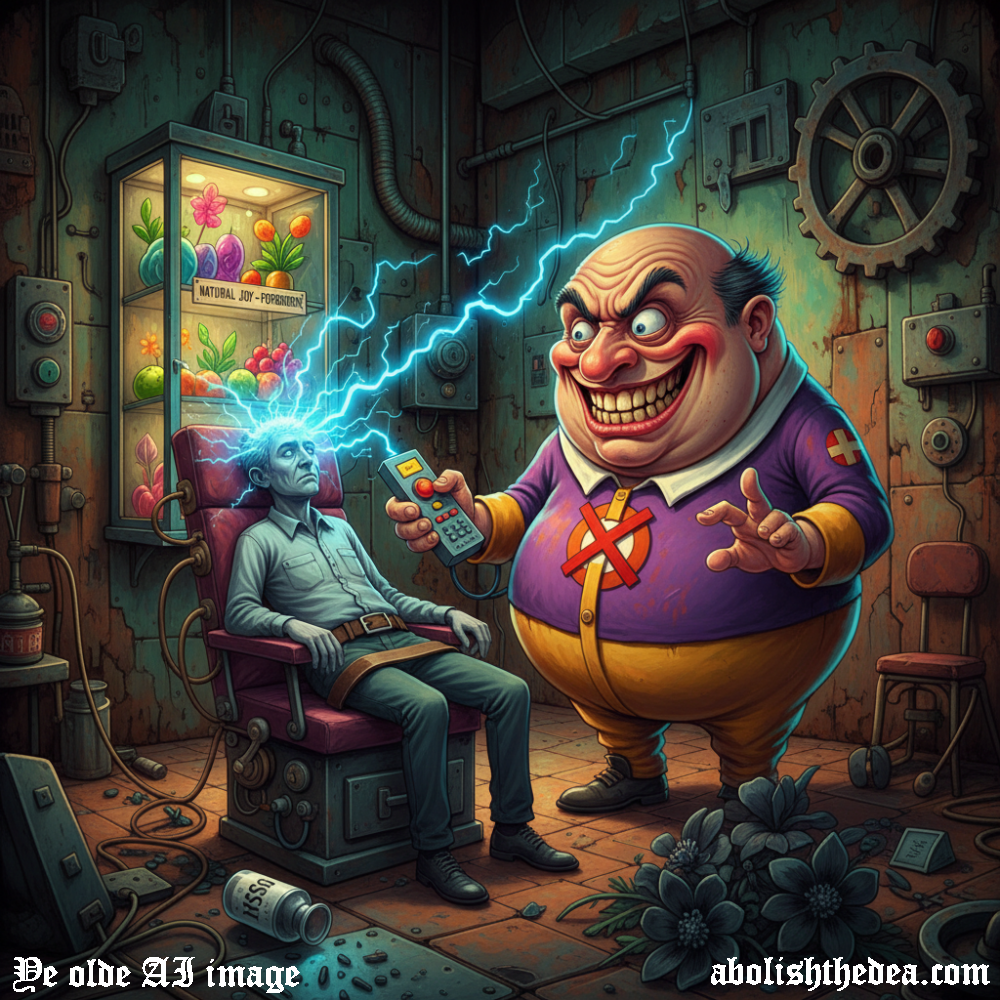
 The following comments are written in response to an article on the Mad in America website entitled "Which Would You Prefer: Electroshock or a Safe Taper?" by Jennifer Giordano. 1
The press is having a field day with the Matthew Perry story. They love to have a nice occasion to demonize drugs. I wonder how many decades must pass before they realize that people are killed by ignorance and a corrupted drug supply, not by the drugs themselves.
People say shrooms should not be used by those with a history of "mental illness." But that's one of the greatest potential benefits of shrooms! (They cured Stamets' teenage stuttering.) Some folks place safety first, but if I did that, I'd die long before using mother nature.
I've been told by many that I should have seen "my doctor" before withdrawing from Effexor. But, A) My doctor got me hooked on the junk in the first place, and, B) That doctor completely ignores the OBVIOUS benefits of indigenous meds and focuses only on theoretical downsides.
Before anyone receives shock therapy -- or the right to assisted suicide -- they should have the option to start using opium or cocaine daily -- in fact, any drug that makes them feel that life is worth living again.
I knew all along that Measure 110 in Oregon was going to be blamed for the problems that the drug war causes. Drug warriors never take responsibility, despite all the blood that they have on their hands.
Someone should stand outside Jefferson's estate and hand out leaflets describing the DEA's 1987 raid on Monticello to confiscate poppy plants. That raid was against everything Jefferson stood for. The TJ Foundation DISHONORED JEFFERSON and their visitors should know that!
The Shipiba have learned to heal human beings physically, psychologically and spiritually with what they call "onanyati," plant allies and guides, such as Bobinsana, which "envelops seekers in a cocoon of love." You know: what the DEA would call "junk."
Why does no one talk about empathogens for preventing atrocities? Because they'd rather hate drugs than use them for the benefit of humanity. They don't want to solve problems, they prefer hatred.
The Hindu religion was created thanks to the use of a drug that inspired and elated. It is therefore a crime against religious liberty to outlaw substances that inspire and elate.
If you're looking for an anti-Christ, just look for an American presidential politician who has taught us to hate our enemies. Gee, now, who could that be, huh? According to Trump, Jesus was just a chump. Winning comes before anything at all in his sick view of life.
The following comments are written in response to an article on the Mad in America website entitled "Which Would You Prefer: Electroshock or a Safe Taper?" by Jennifer Giordano. 1
The press is having a field day with the Matthew Perry story. They love to have a nice occasion to demonize drugs. I wonder how many decades must pass before they realize that people are killed by ignorance and a corrupted drug supply, not by the drugs themselves.
People say shrooms should not be used by those with a history of "mental illness." But that's one of the greatest potential benefits of shrooms! (They cured Stamets' teenage stuttering.) Some folks place safety first, but if I did that, I'd die long before using mother nature.
I've been told by many that I should have seen "my doctor" before withdrawing from Effexor. But, A) My doctor got me hooked on the junk in the first place, and, B) That doctor completely ignores the OBVIOUS benefits of indigenous meds and focuses only on theoretical downsides.
Before anyone receives shock therapy -- or the right to assisted suicide -- they should have the option to start using opium or cocaine daily -- in fact, any drug that makes them feel that life is worth living again.
I knew all along that Measure 110 in Oregon was going to be blamed for the problems that the drug war causes. Drug warriors never take responsibility, despite all the blood that they have on their hands.
Someone should stand outside Jefferson's estate and hand out leaflets describing the DEA's 1987 raid on Monticello to confiscate poppy plants. That raid was against everything Jefferson stood for. The TJ Foundation DISHONORED JEFFERSON and their visitors should know that!
The Shipiba have learned to heal human beings physically, psychologically and spiritually with what they call "onanyati," plant allies and guides, such as Bobinsana, which "envelops seekers in a cocoon of love." You know: what the DEA would call "junk."
Why does no one talk about empathogens for preventing atrocities? Because they'd rather hate drugs than use them for the benefit of humanity. They don't want to solve problems, they prefer hatred.
The Hindu religion was created thanks to the use of a drug that inspired and elated. It is therefore a crime against religious liberty to outlaw substances that inspire and elate.
If you're looking for an anti-Christ, just look for an American presidential politician who has taught us to hate our enemies. Gee, now, who could that be, huh? According to Trump, Jesus was just a chump. Winning comes before anything at all in his sick view of life.


 (up)
(up)