a philosophical review of Phantastica by Louis Lewin
by Brian Ballard Quass, the Drug War Philosopher
August 14, 2025
If you want to understand how the west picked up the wrong end of the stick when it comes to drug use, I encourage you to read German pharmacologist Louis Lewin's introduction to the discussion of opium and morphine 1 use in "Phantastica; narcotic and stimulating drugs, their use and abuse.2" His entire introduction reeks of unspoken western prejudices against psychoactive drugs -- biases that no one to my knowledge has ever noticed, let alone taken the time to highlight and to refute. In this essay, therefore, I will parse that introduction carefully, almost line by line, in order to demonstrate the materialist western biases of which Lewin is guilty, biases that he passed on to his colleagues, and to his intoxiphobic3 fellow westerners in general, in his all-too-popular work on this topic.
We begin then on page 32 of the posthumously published 1964 edition of Lewin's book by E.P. Dutton & Company, with the section entitled "Euphorica: Mental Sedatives. Opium, morphia. Opium and morphia as Euphorics. Their history, production and effect."
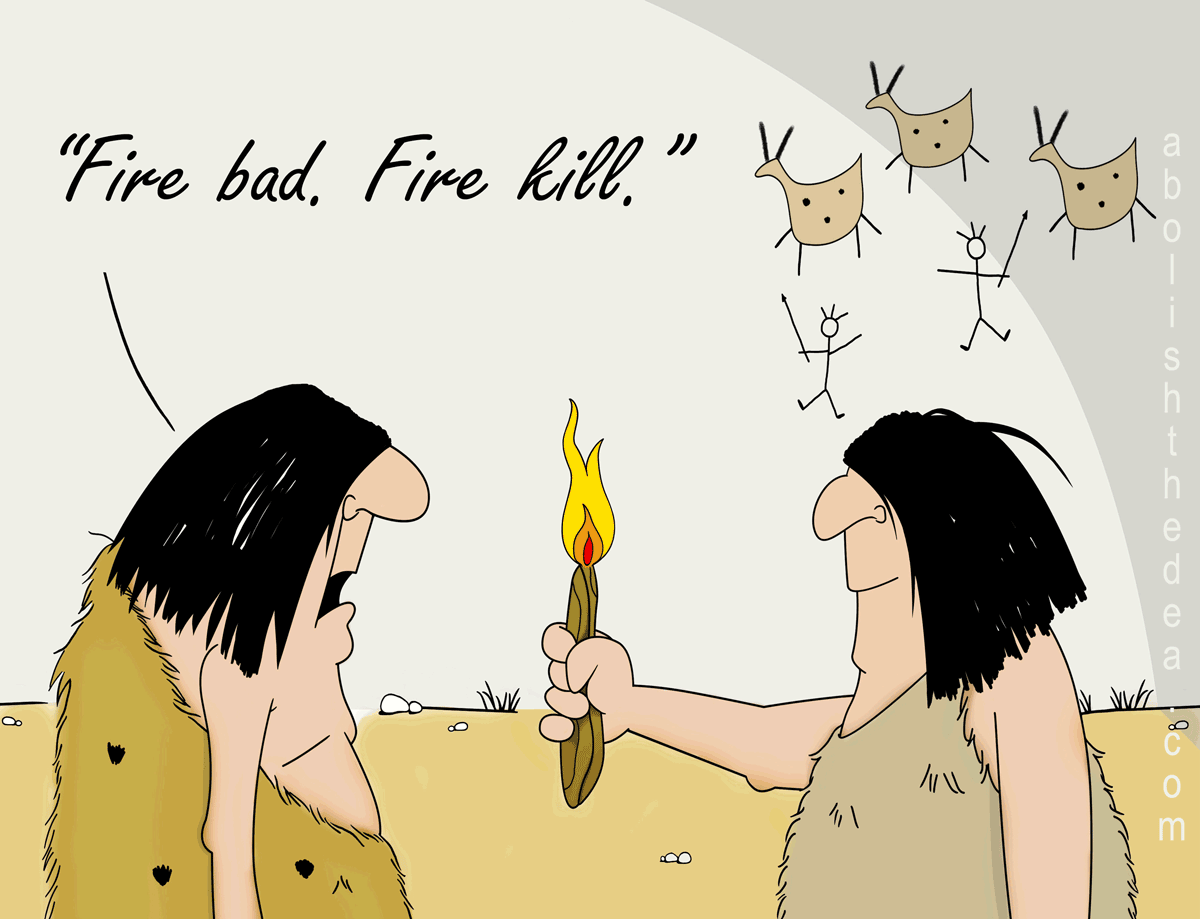
Saying things like 'Fentanyl kills' is philosophically equivalent to saying 'Fire bad'. Both statements would have us fear dangerous substances rather than to learn how to use them wisely for the benefit of human beings.
Louis commences his introduction as follows:
"The use of opium and its ingredients as a soothing and euphoric remedy has developed into a grave menace to the life of nations."
Wow! I'd better double-check the book jacket. I thought Louis Lewin was a pharmacologist. It turns out he is a political scientist -- or is he a proselytizing Christian Scientist instead?
At least no one can accuse Louis of hiding his agenda. The German materialist makes it perfectly clear that he comes not to praise the time-honored panacea known as opium, but to bury her instead, by casting the drug as an insidious menace to God-fearing westerners. Let me just note here that this bald-faced declaration of an opiate "menace" is fraught with highly debatable presumptions. Since Lewin's time, we have come to live in a world on the brink of nuclear annihilation thanks to the Homo sapiens' notorious mistrust of "the Other," and yet Lewin sees a grave menace in the use of a drug that helps people live comfortably with themselves and hence with others. It is clear from this polemical opening salvo that Lewin is viewing opiate use through an intoxiphobic western lens. If this were not the case, he might have commenced this section quite differently. He might have written, for instance:
"The smoking of opium has wonderful societal benefits, especially when contrasted with the drinking of alcohol. It empowers the user to take care of most of their own health concerns without obtaining an expensive and time-consuming "by your leave" from medical science. Like any potentially dangerous substance, however (like fire, like electricity), the use of the drug may prove problematic for a certain small percentage of users. The following chapter will explain ways to use the drug as wisely as possible for the benefit of individuals and humankind."
But then Lewin's MO is typical: as a materialist and a westerner, his first step in evaluating opium -- or "drugs" in general -- is to ignore all the glaringly obvious benefits of use -- focusing instead entirely on the downsides experienced by those whom we refuse to educate about safe and wise use.
And so Lewin continues his presumptuous introduction as follows:
"Differing from alcoholism in that it does not betray its victim to others, the opium habit, especially since the war, has taken hold of whole classes of people who were formerly free from it."
Notice, first of all, that Lewin conflates the mere use of opium with the habitual use of opium and the habitual use of opium with addiction to opium. By this logic, we are obliged to refer to a casual liquor drinker as an alcoholic. This is not science, friends, this is rhetoric on behalf of the passion-scorning western ideology of materialism 4. Lewin has a certain world view -- ideas as to what life is all about -- and he is outraged by drugs that facilitate alternative ways of "being in the world,5" merely peaceable ways in which folks enjoy life while minding their own damn business. Lewin then goes on to blame opium for the fact that its supposedly baleful effects are not obvious to others -- which, however, begs the enormous question: why do we think that such apparently invisible effects are problematic in the first place? This strange complaint about opium, that it does not exhibit any of its supposed downsides to the outside world, reminds me of a case I read a few years ago about a stateside sheriff attempting to arrest Ecstasy users. In a fit of unconscious irony, he bemoaned the fact that the drug produced no symptoms that made it obvious that a user was "on" the drug.
Any sane analysis would view this quality of Ecstasy as a good thing -- the user is not a madman or madwoman in public, indeed they are even rational and compassionate while using Ecstasy -- but the westerner has nothing but disdain for a psychoactive drug that works from the user's point of view without also producing telltale signs of pathology for drug-hating outsiders. It must be remembered in this context that Drug Czar William Bennett reserved his most intolerant scorn for those drug users who used drugs wisely and safely. He wanted to have their names published in the newspaper and make them targets of abuse by their supposedly drug-free fellows. Why? Because in the perverted mind of the Drug Warrior, safe and rational drug use is actually a BAD thing -- notwithstanding the fact that such drug-bashing westerners typically advance such opinions while "throwing back a cold one" -- or, in Bennett's case, while chain-smoking tobacco, a substance containing the potentially problematic drug known as nicotine, a drug which can create far greater cravings than those produced by opium.
Yet Lewin then goes on to characterize the desire to use opium as an enslaving passion.
"By this passion I mean the state which induces persons, habitually and as the result of a violent craving, to employ opium, morphia, and other substances of the same kind, without being driven thereto by a grave or incurable disease, but with the sole object of obtaining agreeable sensations in the brain, even though they know, or ought to know, that they are risking health and life as the price of this abuse."
First, a word from Andrew Weil about this supposed "violent craving" for opiates:
"The strong craving that characterizes opiate addiction has inspired many critics of the drugs to suggest that narcotics destroy the will and moral sense, turning normal people into fiends and degenerates. Actually, cravings for opiates are no different from cravings for alcohol among alcoholics, and they are less strong than cravings for cigarettes, a more addictive drug." --From Chocolate to morphine 6 : Everything You Need to Know About Mind-Altering Drugs7
Moreover, the smoking of opium is the least potentially addictive way to benefit from opiates. As Brereton reports, such use has as little generic addictive potential as does the nightly drinking of alcohol. And yet, as noted, Lewin sees no difference between opium use, opium abuse and opium addiction. Worse yet, he calls opium users "victims," thereby implying that drugs are evil in and of themselves, implying that we need to fight against these "drugs" as if they were actual evil-causing human beings -- hence the notion of a "War on Drugs," an appellation that only makes sense for those who have superstitiously anthropomorphized drugs as flesh-and-blood killers! This is nothing less than the superstitious attitude that first caused our ancestors to indignantly shout: "Fire bad!" It is an attempt to have us fear, to scapegoat, and to disdain dangerous substances rather than to learn how to use them as wisely as possible for the benefit of humankind.
Let me repeat the previously cited statement by Lewin, since we have yet to fully address all of the philosophical inanity that it contains:
"By this passion I mean the state which induces persons, habitually and as the result of a violent craving, to employ opium, morphia, and other substances of the same kind, without being driven thereto by a grave or incurable disease, but with the sole object of obtaining agreeable sensations in the brain, even though they know, or ought to know, that they are risking health and life as the price of this abuse."
Hold on a minute? So use is now abuse?
Notice how breezily Lewin dismisses and condemns the desire to have "agreeable sensations in the brain"! And yet what are "agreeable sensations in the brain" but materialist shorthand for a positive attitude toward life? Forty-nine thousand Americans committed suicide in 2022 alone because they did not have "agreeable sensations in the brain"89! Agreeable sensations in the brain help us to concentrate, to imagine, to transcend problems, and above all to consider that life is worth living and that tasks are worth accomplishing in the first place. And yet Lewin pretends that our desire for an improved attitude toward life is irresponsible. He does this by using the judgmental pedantic phrase "agreeable sensations in the brain" in place of the neutral commonplace phrase "positive attitude." He does this because everyone knows that attitude matters, that a good attitude helps in life, and yet it's easy to think of mere attainment of "agreeable sensations in the brain" as a childish desiderata, like the desire for a "cheap high." And so Lewin disses our desire for having a positive attitude in life by linguistically disguising it as hedonism.
If Lewin were writing as a chronic depressive rather than as a materialist scientist, he would never be so dismissive about the importance of attitude! He is essentially telling us that attitude does not matter and that we therefore should judge opium based on the worst examples of misuse by westerners who have never even bothered to develop safe-use guidelines for the drug, let alone to publicize and follow them.
I take this materialist bias of his personally. I have been a chronic depressive for a lifetime now because westerners like Lewin can see no reasons for altering brain chemistry to improve attitude. Such biases have encouraged the outlawing of all manner of GLARINGLY OBVIOUS godsends for mental suffering. And yet how utterly presumptuous of Lewin! His childish argument basically amounts to this: He (Lewin) does not feel the need for drug-aided inspiration; hence, no one else should feel the need for drug-aided inspiration. Does Lewin even know that we are all unique individuals, with unique biochemistries, that I myself am not a Lewin clone when it comes to mind and mood? But this disdain for opium on Lewin's part is hypocritical, of course. The German pharmacologist is not going to begrudge us our nightly alcohol on the pedantic grounds that its use is a copout -- and yet Lewin makes precisely that argument about the use of the time-honored panacea known as opium.
Let's look at yet another problem with the quotation cited above.
Lewin also condescendingly tells us that we "should know" that opium use is unhealthy. Really?
HEALTH IS NOT A THING, IT IS A BALANCE
This highly problematic and judgmental claim betrays another drug-war bias on Lewin's part: namely, the false idea that health is a single thing, created or destroyed by drug use or the lack thereof. Drug use is neither healthy nor unhealthy in the abstract. The personal health of a unique human being is the result of a balance of a wide array of complexly interacting inputs of all kinds (of a psychosocial, biochemical and genetic nature). This understanding helps explain the seemingly paradoxical fact that the use of nicotine can have beneficial uses in Latin America while it is only known for causing cancer in the west. The difference must be explained with reference to the fact that human beings are complicated creatures -- whose physiology and psychology are influenced by a wide array of interacting psychosocial and sociocultural factors, including personal and cultural beliefs and expectations. Besides, it is absurd to assume that one separately established drug effect will express itself consistently when said drug is used in combination with a wide variety of other psychoactive substances, as is often the case in indigenous societies. This is the truth revealed by holism, the philosophical attitude toward life that materialists dogmatically scorn. Why? Because they know that if they embraced that doctrine -- that health is a complex result of a vast number of interacting factors -- they would have to renounce their irritating and presumptuous claims to omniscience when it comes to deciding what folks like myself should and should not need when it comes to so-called drugs!
In other words, it has always been absurd to talk about drug effects in the abstract. The precise outcome of psychoactive drug use -- for any unique individual in any given case -- is explainable only with reference to a wide array of factors -- factors that materialist scientists downplay or ignore in order to support their hubristic pretensions to omniscience on these subjects. (When materialist scientists cannot give definitive answers on a topic, they merely simplify the subject by ignoring crucial variables. For more on the subject of this materialist sleight of hand, I urge the reader to consult "The Book of the Damned 10 " by Charles Fort 11 .12)
This, of course, is why drug prohibition was wrong in the first place: it places government in charge of deciding what is healthy for a specific individual, something that neither government scientists nor their bureaucratic support team can ever hope to know. As a result, government adopts the ham-fisted approach of deciding that nobody needs drugs -- based on the absurd and anti-indigenous notion that drug use is somehow unhealthy in and of itself.
To be honest, I was planning to read Lewin's book in its entirety today. I only renounced that plan after reaching page 32 and realizing that Lewin's entire approach to drugs was premised on a series of unspoken western materialist biases. I will make a second attempt to read the book in its entirety as soon as I can find the stomach for it. I need to wait until a day when I can tolerate Lewin's many tacit button-pushing assumptions about drugs without becoming ill.
Meanwhile, I strongly suggest that all of Lewin's readers keep in mind the author's western biases as they struggle through this cleverly disguised piece of drug-war agitprop. Two must-reads in this connection are: Opium for the Masses by Jim Hogshire13 and The Truth About Opium by William H. Brereton14.
AFTERTHOUGHTS
1) Lewin says that we are risking health and life when we use opium. But this could be said of any risky activity on the planet. We are risking health and life when we climb mountains. We are risking health and life when we drive cars. We are risking health and life when we consume alcohol. And yet none of these activities are wrong -- unless we have the absurd idea that the ultimate goal in life is to live as safely as possible. Americans certainly do not believe that in their heart of hearts -- otherwise 49,000 of us would not commit suicide every year because of a lousy inner mindset! No, Louis, people want to have a positive attitude toward life, they want to live large -- even if you try to pathologize that desire by pedantically claiming that all they really want is to obtain "agreeable sensations in the brain."
2) Prohibition is a mindset that creates its own problems. This is why it is so hard to convince Drug Warriors that they are on the wrong path. When we ask them to contemplate the idea, say, of re-legalizing the use of opium, they envision that legal change as taking place in a world in which we still have a biased attitude against drugs -- a world in which we refuse to teach safe use, a world in which we continue our fearmongering based on worst-case scenarios, a world in which we continue to hold drug use to a safety standard that we apply to no other dangerous substances on the planet: not to fire, not to electricity, not to cars, etc. When I call for opium re-legalization , on the other hand, I call for the complete package: I call for opium re-legalization in a world in which we have stopped our childish drug demonization campaigns -- based both on materialism and Christian Science morality -- a world in which fearmongering is considered "bad form." I call for opium re-legalization in a world in which we respond to a drug-related death in the same way that we respond to a car-related death: not by demonizing the drug in question but by recommitting ourselves to spreading the word about the safest possible drug use as determined by actual user experience!
In this philosophically improved world, we would finally jettison the racist idea that drug use must be 100% safe for white young people before we dare re-legalize a drug. We must admit that there will be victims of drug use in a free world just as there are for every other risky activity on the planet. In such a world, we would no longer make the absurd and inherently racist claim that drug prohibition is worth it if only it saves one single white young American person from themselves, a young person whom we have refused on principle to educate about safe use. Instead, we would realize that a few deaths of white young people are clearly preferable to a world in which tens of thousands of inner-city minorities are killed every year by prohibition-fueled gun violence 15 !
And so you see the problem here: when I call for drug re-legalization 16 , I envision the redemption of inner cities, the end of drive-by shootings, and the restoration of basic American freedoms. Drug warriors, on the other hand, can only see the potential death of the white young people whom they have refused to educate about drugs. According to the racist calculus of these education-hating Drug Warriors, the destruction of inner cities is a small price to pay for saving just one white person from the fact that we live in a psychoactive world! This analysis, however, makes it painfully clear that drug prohibition is ultimately a racist attempt to outsource the downsides of drug use to minorities and the poor.
3) As Weil points out, the Drug Warrior likes to think of opiate users as having a demeaning reliance on their drug of choice. And yet the modern Drug Warrior has no problem with the fact that 1 in 4 American women are dependent on Big Pharma 1718 meds for life -- and that getting off those meds can be more difficult than getting off of heroin1920! If pressed on this topic, the Drug Warrior will respond that opiates are addictive whereas drugs like Effexor 21 merely cause dependence. To which I respond: So what? I came close to committing suicide thanks to the anemic downsides caused by attempting to get off of Effexor. Is that not problematic? Moreover, what could be more demeaning than the fact that drug prohibition has turned chronic depressives like myself into patients for life? Such elderly "patients" are like the wedding guest in "The Rime of the Ancient Mariner." We are forced to hove into healthcare harbor every three months of our lives to repeat our life stories to a nurse practitioner 1/3 our age, all for the privilege of being "allowed" to purchase another overpriced and underperforming drug whose use has turned us into wards of the healthcare state!
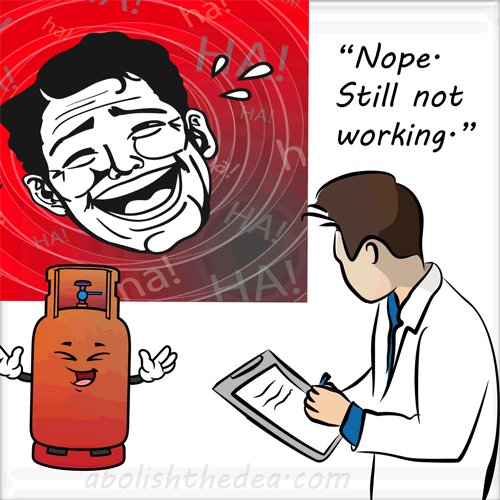
4) Why is Lewin so blind to common sense? Why does he not see the obvious fact that feeling good can actually improve one's quality of life and even create a "virtuous circle" while doing so? ANSWER: Because Lewin is a materialist and hence a behaviorist when it comes to human motivations. He is like the modern materialist by the name of Dr. Robert Glatter who told us in 2021 in Forbes magazine that he saw no obvious uses for laughing gas in fighting depression22. Why not? Because as a materialist, Glatter is completely blind to common sense about drugs. He does not care that laughing gas 23 gives me a break from pathological sobriety and allows me to look forward to life. He sees no benefits to glimpsing God him or herself with the help of such gas. If Glatter cannot account for mood improvement by referencing specific chemical pathways, then he feels free to ignore said improvement. This is the pathology of modern materialism when it comes to drugs, a diagnosis that I seem to be the first philosopher to have noted explicitly -- though this idea is certainly implicit in a few of the least brainwashed pundits on these matters, especially in the works of Thomas Szasz.
CONCLUSION: Drug warriors have no problem with drugs as such: they merely want us to use the "right" drugs: namely, those drugs whose use benefits their moneyed benefactors in the pharmaceutical industry.
ADDITIONAL NOTES:
ALCOHOL v. OPIUM
As William H. Brereton pointed out in "The Truth about Opium," the Chinaman who smoked opium nightly did not beat his wife, whereas wife beating was endemic to countries like the UK in which the head of the household imbibed alcohol nightly instead.
"You will find that those acts of violence, those unfortunate cases that make one shudder to read, happening daily in this country—kicking wives, sometimes to death, beating and otherwise ill-using helpless children, violently attacking unoffending people in the streets—all are the results, more or less, of spirit drinking." --The Truth about Opium / Being a Refutation of the Fallacies of the Anti-Opium Society and a Defence of the Indo-China Opium Trade24
If religious liberty existed, we would be able to use the inspiring phenethylamines created by Alexander Shulgin in the same way and for the same reasons as the Vedic people of India used soma.
Drug prohibition is a crime against humanity. It is the outlawing of our right to take care of our own health.
The FDA is not qualified to tell us whether holistic medicines work. They hold such drugs to materialist standards and that's pharmacological colonialism.
This is why it's wrong to dismiss drugs as "good" or "bad." There are endless potential positive uses to psychoactive drugs. That's all that we should ask of them.
After watching my mother suffer because of the drug war, I hate to hear people tell me that the problem is drugs. WRONG! That's a western colonialist viewpoint. God loved his creation (see Genesis). He did not make trash. We need to use entheogenic medicines wisely.
How would we even KNOW that outlawed drugs have no positive uses? We first have to incorporate them in a sane, empathic and creative way to find that out, and the drug war makes such a sensible approach absolutely impossible.
Freud thought cocaine was a great antidepressant. His contemporaries demonized the drug by focusing only on the rare misusers. That's like judging alcohol by focusing on alcoholics.
The benefits of outlawed drugs read like the ultimate wish-list for psychiatrists. It's a shame that so many of them are still mounting a rear guard action to defend their psychiatric pill mill -- which demoralizes clients by turning them into lifetime patients.
Materialist puritans do not want to create any drug that elates. So they go on a fool's errand to find reductionist cures for "depression itself," as if the vast array of human sadness could (or should) be treated with a one-size-fits-all readjustment of brain chemicals.
"The Oprah Winfrey Fallacy": the idea that a statistically insignificant number of cases constitutes a crisis, provided ONLY that the villain of the piece is something that racist politicians have demonized as a "drug."
Unless otherwise indicated, no AI is used in the creation of site content. These essays represent the original ideas of their author and not the ideas that the author SHOULD have based on an algorithmic parsing of existing data. For more on this subject, consider the AI-related viewpoints to which the author subscribes as delineated in the New York Times opinion piece entitled "What 370,000 College Essays Tell Us About A.I.’s Effects on Creativity" by Rebecca Winthrop of the Brookings Institution.









 Moreover, the smoking of opium is the least potentially addictive way to benefit from opiates. As Brereton reports, such use has as little generic addictive potential as does the nightly drinking of alcohol. And yet, as noted, Lewin sees no difference between opium use, opium abuse and opium addiction. Worse yet, he calls opium users "victims," thereby implying that drugs are evil in and of themselves, implying that we need to fight against these "drugs" as if they were actual evil-causing human beings -- hence the notion of a "War on Drugs," an appellation that only makes sense for those who have superstitiously anthropomorphized drugs as flesh-and-blood killers! This is nothing less than the superstitious attitude that first caused our ancestors to indignantly shout: "Fire bad!" It is an attempt to have us fear, to scapegoat, and to disdain dangerous substances rather than to learn how to use them as wisely as possible for the benefit of humankind.
 4) Why is Lewin so blind to common sense? Why does he not see the obvious fact that feeling good can actually improve one's quality of life and even create a "virtuous circle" while doing so? ANSWER: Because Lewin is a materialist and hence a behaviorist when it comes to human motivations. He is like the modern materialist by the name of Dr. Robert Glatter who told us in 2021 in Forbes magazine that he saw no obvious uses for laughing gas in fighting depression22. Why not? Because as a materialist, Glatter is completely blind to common sense about drugs. He does not care that laughing gas 23 gives me a break from pathological sobriety and allows me to look forward to life. He sees no benefits to glimpsing God him or herself with the help of such gas. If Glatter cannot account for mood improvement by referencing specific chemical pathways, then he feels free to ignore said improvement. This is the pathology of modern materialism when it comes to drugs, a diagnosis that I seem to be the first philosopher to have noted explicitly -- though this idea is certainly implicit in a few of the least brainwashed pundits on these matters, especially in the works of Thomas Szasz.
 (up)
(up)