As you know, I have recently recommended that 21st-century chemists undertake a study that I call "Pihkal 2.0," in which they would assemble groups of drug testers from a wide variety of demographics to repeat the kinds of experiments conducted by Ann and Alexander Shulgin in the 1980s. The purpose of this study would be unlike that of any other drug study of modern times. Instead of deciding in advance what sort of drug use should work, say, for a middle-aged person with depression based on theory and the hints provided from the usage reports of so-called 'normal' drug testers, let's try something else instead. Let's ask a group of middle-aged depressives themselves to try out a wide variety of phenethylamines to report on what works for THEM as a group -- what works according to the depressed middle-agers themselves!
Imagine that, asking the "patients" what works for THEM! How novel! Likewise with a group of elderly people seeking to treat their agoraphobia. Likewise with a group of young authors struggling with writer's block. Likewise with a group of middle-aged philosophers who are attempting to follow in the footsteps of William James when it comes to experiencing new realities through the use of psychoactive substances. I won't go into further detail at this time, but I ask you to learn more from reading my recent essay on the subject entitled Pihkal 2.0.
Oh, and for the record, I have already called dibs on membership in that latter study group -- that is, should "Pihkal" 2.0 actually materialize. Meanwhile, fingers crossed. Let's hope that some modern chemist can find a way to claw back enough academic freedom1 to reproduce Alexander Shulgin's user-centric experimentation method in the 21st century. It sounds like a tall order, but then if Alexander could pull it off in the 1980s, which was, after all, the high-water mark of the drug prohibition mindset, then modern chemists should be able to get a special dispensation to study drugs using a similarly common-sense approach today.
That's all I had. Questions? Oh, one at a time, please.
Yes, thank you, Mr. Philosopher. Francisco Hunzeker from the San Diego Cistern.
Talk to me, Francis.
Isn't it true that MDMA can leave a user feeling logy on the day following use and so is not the best drug for treating depression?
First, let me say that I try to avoid the temptation to talk about drug use in the abstract. That is one of the big sins of the Drug War, that it encourages us to judge drugs "up" or "down" based on generalities. The most I can say in response to your question is that MDMA does have a tendency to evoke some morning-after grogginess of which you speak, at least in some users, but that is not the end of the story. In a free world, we would use nutrients and drugs to obviate the problems caused by otherwise wonderful drugs. Big Pharma 23 is already making money on drugs that counteract the much more dire downsides of their own dependence-causing medicines. Moreover, it is absurd to make any hard and fast rules about psychoactive drug use, because results depend on such a wide variety of factors, from biochemistry, to genetics, to psychology, to aim and intention, etc. etc. etc. If a user is aware of a potential "morning after" effect and takes it into account... and is prepared for it with the help of nutrients or other drugs... You see what I'm getting at here, Francis. The details matter.
This is why we need what I call "pharmacologically savvy empaths" 4, to help the would-be user with suggestions for usage protocols based on a study of real user reports and of best results in the field -- best results as reported by actual users and not as determined by a materialist scientist looking under a microscope.
I would add, moreover, that MDMA 5 is just one of many phenethylamines. Each one has a different profile when it comes to aftereffects if any. Consider the following reports of aftereffects of phenethylamines as reported in Pihkal 1.0 from 19916:
"The afterglow was benign and rich in empathy for everything."
"Next day, same sense of serene, quiet joy/beauty persisted for most of the day. A true healing potential."
I hope, moreover, that the chemists involved in Pihkal 2.0 will have the liberty to provide laughing gas to their drug-testing participants. Laughing gas, aka nitrous oxide, is a substance that has no groggy after-effects. It would be great to see studies in which laughing gas is made available for use on an as-needed basis for folks with PTSD. We could explore ways to fight PTSD by helping the user to associate the relaxing effects of laughing gas with the thoughts, people and environments that have proven traumatic for them in the past. By associating these fear-inducing triggers with calming thoughts, those triggers will eventually lose their power to frighten.
So, you're saying that laughing gas will help fight PTSD?
There you go again, trying to get me to make a blanket statement about what psychoactive drugs can or cannot do. This is the whole problem, the fact that we are encouraged to judge drugs "up" or "down" like that for specific uses. I can imagine laughing gas protocols that would be a godsend for many -- but these same protocols could conceivably be problematic for certain others. All I am saying is that we must not blind ourselves to the obvious. There is what philosophers would call a "prima facie" case to be made that laughing gas could work wonders for many mental hang-ups. Now, the question of precisely who can be helped and how is a different question, but it is one that we can answer by actually studying how real people with real problems respond to various usage protocols.
As things stand, however, we are being gaslighted by the FDA and the DEA into ignoring common sense -- into pretending that happiness is not happiness and that laughter is not laughter. Laughing gas has enormous potential for helping to improve mind and mood. This is blazingly obvious. One does not need to have studied biochemistry and reuptake inhibitors in a university to make that statement: one just has to be a living, breathing human being.
We have to keep reminding ourselves that the government is trying to gaslight us about the obvious benefits of psychoactive substances. Let me add here, for good measure, that it is the outlawing of religion to outlaw substances that inspire and elate, laughing gas included. Why? Because we know that entire religions have been created thanks to the use of drugs that inspire and elate. That is all we need to know in order to conclude that drug prohibition is the outlawing of religion -- nay, of the religious impulse itself.
Incidentally, I say more about this subject of judging drugs "up" or "down" in my recent essay entitled Prohibition is the Problem.
Lexis Sheeks from the Global Gazette Journal and Times Dispatch Sentinel Record and Daily Mirror
Could you repeat that, preferably in double time.
Lexis Sheeks from the Global Gazette Journal and Times Dispatch Sentinel Record and Daily Mirror
That's what I THOUGHT you said. Question, please?
I understand that your Partnership for a Death Free America 78 has just published some more public service announcements to save our young people from danger. Is that true?
Yes, indeed. Our latest radio adds seek to outlaw fire, skateboards, and mobile phones9.
But, Mr. Philosopher, really! How could you possibly call for the outlawing of mobile phones!
Did you know, Lexis, that more young white people die from taking selfies than from shark attacks.
What?
So first of all, get your facts right before you cross-examine me, missy.
Excuse me?
And, B: close to 100 kids die each year from taking selfies.
Oh! Oh, I'm... I'm sorry, I didn't know that.
You ask me, "How can I fight to outlaw mobile phones," Lexis? "How can I fight to outlaw mobile phones?" I take one look at my children, Lexis, and I think to myself: How could I NOT, and with every fiber of my being!
[smattering of applause]
Oh, thank you for that.
Can I be honest? I'm getting a bit of a rush here. I begin to see why Drug Warrior scapegoating is so popular. It is exhilarating to exercise one's moral superiority over one's fellows like this.
Did ya hear that Lexis: I said, How could I NOT???!! And with every fiber of my being!!!
Oh, that feels good!
Yes, yes, you got me. I give, I give. I grovel before your sanctity!
Hey, listen, that's all I'm asking, Lexis, that you grovel before my sanctity. Nothing more.
We have time for just one more question --
Cash Shepperdson from the Apex Predator and Times Record Journal Gazetteer Sentinel.
Could you repeat that for me?
I doubt it.
Okay, on to your question, please?
Yes, first I wanted to thank you for being the only philosopher to formally protest to the FDA about their plans to treat laughing gas as a "drug."
Well, thank you, Cash. What can I say? Somebody had to stand up for academic freedom and the legacy of William James.
Speaking of which, didn't you recently protest the failure of the Harvard University Psychology Department to even mention nitrous oxide in their online biography about James?
Yes, indeed, I did. I made so bold as to suggest to the department chairman, a certain Matthew K. Nock, that Harvard was dishonoring James's legacy by ignoring his interest in expanded states of consciousness, or what he referred to, generally speaking, as the anesthetic revelation 101112.
Yes, but that was over two months ago. Surely, Chairman Nock has responded by now.
Alas, he has not, but then that is the problem with the Drug War: it scares the vast majority of Americans into a politically correct silence.
Ladies and gentlemen, the Drug War Philosopher of the United States of America.
Hey, wait a minute, I wasn't done, Don Pardo! How do you like that, my own show host is censoring me.
Discussion Topics
May 23, 2025
Attention Teachers and Professors: Brian is not writing these essays for his health. (Well, in a way he is, actually, but that's not important now.) His goal is to get the world thinking about the anti-democratic and anti-scientific idiocy of the War on Drugs. You can stimulate your students' brainwashed grey matter on this topic by having them read the above essay and then discuss the following questions as a group!
What are the principal differences between the original Pihkal study and the new one advocated by the Drug War Philosopher?
What is the problem with talking about drugs "in the abstract"?
How could laughing gas 13 (nitrous oxide) be used to fight PTSD?
How does the FDA gaslight us into believing 'that happiness is not happiness and laughter is not laughter'?
Why does drug prohibition represent the outlawing of religion?
Did Harvard Psychology Department Chairperson Matthew K. Nock respond to Brian's complaint about his university's censorship of William James' online bio when it comes to the philosophical importance of altered states? If not, what does this tell us about the bamboozled and censored status of modern academia?
There are neither "drugs" nor "meds" as those terms are used today. All substances have potential good uses and bad uses. The terms as used today carry value judgements, as in meds good, drugs bad.
The Hindu religion was created thanks to the use of a drug that inspired and elated. It is therefore a crime against religious liberty to outlaw substances that inspire and elate.
When psychiatrists write about heroin, they characterize dependency as enslavement. When they write about antidepressants, they characterize dependency as a medical duty.
"Just ONE HORSE took the life of my daughter." This message brought to you by the Partnership for a Death Free America.
It is evil to give the depressed drugs to help them die while barring them from using drugs that could make them wish to live.
Many psychedelic fans are still drug warriors at heart. They just think that a nice big exception should be carved out for the drugs that they're suddenly finding useful.
We drastically limit drug choices, we refuse to teach safe use, and then we discover there's a gene to explain why some people have trouble with drugs. Science loves to find simple solutions to complex problems.
The most addictive drugs have a bunch of great uses, like treating pain and inspiring great literature. Prohibition causes addiction by making their use as problematic as possible and denying knowledge and choices. It's always wrong to blame drugs.
We've created a faux psychology to support such science: that psychology says that anything that really WORKS is just a "crutch" -- as if there is, or there even should be, a "CURE" for sadness.
The Drug War has turned America into the world's first "Indignocracy," where our most basic rights can be vetoed by a misinformed public. That's how scheming racist politicians put an end to the 4th amendment to the US Constitution.
Break the ice with a sledgehammer: place this book on your coffee table.
This book features 150 annotated images, designed to force brainwashed Americans to confront the fact that drug prohibition is wrong. Here is what author Richard Parrish II says of the book's compiler: "The drug prohibition philosopher provides first-hand, principled, persuasive, and insightful arguments against the current drug prohibition regime..."
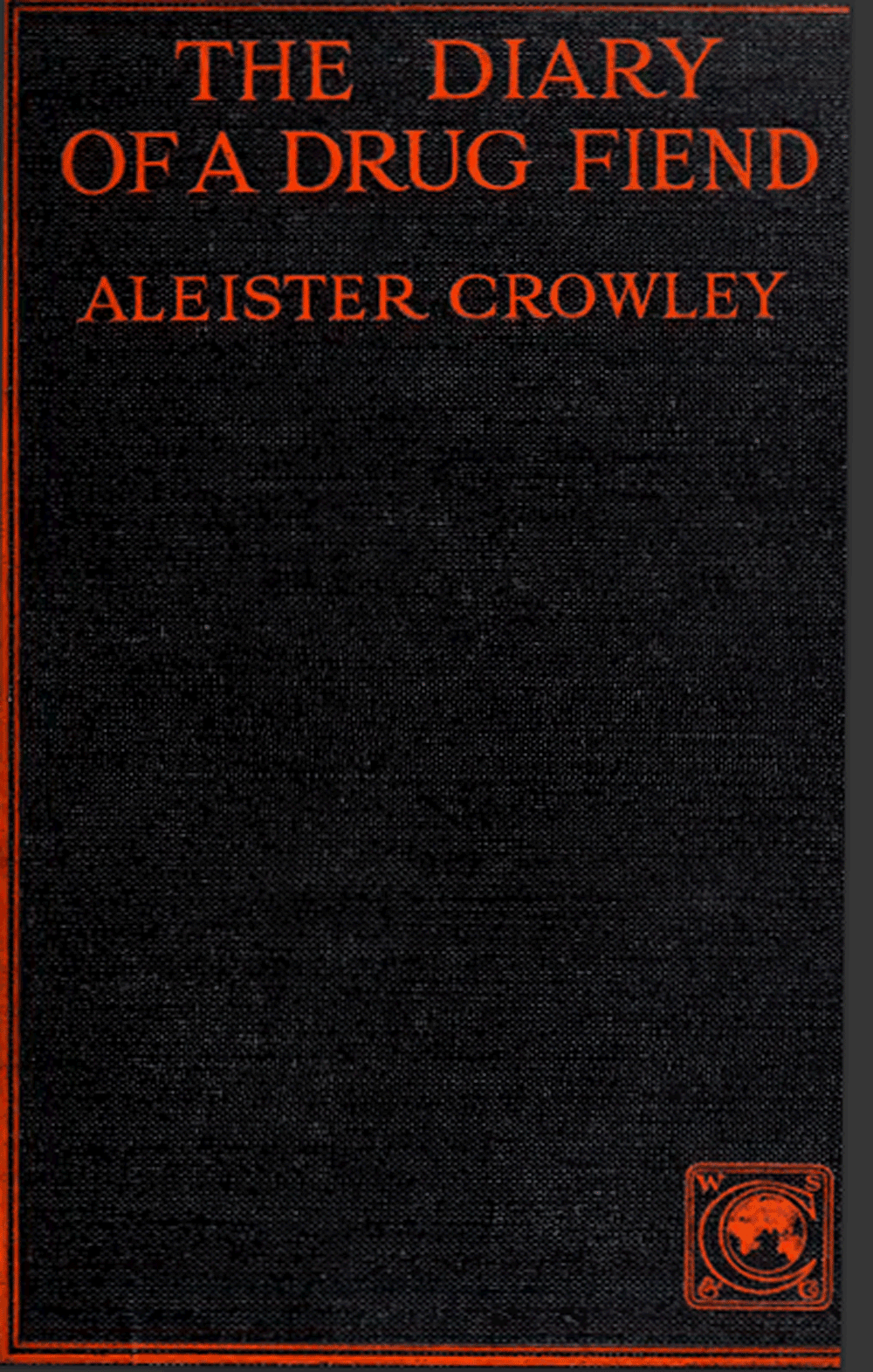
This is the only full-cast recording of Aleister Crowley's 1922 classic paeon to common sense. It is the first book -- and so far almost the only book -- to stake out a philosophy of drug use that is compatible with human freedom, one in which we learn to use drugs as wisely as possible for the benefit of humanity. This recording was produced by the Drug War Philosopher and your purchases help support his effort to push back against the tragically counterproductive policy of drug prohibition, in the name of human freedom and of humanity's right to heal.
No cookies, no ads paid for by amoral and immoral billionaires (or trillionaires).
Unless otherwise indicated, no AI is used in the creation of site content. These essays represent the original ideas of their author and not the ideas that the author SHOULD have based on an algorithmic parsing of existing data. For more on this subject, consider the AI-related viewpoints to which the author subscribes as delineated in the New York Times opinion piece entitled "What 370,000 College Essays Tell Us About A.I.’s Effects on Creativity" by Rebecca Winthrop of the Brookings Institution.












 (up)
(up)