







Homepage of the Drug War Philosopher, Brian Quass
blog icon orange rss icon with stylized radio waves bird icon for twitter bird icon for twitter substack icon


back navigation arrow forward navigation arrow


The Therapeutic Value of Anticipation

towards a realistic psychology of substance use

by Brian Ballard Quass, the Drug War Philosopher

January 24, 2020


The use of the term "recreational" to describe substance use is misleading. Those who use the term are ignoring the fact that enjoyable or interesting drug-induced experiences often provide a psychological respite from the dullness and difficulties of so-called sober life. And thus, although a drug experience may be defined as "recreational," that does not imply that the substance use was ONLY recreational (which is generally the way in which Drug Warriors intend the term).

Update: June 09, 2025

To the contrary, such use is often psychologically therapeutic, and in two ways, the second of which psychology has yet to recognize: 1) It is therapeutic thanks to the relaxation and/or diversion that the actual drug experience affords, and, 2) It is therapeutic thanks to the relaxation induced by the MERE ANTICIPATION of the upcoming relaxation. DeQuincey wrote of this latter benefit of drug use when he praised the therapeutic value of anticipation in connection with his use of opium (this was before he began his ill-advised daily use of opium for the relief of physical pain, after which he necessarily lost the anticipatory benefits of his substance use).

Not only were the author's weekend experiences at the opera enhanced by opium , but his "sober" weekdays were rendered more bearable as well, not directly by the drug, but thanks to the author's sure and certain knowledge of the upcoming intellectual ecstasies that were awaiting him. It is this "something to look forward to" of which modern psychiatry stubbornly refuses to take cognizance in estimating the value of occasional substance use, preferring instead to categorically demonize substances such as opium and cocaine 1 2 as having no therapeutic value whatsoever, in slavish deference to the politically inspired laws against such drugs. Such substances are then held to health and safety standards that no one would ever think of applying to alcohol and tobacco, let alone to the Big Pharma antidepressants 3 to which 1 in 4 women are addicted, in a scandal that has yet to make the hypocritical and purblind Drug Warriors lose a minute of sleep.

(One can only conclude that addiction is not the real bugaboo for the anti-drug fanatics, that what really alarms them is the marketing of substances for which big business is not getting its fair share of the profits.)

Thus, the bi-monthly use, say, of psychedelics cannot be dismissed as "recreational" merely because the user has assigned no nobler purpose to the use, for the anticipatory aspect of any positive experience -- drug-induced or otherwise -- can itself conduce to relaxation and a happier life. Thus such use can be psychologically therapeutic even if the user fails to explicitly note that fact.


May 23, 2022 I look forward to the day when pharmacologically savvy empaths will understand the importance of anticipation. Then I will be the first to join those weekly groups wherein we use a variety of currently demonized medicines to reach self-transcendence while yet avoiding the addictive drugs of Big Pharma 4 5 . "What's on the menu for this week, doc?" Answer: "This week, Brian, we will all ingest psilocybin mushrooms and then listen to great music. Next week, we'll use morphine 6 to give us supernatural appreciation of Mother Nature. The week following we'll smoke a little opium 7 and share our wondrous visions. The week following, we'll use coca wine while we're braining storming ideas about how to make our lives better."

Author's Follow-up: April 30, 2023


Some folks who read the above "editor's note" will charge me with thinking of "drugs" as a panacea. But it's natural that a heretical thinker like myself should sound fantastically cheery about drugs in a world in which the party line is to be fantastically dismissive of them. Sure, there are no doubt limits to what "drugs" can accomplish. Moreover, psychoactive drugs do not work like reductionist meds (a fault for which materialists will never forgive them). They are not "one size fits all." Rather, the user will generally benefit from them only to the extent that they have the correct mindset. A drug, for instance, will be less likely to help you appreciate nature if you are not already disposed to do so and desirous of that denouement.

Some Twitter trolls love to shoot down supposedly starry-eyed folks like myself, claiming that there's no "there" there when it comes to substance use, or that the potential benefits are oversold. I answer: how can we say that, when no one has ever combined complete substance freedom and modern mobility with a shamanically motivated and pharmacologically informed look into the topic? In other words, when it comes to "drugs," no one has ever combined "western" dogma-free curiosity with the "eastern" goals of the shaman. For my part, I can imagine an endless list of therapies employing an endless variety of psychoactive meds (many of which we are still unaware in our self-imposed insularity on this topic), both natural and inspired by nature, all of which protocols have never even been imagined before, let alone investigated. The possibilities seem limited by one's imagination alone. Unfortunately, to date, the mainstream has no imagination at all on this topic, having been successfully taught to be terrified of "drugs" in the abstract. But even the opponents of the Drug War fail to envision such possibilities, having themselves been convinced that drug legalization is all about harm reduction and has nothing to do with benefit maximization. They have swallowed the Drug War lie that legalization 8 is all about accommodating and/or protecting white well-to-do hedonists from themselves.


Author's Follow-up:

June 09, 2025

picture of clock metaphorically suggesting a follow-up


Some critics will say that modern antidepressants cause dependency but not addiction. This may be technically true, but I hate to recognize the difference since it is loaded with value judgments and assumptions. Take my psychiatrist, for instance. He told me he thought Effexor 9 was wonderful because it did not cause addiction.

Fortunately, for him I am polite -- or is it cowardly? Otherwise I would have pointed out that the difference between addiction and dependence is academic from the point of view of an actual user trying to get off a drug. When I tried to get off Effexor too rapidly, I literally wanted to die. That's right, I wanted to die. Apparently, this is not a problem, however, since I suffered in silence.

It would only be a problem if I woke up my doctor at 4 in the morning with a phone call and insisted that I needed more of the drug -- which, however, is something that only an addict would dare try. The merely dependent user is too depressed to bother, and so dependency is clearly better for the doctor.

In my six years of writing and researching daily about the drug prohibition, I have yet to find any psychiatrist who understands (let alone bemoans the fact) that dependence-causing antidepressants have turned me into an eternal patient. No one sees a problem with that, somehow, even though my dependency on Effexor would seem to be the exact opposite of the 'empowerment' to which Americans otherwise seem to think that everyone is entitled these days.

I guess we want empowerment for everyone except mental 'patients', whom we tell instead to shut up and take their meds.

No, I am not blaming individual psychiatrists, but I don't dare speak more diplomatically on this subject, at least until such time as Americans at least acknowledge it as a problem. Until then, you may think that I am screaming, but it sounds that way only because everyone else is being pathologically silent on this topic.


The Links Police

Do you know why I pulled you over? That's right, you were about to leave this page without seeing the following related essays on the topic of "anticipation and the Drug War."


Notes:

1: Sigmund Freud's real breakthrough was not psychoanalysis DWP (up)
2: “Freud on Cocaine : Freud, Sigmund, 1856-1939 : Free Download, Borrow, and Streaming : Internet Archive.” 2023. Internet Archive. 2023. https://archive.org/details/freudoncocaine0000freu/page/n5/mode/2up?view=theater. (up)
3: Antidepressants and the War on Drugs DWP (up)
4: Seife, Charles. 2012. “Is Drug Research Trustworthy?” Scientific American 307 (6): 56–63. https://doi.org/10.1038/scientificamerican1212-56. (up)
5: LaMattina, John. n.d. “Why Is Biopharma Paying 75% of the FDA’s Drug Division Budget?” Forbes. https://www.forbes.com/sites/johnlamattina/2022/09/22/why-is-biopharma-paying-75-of-the-fdas-drug-division-budget/. (up)
6: Three takeaway lessons from the use of morphine by William Halsted, co-founder of Johns Hopkins Medical School DWP (up)
7: The Truth About Opium by William H. Brereton DWP (up)
8: “National Coalition for Drug Legalization.” n.d. National Coalition for Drug Legalization. https://www.nationalcoalitionfordruglegalization.org/. (up)
9: How Drug Prohibition makes it impossible to get off of Effexor and other Big Pharma drugs DWP (up)


read more essays here


Ten Tweets

against the hateful war on US


The whole drug war is based on the anti-American idea that the way to avoid problems is to lie and prevaricate and persuade people not to ask questions.

AI is like almost every subject under the sun: it takes on a very different and ominous meaning when we view it in light of the modern world's unprecedented wholesale outlawing of psychoactive medicine.

If MAPS wants to make progress with MDMA they should start "calling out" the FDA for judging holistic medicines by materialist standards, which means ignoring all glaringly obvious benefits.

America legalizes alcohol and then outlaws all the drugs that could help prevent and cure alcoholism.

It is consciousness which, via perception, shapes the universe into palpable forms. Otherwise it's just a chaos of particles. The very fact that you can refer to "the sun" shows that your senses have parsed the raw data into a specific meaning. "We" make this universe.

Drug use is judged by different standards than any other risky activity in the western world. One death can lead to outrage, even though that death might be statistically insignificant.

I'm on SNRIs. But SSRIs and SNRIs are both made with materialist presumptions in mind: that the best way to change people is with a surgical strike at one-size-fits-all chemistry. That's the opposite of the shamanic holism that I favor.

If opium were legal, then most of the nostrums peddled by drug stores today would be irrelevant. (No wonder the drug war has staying power!)

Antidepressants might be fine in a world where drugs were legal. Then it would actually be possible to get off them by using drugs that have inspired entire religions. In the age of prohibition, however, an antidepressant prescription is usually a life sentence.

Americans heap hypocritical praise on Walt Whitman. What they don't realize is that many of us could be "Walt Whitman for a Day" with the wise use of psychoactive drugs. To the properly predisposed, morphine gives a DEEP appreciation of Mother Nature.


Click here to see All Tweets against the hateful War on Us


back navigation arrow forward navigation arrow
Book Cover

Break the ice with a sledgehammer: place this book on your coffee table.

This book features 150 annotated images, designed to force brainwashed Americans to confront the fact that drug prohibition is wrong. Here is what author Richard Parrish II says of the book's compiler: "The drug prohibition philosopher provides first-hand, principled, persuasive, and insightful arguments against the current drug prohibition regime..."

Purchase Your Copy
Book Cover

Diary of a Drug Fiend

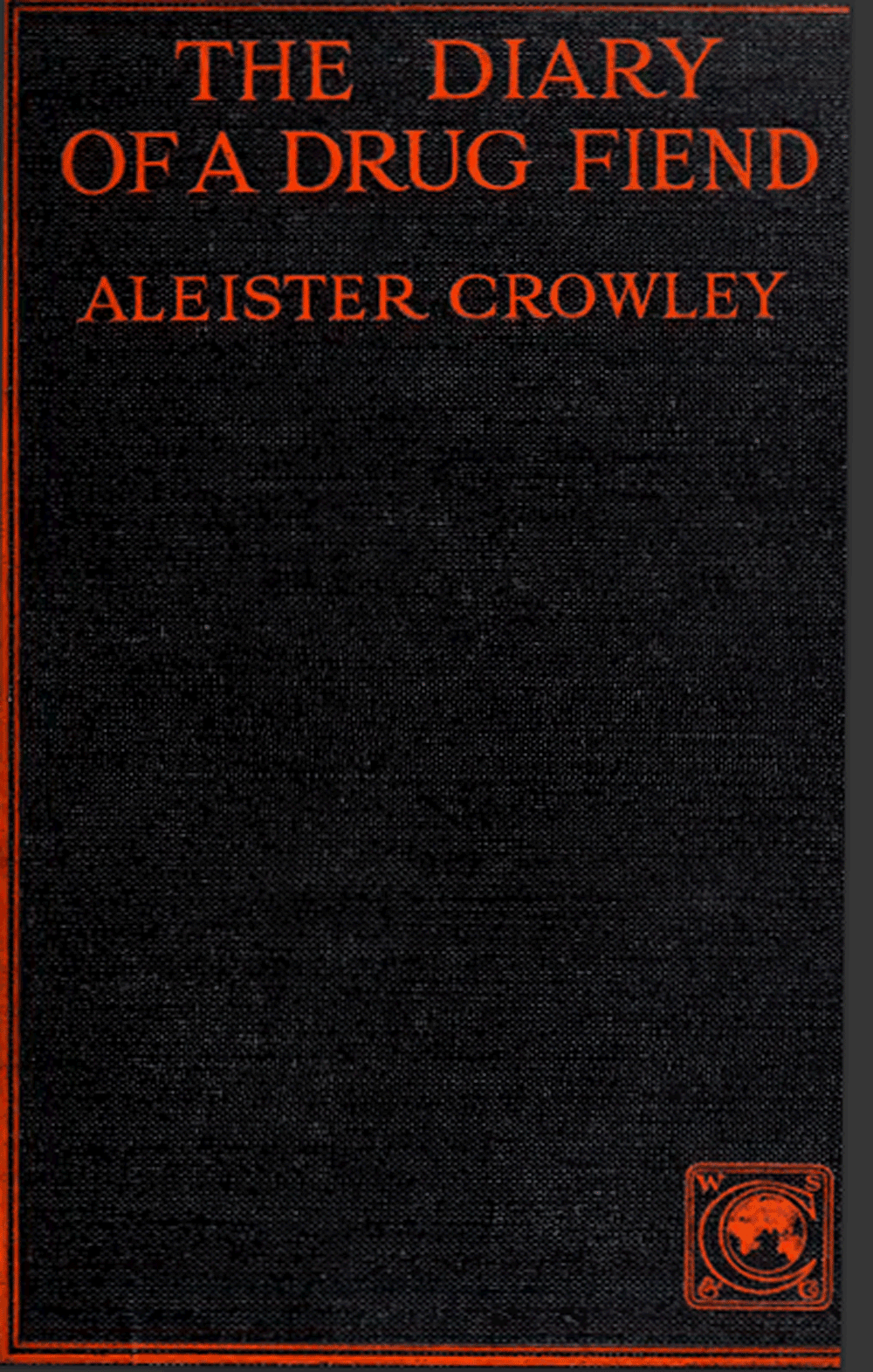
This is the only full-cast recording of Aleister Crowley's 1922 classic paeon to common sense. It is the first book -- and so far almost the only book -- to stake out a philosophy of drug use that is compatible with human freedom, one in which we learn to use drugs as wisely as possible for the benefit of humanity. This recording was produced by the Drug War Philosopher and your purchases help support his effort to push back against the tragically counterproductive policy of drug prohibition, in the name of human freedom and of humanity's right to heal.

Purchase Your Copy


No cookies, no ads paid for by amoral and immoral billionaires (or trillionaires).


Unless otherwise indicated, no AI is used in the creation of site content. These essays represent the original ideas of their author and not the ideas that the author SHOULD have based on an algorithmic parsing of existing data. For more on this subject, consider the AI-related viewpoints to which the author subscribes as delineated in the New York Times opinion piece entitled "What 370,000 College Essays Tell Us About A.I.’s Effects on Creativity" by Rebecca Winthrop of the Brookings Institution.

The Partnership for a Death Free America is a proud sponsor of The Drug War Philosopher website @ abolishthedea.com.


Copyright 2026, Brian Ballard Quass Contact: quass@quass.com

tombstone for American Democracy, 1776-2024, RIP (up)