








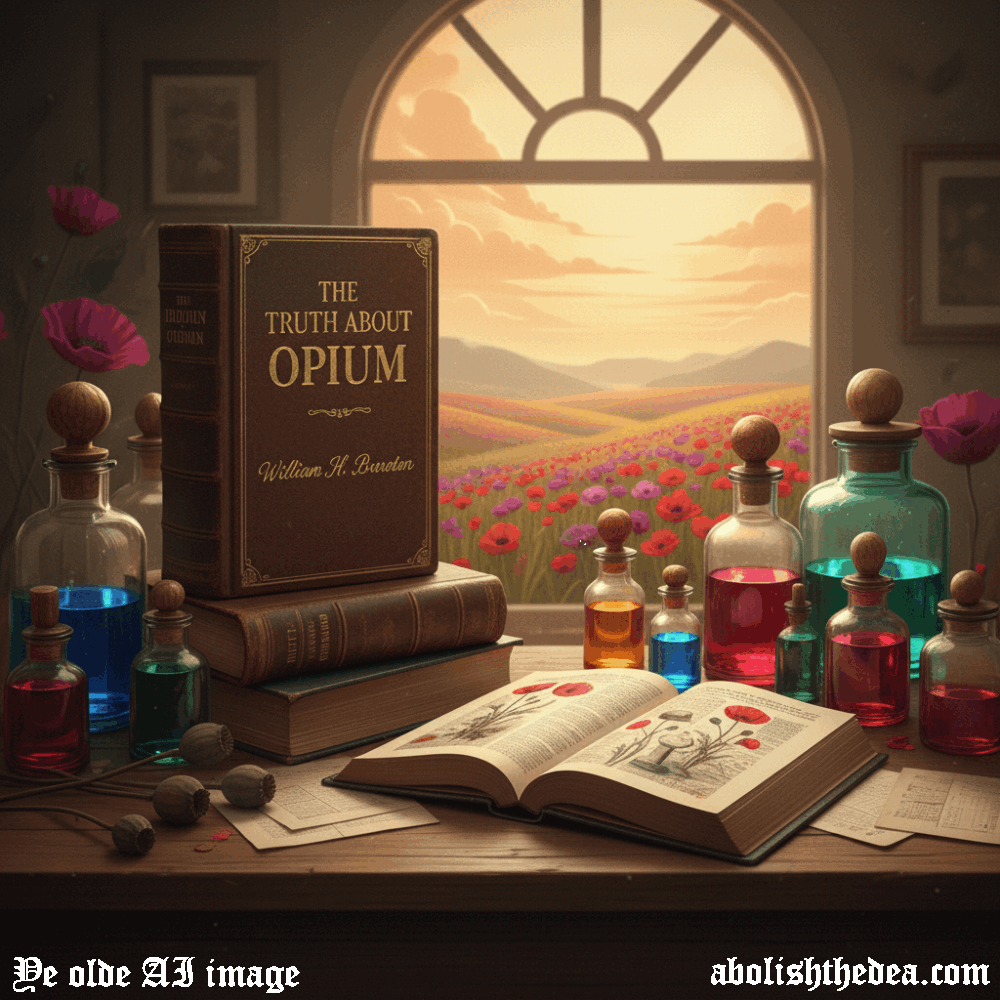
"Let truth and falsehood grapple; who ever knew truth put to the worse in a free and open encounter?" -John Milton
"The American war against the Chinese in the United States was a terrible tragedy— regardless of how often this drama continues to be enacted on the stage of history. Although “we” did not succeed in beating “them” down, at least “we” took away something that “they” treasured and that made life better for “them.” Envious persecutors must be thankful for small victories no less than for large. " --Thomas Szasz, Ceremonial Chemistry: the ritual persecution of drugs, addicts, and pushers13

"I had daily intercourse with the people from whom the best and most trustworthy information on the subject of opium and opium smoking could be obtained, and my experience is that opium smoking, as practised by the Chinese, is perfectly innocuous. This is a fact so patent that it forces itself upon the attention of every intelligent resident in China who has given ordinary attention to the subject. The whole question at issue is involved in this one point, for if I show you that opium smoking in China is as harmless, if, indeed, not more so, as beer drinking in England, as I promise you I shall do most conclusively, then cadit quæstio, there is nothing further in dispute; the Indo-Chinese opium trade will then stand out—as I say it does—free from objection upon moral, political, and social grounds, and the occupation of the Anti-Opium agitators, like Othello's, will be gone." -- William H. Brereton," The Truth about Opium"
"The strong craving that characterizes opiate addiction has inspired many critics of the drugs to suggest that narcotics destroy the will and moral sense, turning normal people into fiends and degenerates. Actually, cravings for opiates are no different from cravings for alcohol among alcoholics, and they are less strong than cravings for cigarettes, a more addictive drug." --Andrew Weil in "From Chocolate to morphine 14 : Everything You Need to Know About Mind-Altering Drugs"15


"I have never known a single instance of an Englishman, or any other foreigner, being an opium smoker, although I have met with many who had smoked a few pipes by way of experiment. All have assured me that the vapour was nauseous, and produced no pleasurable sensations whatever."
"For my own part I must say, that much as I dislike the odour of tobacco, I have a greater aversion still to the effluvium of opium in any form or shape, and I think this is also the case with all Europeans."
"The medical uses of opium have been so well known through all historical times that it is a matter for surprise to find that they are not better appreciated in the present day. In this, as in many other matters, we are in fact only gradually emerging from the condition of those dark times during which, amongst many good things, the knowledge of opium, for example, was lost."
"I came to the conviction that here one of the most interesting therapeutical problems had been solved in the most ingenious and at the same time in the most safe manner. I held in my hand a power well-known and used largely by Eastern races, yet its use neglected, ignored, denounced, and despised by the entire Western world."
In the Atomic Age Declassified, they tell us that we needed hundreds of thermonuclear tests so that scientists could understand the effects. That's science gone mad. Just like today's scientists who need more tests before they can say that laughing gas will help the depressed. Science today is all about ignoring the obvious.
There was no opioid crisis when Americans were free to smoke opium nightly in their homes. Now scientists around the country are making money hand over fist by "solving" the problem in a politically correct way, without even mentioning the drug prohibition that caused it.
The search for SSRIs has always been based on a flawed materialist premise that human consciousness is nothing but a mix of brain chemicals and so depression can be treated medically like any other physical condition.
No substance is bad in and of itself. Fentanyl has positive uses, at specific doses, for specific people, in specific situations. But the drug war votes substance up or down. That is hugely anti-scientific and it blocks human progress.
The International Observer says the "core issues" causing Mexican drug violence are: "corruption, inequality, and the demand for narcotics in the U.S." Wrong, wrong, wrong. The core issue is DRUG PROHIBITION.
The Drug War shows us that American democracy is fundamentally flawed. Propaganda and fearmongering has persuaded Americans to give up freedoms that are clearly enunciated in the U.S. Constitution. We need a new democracy in which a Constitution actually matters.
"My faith votes and strives to outlaw religions that use substances of which politicians disapprove."
The goal of rehab should not be to get people off of all drugs, it should be to teach them to be in control of their drug use and to use drugs wisely for beneficial purposes.
Americans outlaw drugs and then insist that those drugs did not have much to offer in any case. It's like I took away your car and then told you that car ownership was overrated.
Brits have a right to die, but they do not have the right to use drugs that might make them want to live. Bad policy is indicated by absurd outcomes, and this is but one of the many absurd outcomes that the policy of prohibition foists upon the world.


 (up)
(up)