



introduction to the Drug War Philosopher website at abolishthedea.com orange rss icon with stylized radio waves orange rss icon with stylized radio waves label reading 'add as a preferred source on Google' bird icon for twitter bird icon for twitter


back navigation arrow


There is no such thing as free speech in Drug War America

by Ballard Quass, the Drug War Philosopher

May 26, 2026


There is no such thing as free speech in Drug War America. If there was free speech, we would see billboards calling for the end of drug prohibition, we would see billboards touting the benefits of outlawed drugs, we would see billboards demanding an end to the psychiatric pill mill, we would see billboards demanding the end to the government censorship of science, we would see billboards demanding the right to use psychoactive substances for religious purposes, and so forth. To the extent that such billboards exist in America today, they exist only as exceptions that prove the rule: to wit, that our conglomerate media simply will not allow such viewpoints the light of day. Media companies will claim that such ads encourage "drug use," a totally circular argument that assumes the correctness of the drug-related attitudes that the would-be advertiser is denouncing in the first place. This is the sad truth that I am coming to after having studied drug attitudes from a philosophical perspective for the last seven years.

Google would not even index my site about drugs.
When I started this journey, I was very naive about America. I assumed that free speech was free speech. To be specific, I thought that my site about drug attitudes would be listed and promulgated on Google Search the same way that my former site about owls had been promulgated, so that I could see which pages attracted whom and why and so improve my site step by step. Instead, I found that Google would not even index my site about drugs. It turns out they prefer "consensus" web pages that will be of use to web surfers and that they are in charge of deciding whether a page is of use -- and what's more, one has no right to appeal their decisions on that topic. When I asked AI about this disturbing status quo, it lectured me about the nature of the capitalist system, reminding me that Google was a private company and could do as it pleased. So there! And yet Google is not just some private company: they are a monopoly that controls online visibility and thus when they ignore content, they are effectively censoring that content and so outlawing free speech in America. Or rather we still have the right to free speech, provided that Google techies (and the algorithms for which they stand) decide that what we're saying is worthwhile and actually needs to be seen by anybody.

And so what started out as my simple exploration of American drug attitudes has taught me an unexpected lesson: that free speech is a thing of the past. It will be argued that such freedom never existed in the first place, but that's a story for another essay. The point here is that today's censorship is unique, whatever we may have seen in the past: for we now have one single company that gets to decide whether what you and I have to say is worth hearing. So much for the idea that the Internet was going to bring about the democratization of information and the free spread of ideas. Ideas will only spread if Google decides that they deserve to spread, though we can always hope for our content to go viral online, just as we already hope to win the lottery someday in our offline lives.

So much for the idea that the Internet was going to bring about the democratization of information and the free spread of ideas.
Of course, you're not likely to hear much about such censorship for obvious reasons. All the traditional societal powerhouses are exempt from such censorship, and that includes the mental health professionals who have turned me into a ward of the healthcare state thanks to their monopoly on prescribing mind and mood medicine. They can tell me to "take my meds" in a variety of heavily annotated papers with impressive-sounding titles, but I cannot tell them why I should not have to take those meds, why I should have access to the vast pharmacopoeia of Mother Nature instead, and why they, if they were truly interested in my psychological health, would stand up for my rights to use the same, rather than sitting back in well-paid silence and thereby helping to normalize the hateful policy of drug prohibition. I can always contact such researchers one by one, as indeed I do (only to be ignored, as it were, one by one), but when a no-named researcher Ph.D. from Georgia trashes nitrous oxide on The Conversation website, I cannot respond in kind because I am not a board-certified academic, and we all know that drug benefits have to be established by reductionist scientists who are blind to all glaringly obvious benefits of drug use.

I am still coming to terms with the fact that Google will not even deign to index my drug-related site. Speaking of which, if you're one of my rare readers, I apologize in advance for any shortcomings in said site. My plan was always to adjust my style -- at least to the extent that I could do so with a clear conscience -- by viewing which essays are popular and which not. But since Google indexes absolutely none of my web pages, I am given no way to separate my wheat from my chaff. I am therefore flying blind, except for the excruciatingly rare advice that I receive via my contact form from one of my handful of followers. I was recently informed, for instance, that I had "overdone it" with the AI imagery, after which I promptly corrected that perceived flaw -- which, by the way, reminds us of the disproportionate power possessed by the first few critics of a well-hidden website like mine. They are like the first person to review a site on Trip Advisor or Yelp!: their wish is the criticized person's command, at least in the absence of any obvious malice on the critic's part.

This is why we need organized pushback against drug prohibition from the med-dependent depressed.
I used to blame psychiatrists for telling me to "shut up and take my meds" whenever I tried to complain online about the psychiatric pill mill, and yet Google is telling me the exact same thing in their own way. And when I complain to the sites that are supposedly set up to "help" the med-dependent, I am told that I have no standing in the debate: that academics in the medical field are the experts on what I should take, and when, for my depression. Indeed, I have discovered many sites that want to "help" the med-dependent, but none that really want to learn from them. We are giving sandboxes in which we can mouth off, but the substacks full of "real" opinions are populated by board-certified medical personnel and board-certified ethicists, etc. We patients can read such things for our benefit, of course, but we can never hold forth in such a venue: we are the patients, after all, who have to be taught the ropes by experts: if not our doctors then their replacements from the self-help field, as they flog vitamins, meditation routines, and otherwise proselytize on behalf of the joys of the Christian Science lifestyle, free of all drugs whatsoever.

This is why we need organized pushback against drug prohibition from the med-dependent depressed. These people need to come together as a group and demand an end to the drug prohibition that outlaws their right to heal. The very existence of such a group would remind the Drug Warriors that there are more stakeholders in American drug policy than the white suburban young people whom they refuse to educate about safe use. Google may not allow an algorithmically perceived nobody like myself to make these points online, but they may yet allow thousands of people to do so as a group. But for that to happen, I first have to persuade the depressed to see the disempowering forest for the trees. Unfortunately, that will involve the mother of all David and Goliath battles, as I go up against a mindset that is being preached with the help of billions of dollars' worth of anti-drug campaigns from government, Big Pharma, and psychiatric front organizations selling Americans on the idea that depression can only be beaten with the help of a lifelong commitment to taking pharmaceuticals on a daily basis under the watchful (and expensive) eye of a board-certified doctor.


Key Takeaways:


read more essays here


Ten Tweets

against the hateful war on US


Yeah. That's why it's so pretentious and presumptuous of People magazine to "fight for justice" on behalf of Matthew Perry, as if Perry would have wanted that.

The FDA approves of shock therapy and the psychiatric pill mill, but they cannot see the benefits in MDMA, a drug that brought peace, love and understanding to the dance floor in 1990s Britain.

If religious liberty existed, we would be able to use the inspiring phenethylamines created by Alexander Shulgin in the same way and for the same reasons as the Vedic people of India used soma.

Drugs like opium and cocaine should come with the following warning: "Outlawing of this product may result in inner-city gunfire, civil wars overseas, and rigged elections in which drug warriors win office by throwing minorities in jail."

Alcohol is a drug in liquid form. If drug warriors want to punish people who use drugs, they should start punishing themselves.

The Holy Trinity of the Drug War religion is Janis Joplin, Jimi Hendrix, and John Belushi. "They died so that you might fear psychoactive substances with all your heart and with all your soul and with all your mind and with all your strength."

Imagine the Vedic people shortly after they have discovered soma. Everyone's ecstatic -- except for one oddball. "I'm not sure about these experiences," says he. "I think we need to start dissecting the brains of our departed adherents to see what's REALLY going on in there."

"Dope Sick"? "Prohibition Sick" is more like it. The very term "dope" connotes imperialism, racism and xenophobia, given that all tribal cultures have used "drugs" for various purposes. "Dope? Junk?" It's hard to imagine a more intolerant, dismissive and judgmental terminology.

Only a pathological puritan would say that there's no place in the world for substances that lift your mood, give you endurance, and make you get along with your fellow human being. Drugs may not be everything, but it's masochistic madness to claim that they are nothing at all.

Michael Pollan is the Leona Helmsley of the Drug War. He uses outlawed drugs freely while failing to support the re-legalization of Mother Nature. Drug laws are apparently for the little people.


Click here to see All Tweets against the hateful War on Us


back navigation arrow


No cookies, no ads.


Attention, Teachers and Students: Read an essay a day by the Drug War Philosopher and then discuss... while it's still legal to do so!

The Partnership for a Death Free America is a proud sponsor of The Drug War Philosopher website @ abolishthedea.com. Updated daily.

Copyright 2025, Brian Ballard Quass Contact: quass@quass.com

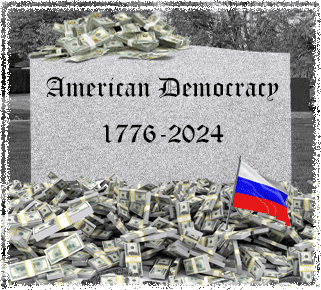
tombstone for American Democracy, 1776-2024, RIP (up)