




Homepage of the Drug War Philosopher, Brian Quass
blog icon orange rss icon with stylized radio waves bird icon for twitter bird icon for twitter substack icon


back navigation arrow forward navigation arrow


Wanted: Martian Psychiatrists

Must be willing and able to prescribe pills to make Martian life bearable.

by Brian Ballard Quass, the Drug War Philosopher

May 28, 2026


One never knows where the next drug-related insight will come from. Last night was a case in point. I was watching a Spanish-dubbed version of a 2024 documentary called "Alien Humans on Mars," narrated by Gary Dean Orona and Tabitha Stevens. I figured this would give me a break from the often irritating subject of American drug attitudes while helping to improve my Spanish language skills at the same time. And indeed, the first half-hour of the program was ideal for this purpose. The co-hosts greeted us from what looked like a campground in Death Valley, seated on what appeared to be logs, but which were possibly some sort of prefabricated stand-in for logs, bearing in mind that I was not wearing my glasses at the time. From this forbidding (if perhaps somewhat blurry) outpost, they began speculating freely -- and in intelligible and straightforward Spanish -- about the many challenges that would face the first human beings who traveled to the Red Planet, placing particular emphasis on the psychological challenges that would be encountered there, including claustrophobic living quarters and the absence of all but a handful of human beings with whom one could share one's thoughts and feelings. They also pointed to some underappreciated physical drawbacks to Martian life, like the excruciatingly cold temperatures and the fact that the Martian soil contains toxins called perchlorates.

"Perchlorates, check," I thought to myself. "I did not know that." I was soon starting to relax, convinced that I was in a "drug-war free" zone while watching this documentary, that there was no opportunity for the hosts to suddenly make some biased statement about drugs that would pluck my last and final nerve. Alas, I was wrong. After a half-hour of unobjectionable speculation about the challenges of living on Mars, mostly on the part of Gary, who was apparently the main narrator for the piece, Tabitha started getting talkative. She started riffing, in particular, on specific ways that future astronauts could conquer claustrophobia and loneliness on Mars without going stir crazy. "Okay," I thought to myself, "be careful here, Tabitha. Where exactly are you going with this?" Come to find out, Tabitha believed that some medications could be created to help us endure life on Mars and that such medications could be administered by... wait for it, folks... a sort of astronaut psychiatrist, who would be "along for the ride" to Mars to make sure that everybody "took their meds."

"As if meds were not drugs in the first place."
"Isn't that just like Americans?" I thought to myself. "They think that meds can solve everything, while drugs -- you know, the junk cranked out by Mother Nature -- can only be misused, abused, and drive us crazy!? As if meds were not drugs in the first place; as if we should judge psychoactive substances by the spin that they are given by racist and xenophobic politicians, to say nothing of financially interested pharmaceutical companies and their front organizations that parade before the gullible public as health-conscious nonprofits." I asked myself, "Why is Tabitha qualified to give medical advice, while my Reddit posts get blocked if I so much as suggest that naturally occurring substances have any beneficial uses whatsoever? Who is this Tabitha Stevens, anyway? Who died and gave her a medical degree?" So thinking, I betook myself to my smartphone to perform a cursory search on the co-host's name. It turned out that Tabitha was a former American porn star and a winner of the AVN award, whatever that is. I'm not sure that does much to improve her street cred on the subject of psychoactive medicine; I should add, however, in the interests of full disclosure, that the documentary as a whole was credited to an organization called Psychoactive Circus, a nomenclature which may be a nod to experiential knowledge on the part of the co-host, the specifics of which might be inconvenient to relate. Just maybe.

So I'm thinking to myself: "Thanks for nothing, Tabitha. You couldn't leave well enough alone, could you? You had to get specific in a way that reinforces America's deeply ingrained drug-war biases." I then went on to remind Tabitha, in an imaginary but heartfelt colloquy, that a free people would learn about best uses for drugs for achieving specific psychological and socio-spiritual purposes based on actual best practices. We would not need financially-interested psychiatrists to decide for us what sorts of mental attitudes we should have at any given moment in our life: whether we're living in a SpaceX Starship on Mars or a one-bedroom apartment in Jamaica Queens. We can decide such matters for ourselves with the help of a re-legalized pharmacopoeia (yes, Mother Nature would actually be legal in the world of which I speak, Tabitha!)" Besides, with Tabitha's plan, you'd have to have a DEA astronaut along for the ride, to make sure that the "meds" being doled out by the psychiatrist do not inspire any unnecessary joy or bliss. "We can't have them going stir crazy," thinks the narc, "but that doesn't mean they have the right to enjoy a world full of multi-colored phantasmagoria either!"

I think it was Hamlet who said:

O God, I could be bounded in a nutshell
and count myself a king of infinite space,
were it not that the Drug War has outlawed
all substances that could facilitate
precisely such a beneficial mindset on my part.


Or something like that.

I managed to keep watching the documentary to the end, probably because my imperfect grasp of the Spanish language helped to cushion the blow of some of the more biased statements that otherwise could have sent me diving for the "off" button on the remote. It's hard to be furious at someone over something that they may not have even said, after all. But there was no mistaking Stevens's advocacy of a psychiatric pill mill on Planet Mars, and preferably one overseen by a board-certified psychiatrist. She communicated those warped ideas in the vocabulary of Spanish 101. It was all too clear what she was driving at: she was telling us that self-interested doctors are the ones who should call the shots about how we're allowed to think and feel in this life, whether we're living on Planet Mars or in Kingdom of Prussia, Pennsylvania. She failed to mention the fact, however, that DEA bureaucrats would have to look over the shoulders of those Martian psychiatrists, to ensure that patient empowerment does not go too far and that the meds in question do not produce any unnecessary insight or mental flexibility in the partaker. We'll even need a jail on Mars in case the psychiatrists really overdo it and start REALLY helping the crew.

REVIEW

There's a curious line at the end of chapter one of "The Trial" by Franz Kafka, in which the protagonist-narrator is reflecting on his behavior around his attractive boarding house neighbor named Ms. Burstner. "K" tells us that he was satisfied with his behavior around the woman, but that he was also surprised that he was not MORE satisfied with his behavior. This is kind of how I felt about the documentary called "Alien Humans on Mars." I found it interesting, but I was surprised that I did not find it MORE interesting. It was, after all, about a subject in which I should be deeply interested, given that my father worked for NASA and that I am engrossed by the philosophical study of human psychology (not to be confused with the study of the naive behaviorist psychology of today's biochemical determinists). Why then was I lukewarm about this documentary? I could see why some viewers might be put off by the heavy reliance on fabricated still shots in an age when the producers must have had access to plenty of real-life footage from the planet itself as taken by at least four different Martian rovers. But that didn't bother me much; such visuals might have even distracted me from engaging in the philosophical contemplation that the narrators were apparently trying to generate in their audience.

I finally figured out what was sticking in my craw, though. I realized that any human exploration of Planet Mars was going to be undertaken by oligarchs and their toadies, not by the U.S. government on behalf of all the citizens of the world. This was not going to be one small step for man, it was going to be one giant financially leveraged leap for Elon Musk. With this in mind, I found it hard to care about the psychological health of the SpaceX voyagers. They would only be going to Mars to assuage their vanity and to show the world that they (as opposed to "us") are a real "somebody," thank you very much, and that they matter in this world! How am I supposed to be riveted by their fate? It would serve them right if they discovered that they couldn't live with themselves once they got up there. Besides, I'm sure that the well-heeled crew will have their own psychiatrists that they'll want to bring along for the ride. Anyway, the actual trip is still ages away: SpaceX has not yet so much as designed a separate spacecraft for the DEA, its SWAT teams, and the bureaucrats who will be needed to ruin the lives of those who seek to profit from the use of psychoactive medicine on Mars.

Of course, I wish Godspeed to Musk and company, as they boldly go where no multi-billionaires have gone before. But I will not be glued to the TV set, staring at the Starship when it departs the launch gantry for Mars. I might just as well gawk at the next-door neighbors' Honda Civic when it departs their driveway for Disneyworld. That trip is THEIR business, not mine.


Key Takeaways:


read more essays here


Ten Tweets

against the hateful war on US


Scientists are responsible for endless incarcerations in America. Why? Because they fail to denounce the DEA lie that psychoactive substances have no positive medical uses.

Rather than protesting prohibition as a crackdown on academic freedom, today's scientists are collaborating with the drug war by promoting shock therapy and SSRIs, thereby profiting from the monopoly that the drug war gives them in selling mind and mood medicine.

No substance is bad in and of itself. Fentanyl has positive uses, at specific doses, for specific people, in specific situations. But the drug war votes substance up or down. That is hugely anti-scientific and it blocks human progress.

In the 2015 movie "No Escape," the only place that was safe from anti-American hysteria was an opium den. How ironic that the U.S. forced Iran to outlaw opium.

The formula is easy: pick a substance that folks are predisposed to hate anyway, then keep hounding the public with stories about tragedies somehow related to that substance. Show it ruining lives in movies and on TV. Don't lie. Just keep showing all the negatives.

"Drugs" is imperialist terminology. In the smug self-righteousness of those who use it, I hear Columbus's disdain for the shroom use of the Taino people and the Spanish disdain for the coca use of the Peruvian Indians.

A lot of drug use represents an understandable attempt to fend off performance anxiety. Performers can lose their livelihood if they become too self-conscious. We only call such use "recreational" because we are oblivious to the common-sense psychology.

Why does no one talk about empathogens for preventing atrocities? Because they'd rather hate drugs than use them for the benefit of humanity. They don't want to solve problems, they prefer hatred.

I have yet to find one psychiatrist who acknowledges the demoralizing power of being turned into a patient for life. They never list that as a potential downside of antidepressant use.

All drugs have positive uses. It's absurd to prohibit them because one demographic might misuse them.


Click here to see All Tweets against the hateful War on Us


back navigation arrow forward navigation arrow
Book Cover

Break the ice with a sledgehammer: place this book on your coffee table.

This book features 150 annotated images, designed to force brainwashed Americans to confront the fact that drug prohibition is wrong. Here is what author Richard Parrish II says of the book's compiler: "The drug prohibition philosopher provides first-hand, principled, persuasive, and insightful arguments against the current drug prohibition regime..."

Purchase Your Copy
Book Cover

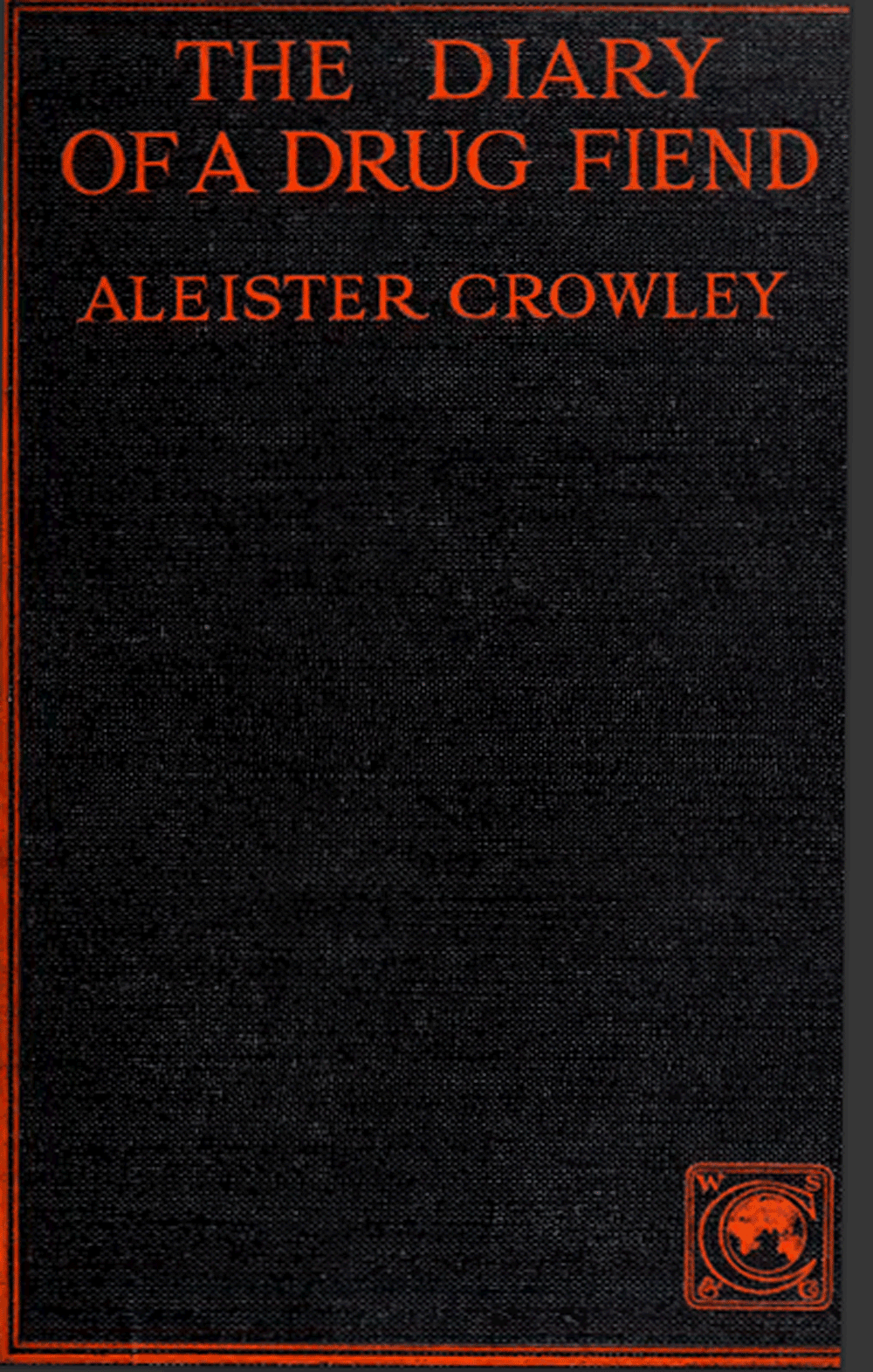
Diary of a Drug Fiend

This is the only full-cast recording of Aleister Crowley's 1922 classic paeon to common sense. It is the first book -- and so far almost the only book -- to stake out a philosophy of drug use that is compatible with human freedom, one in which we learn to use drugs as wisely as possible for the benefit of humanity. This recording was produced by the Drug War Philosopher and your purchases help support his effort to push back against the tragically counterproductive policy of drug prohibition, in the name of human freedom and of humanity's right to heal.

Purchase Your Copy


No cookies, no ads paid for by amoral and immoral billionaires (or trillionaires).


Unless otherwise indicated, no AI is used in the creation of site content. These essays represent the original ideas of their author and not the ideas that the author SHOULD have based on an algorithmic parsing of existing data. For more on this subject, consider the AI-related viewpoints to which the author subscribes as delineated in the New York Times opinion piece entitled "What 370,000 College Essays Tell Us About A.I.’s Effects on Creativity" by Rebecca Winthrop of the Brookings Institution.

The Partnership for a Death Free America is a proud sponsor of The Drug War Philosopher website @ abolishthedea.com.


Copyright 2026, Brian Ballard Quass Contact: quass@quass.com

tombstone for American Democracy, 1776-2024, RIP (up)