




What do you do when the entire world has gotten hold of the wrong end of the stick?
by Brian Ballard Quass, the Drug War Philosopher
May 2, 2025
In December of last year, I sent an essay to historian Richard Hutton, author of "The Witch: A History of Fear from Ancient Times to the Present." I politely suggested that the Drug War is the ultimate case of strategic fearmongering by the powers-that-be and that it was therefore an oversight on his part to fail to mention drugs in his book -- the more so given the fact that the "herbs" that he continually mentions uncritically were actually drugs insofar as they manifested psychoactive properties. The difference was that, back then, the populace was in the habit of holding persons responsible for evil rather than focusing on the substances that they used to bring about evil. Today, of course, we blame substances themselves for evil -- first and foremost by demonizing them with the pejorative epithet of "drugs," which in modern parlance refers to a substance that is superstitiously supposed to have no positive uses for anybody, anywhere, at any dose and when used for any reason whatsoever. Unfortunately, Richard only mentions the word "drugs" once in his entire book, and only then in a pejorative fashion, by likening the poison-selling magician to a drug dealer -- as if the kinds of substances that have inspired entire religions are all poisons. How ironic that a book meant to challenge fearmongers should itself contain such fearmongering about the time-honored substances that Drug Warriors have outlawed in defiance of common sense -- nay, in defiance of human progress itself.
The good news is, Mr. Hutton actually responded to the email containing my essay about his book. The bad news is, he merely thanked me for my comments and signed off. Too typical, I'm afraid. Amazing as it is, I have never yet known one single author or philosopher to respond to the substance of my comments, after having written literally hundreds of letters to the movers and shakers in various relevant fields over the last six years. It is as if it is considered bad manners these days merely to bring up the subject of drug prohibition. It really feels as if the smart people have concluded that the Drug War mentality is here to stay and that their best bet is to censor themselves accordingly. And so we have a kind of faux science these days, a world in which our conclusions in fields like psychology and consciousness only make sense if we assume that drug prohibition constitutes a natural baseline for research on all topics -- even political science, wherein pundits never consider the strategic use of empathogens to end hatred in the world and so stave off nuclear annihilation. Meanwhile, psychology mags publish monthly feel-good pieces about ending depression while yet completely ignoring the fact that drug law outlaws all substances that could do just that, and in real-time as well.
And so we live in a world of make-believe today, a world in which we are completely blind to the progress-preventing effects of our superstitious drug demonization. I say superstitious, for to say things like "Fentanyl 1 kills" makes no more sense than to say "Fire bad!" in the presumptuous manner of our paleolithic ancestors. The truth is that dangerous substances CAN be used wisely -- if we do not make a religion out of insisting otherwise.
This leaves a philosopher like myself in the position of Alfred North Whitehead. We both live in a world in which almost everybody has got ahold of the wrong end of the stick. In Whitehead's case, the vast majority of the world had a bifurcated conception of nature, according to which matter is matter and mind is mind and ne'er the twain shall meet. In my case, the vast majority of the world believes that drugs are drugs and meds are meds and ne'er the twain shall meet. The fact is, of course, that psychoactive substances are psychoactive substances, and that labels like "meds" and "drugs" and "herbs" are used (or rather misused) by Drug Warriors to make us think otherwise. Their obvious goal is to linguistically whitewash dependence-causing pills created by materialist chemists by referring to them by the gentle names of "meds" while harshly scorning as "drugs" the sort of time-honored holistic medicines championed historically by indigenous peoples around the world.
"The evolution of modern medicine gave us our current, bifurcated view of drugs: the good ones that treat illness and the bad ones that people use to change their minds and moods." --Jacob Sullum, from Saying Yes: In Defense of Drug Use, p. 2512
And so I have the same problem as Whitehead in attempting to get my points across. Our arguments are just too novel to be persuasive without the inclusion of many qualifications designed to answer the many kneejerk objections that will naturally occur to a reader who has lived and breathed the fallacious status quo for their entire lifetime. As Whitehead himself phrased this problem in his preface to "The Concept of Nature":
"In the presentation of a novel outlook with wide ramifications, a single line of communications from premises to conclusions is not sufficient for intelligibility. Your audience will construe whatever you say into conformity with their pre-existing outlook."
The formula is easy: pick a substance that folks are predisposed to hate anyway, then keep hounding the public with stories about tragedies somehow related to that substance. Show it ruining lives in movies and on TV. Don't lie. Just keep showing all the negatives.
Just think how many ayahuasca-like godsends that we are going without because we dogmatically refuse to even look for them, out of our materialist disdain for mixing drugs with drugs.
In "Psychedelic Refugee," Rosemary Leary writes:
"Fueled by small doses of LSD, almost everything was amusing or weird." -- Rosemary Leary
In a non-brainwashed world, such testimony would suggest obvious ways to help the depressed.
To treat opioid use disorder (which is really prohibition disorder syndrome) we should normalize the peaceable smoking of opium at home as an alternative to drinking alcohol.
One merely has to look at any issue of Psychology Today to see articles in which the author reckons without the Drug War, in which they pretend that banned substances do not exist and so fail to incorporate any topic-related insights that might otherwise come from user reports.
The drug war normalizes the disdainful and self-righteous attitude that Columbus and Pizarro had about drug use in the New World.
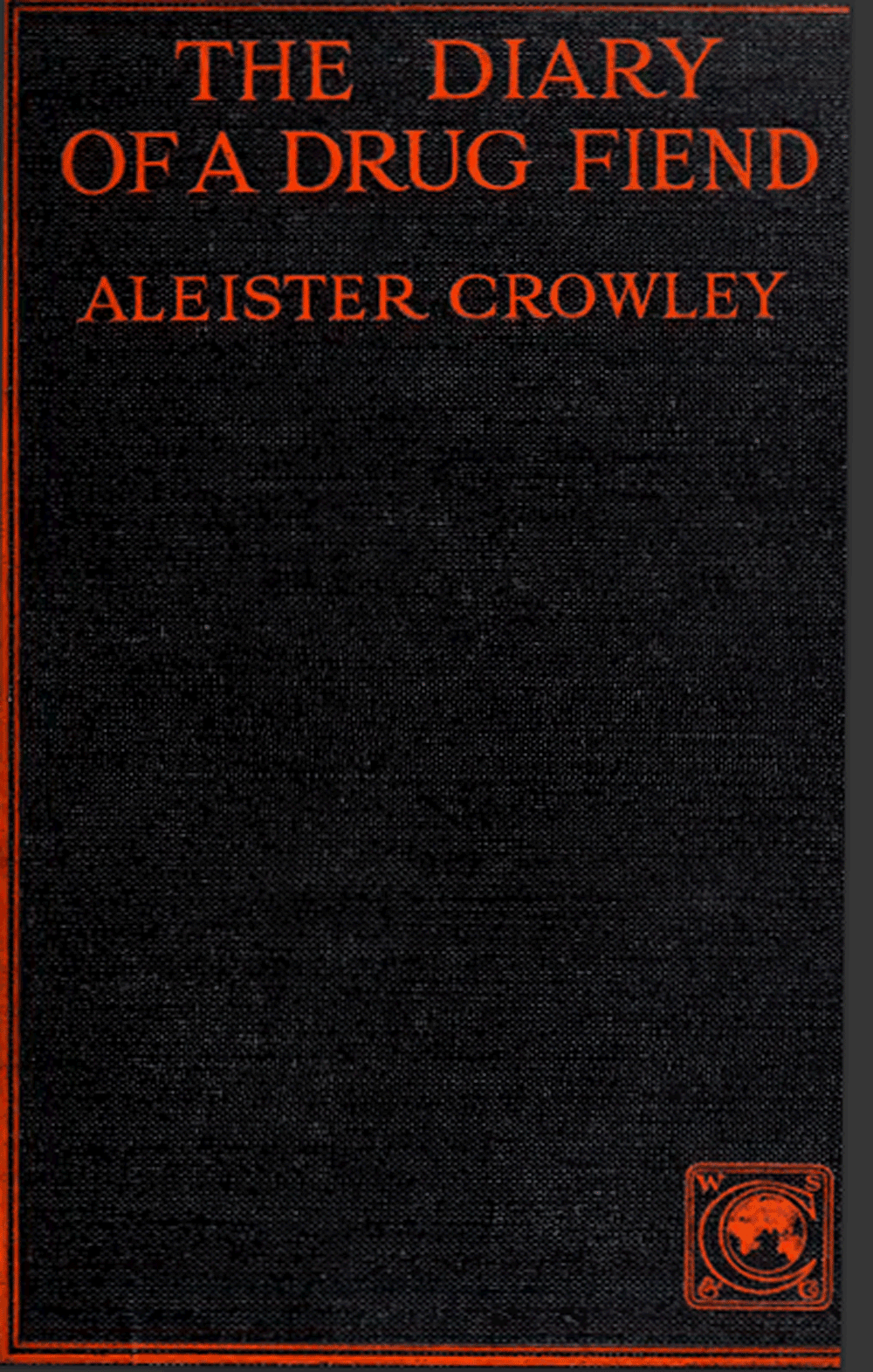
Aleister Crowley actually TRIED to get addicted to drugs and found he could not. These things are not inevitable. The fact that there are town drunkards does not mean that we should outlaw alcohol.
In the 19th century, poets got together to use opium "in a series of magnificent quarterly carouses" (as per author Richard Middleton). When we outlaw drugs, we outlaw free expression.
This is the mentality for today's materialist researcher when it comes to "laughing gas." He does not care that it merely cheers folks up. He wants to see what is REALLY going on with the substance, using electrodes and brain scans.
Musk vies with his fellow materialists in his attempt to diss humans as insignificant. But we are not insignificant. The very term "insignificant" is a human creation. Consciousness rules. Indeed, consciousness makes the rules. Without us, there would only be inchoate particles.