








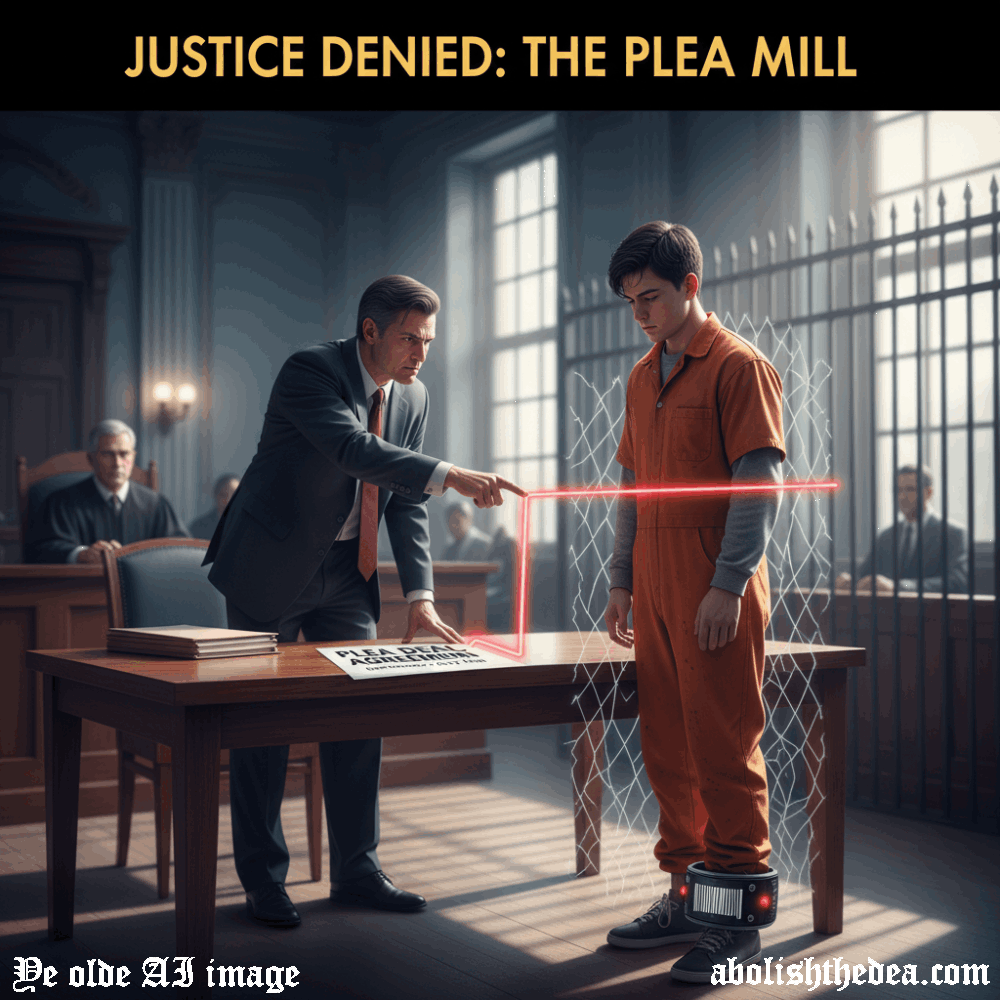
 I'm still wrapping my head around the Kafkaesque world faced by so-called drug offenders in America as detailed by Colleen Cowles in "War On Us."1 For merely possessing a few pills, Americans are being charged with felonies. Felonies! An estimated eight percent of Americans have felonies, according to a study cited by Cowles, and thirty-three percent of African Americans. 33%. This means far more than that they can be sent to prison for years. Once out, they can be denied educational loans, evicted from public housing, rendered ineligible for food stamps, and forced to submit to drug testing on demand. Even after they've completed years of harassing parole, the law seeks to prevent felons from getting on with their lives. As felons, they are barred from working in a host of jobs, which Colleen tells us include, but is by no means limited to: childcare worker, electrician, engineer, judge, nurse, manicurist, midwife, optometrist, psychologist, school-bus driver, social worker, teacher... even watchman. It makes you wonder what jobs they ARE allowed to hold: circus clown, perhaps? Ayurveda healer? Video game tester? (full-time pundit against the War on Drugs?)
"In 2018, the New York State Correctional Officers and Police Benevolent Association mounted an ad campaign against criminal justice reform in that state. The New York City Patrolmen's Benevolent Association campaigned against parole reform. The California Correctional Peace Officers Association spends approximately $8 million annually on lobbying to defeat criminal justice reform, ranging from opposition to reform of three strikes laws to prison expansion."
"First, police departments compete for federal anti drug grants with number of arrests and drug seizures strengthening their application for those grants. The grants also incentivize departments to pay for SWAT team armor and weapons, further militarizing our police forces. Secondly, the ability of police departments to pad their own budgets using civil forfeiture statutes makes drug arrests more lucrative than pursuing other types of arrests."
 Thomas Szasz was not an extremist when it comes to drugs. The extremists are those who feel that psychiatrists know more about our mind and mood than we do.
Psst! Drug use has benefits too. Pass it on!
SSRIs are created based on the materialist notion that cures should be found under a microscope. That's why science is so slow in acknowledging the benefit of plant medicines. Anyone who chooses SSRIs over drugs like San Pedro cactus is simply uninformed.
All uplifting drugs are potential antidepressants. Science denies that fact by claiming that drug efficacy must be proven quantitatively. And so they ignore anecdote, history and psychological common sense.
America is an "arrestocracy" thanks to the war on drugs.
Drug Prohibition is a crime against humanity. It outlaws our right to take care of our own health.
In his treatise on laws, Cicero reported that the psychedelic-fueled Eleusinian Mysteries gave the participants "not only the art of living agreeably, but of dying with a better hope."
M. Pollan says "not so fast" when it comes to drug re-legalization. I say FAST? I've gone a whole lifetime w/o access to Mother Nature's plants. How can a botanist approve of that? Answer: By ignoring all legalization stakeholders except for the kids whom we refuse to educate.
Prohibitionists have blood on their hands. People do not naturally die in the tens of thousands from opioid use, notwithstanding the lies of 19th-century missionaries in China. It takes bad drug policy to accomplish that.
It is folly to put bureaucrats in charge of second-guessing drug prescriptions: what such bureaucrats are really doing is second-guessing the various philosophies of life which are presupposed by the way we use psychoactive drugs.
Thomas Szasz was not an extremist when it comes to drugs. The extremists are those who feel that psychiatrists know more about our mind and mood than we do.
Psst! Drug use has benefits too. Pass it on!
SSRIs are created based on the materialist notion that cures should be found under a microscope. That's why science is so slow in acknowledging the benefit of plant medicines. Anyone who chooses SSRIs over drugs like San Pedro cactus is simply uninformed.
All uplifting drugs are potential antidepressants. Science denies that fact by claiming that drug efficacy must be proven quantitatively. And so they ignore anecdote, history and psychological common sense.
America is an "arrestocracy" thanks to the war on drugs.
Drug Prohibition is a crime against humanity. It outlaws our right to take care of our own health.
In his treatise on laws, Cicero reported that the psychedelic-fueled Eleusinian Mysteries gave the participants "not only the art of living agreeably, but of dying with a better hope."
M. Pollan says "not so fast" when it comes to drug re-legalization. I say FAST? I've gone a whole lifetime w/o access to Mother Nature's plants. How can a botanist approve of that? Answer: By ignoring all legalization stakeholders except for the kids whom we refuse to educate.
Prohibitionists have blood on their hands. People do not naturally die in the tens of thousands from opioid use, notwithstanding the lies of 19th-century missionaries in China. It takes bad drug policy to accomplish that.
It is folly to put bureaucrats in charge of second-guessing drug prescriptions: what such bureaucrats are really doing is second-guessing the various philosophies of life which are presupposed by the way we use psychoactive drugs.


 (up)
(up)